
Florida just logged 485 locally acquired dengue infections this year, its highest count in decades.
Story Snapshot
- Florida added 60 local dengue cases in one week, bringing the total to 485 as of Oct. 24.
- Most cases cluster in the Tampa Bay region, with new spread into additional counties.
- State surveillance defines “locally acquired” as infection without recent travel to risk areas.
- Health officials urge bite prevention and swift testing to slow transmission.
Florida’s Case Surge Rewrites the Recent Playbook
Florida health officials reported 60 new locally acquired dengue infections in a single week, lifting the 2026 total to 485 as of October 24, the largest count in the continental United States in decades. That jump followed steady growth through late summer and early fall. Local transmission means infected mosquitoes in Florida are spreading the virus to residents, without a travel link. This breaks from the norm, which used to be mostly travel-linked cases identified at clinics and urgent care centers.
The Tampa Bay region drives much of the rise. Hillsborough and Pinellas counties accounted for 55 of the latest week’s cases, while the state added the first two this year in Seminole County. The cluster pattern tracks how dengue moves: one infected traveler can seed the virus into local mosquitoes, which then pass it to nearby people. Warm weather, dense neighborhoods, and standing water in yards and worksites give the mosquitoes the edge they need to thrive and spread.
What “Locally Acquired” Actually Means for Risk
Public health case definitions matter now. A locally acquired case is one where the person did not travel to a dengue-risk area in the two weeks before getting sick, which points to in-state mosquito transmission. Health departments use this standard to organize response and to map spread. The Centers for Disease Control and Prevention advises rapid case investigation, mosquito control, and alerts to doctors when local spread appears in more than one geographic area. These steps aim to break the chain before next season.
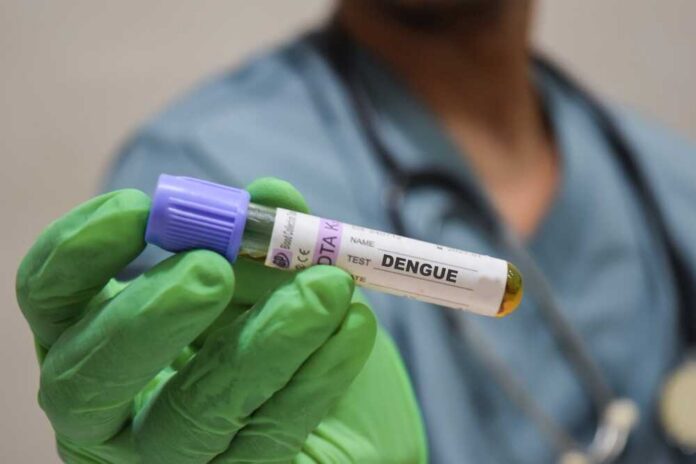
Dengue symptoms often start with fever, headache, and body aches. Many cases are mild and go untested. That gap means official counts are a floor, not a ceiling, and surveillance guides action rather than capturing every infection. Testing helps doctors rule out look-alike illnesses and guides timely care. People with warning signs such as belly pain, vomiting, bleeding, or trouble breathing need urgent evaluation. Early fluids and close monitoring reduce severe outcomes.
Florida battles largest dengue fever outbreak in decades with hundreds infected https://t.co/L2nFez31h9 pic.twitter.com/3YTqFmy1Bv
— New York Post (@nypost) November 3, 2026
Why This Year Is Different, And What History Tells Us
Florida has seen dengue before, but on a smaller scale in modern times. Key West reported dozens of local cases in 2009 and 2010, Martin County had an outbreak in 2013, and Monroe County saw renewed spread in 2020. The current surge spans multiple counties and far exceeds recent annual totals, making this year stand out for disease trackers. Warmer, longer mosquito seasons, global travel, and urban growth give the Aedes mosquito more chances to feed, lay eggs, and spread the virus near homes.
Common-sense steps work. Drain standing water weekly from buckets, planters, gutters, and tarps. Cover rain barrels. Run air conditioning or use screens. Wear long sleeves and repellent with DEET, picaridin, or oil of lemon eucalyptus. Ask your local mosquito control office about neighborhood treatments and how to report heavy mosquito activity. These actions cost little and respect personal choice, yet they protect families and help communities avoid costlier emergency responses later on.
What Local Leaders And Families Should Do Next
County leaders should strengthen targeted mosquito control in high-case zones, expand weekend trash and tire pickup to cut breeding sites, and push bite-prevention messages through schools, churches, and employers. Clinics need easy access to testing supplies and quick lab turnaround so patients get clear answers fast. Residents who feel sick after a mosquito bite should call a doctor early and avoid getting more bites to prevent onward spread. Fast, local action now can shrink next year’s risk.
Sources:
tallahassee.com, floridatoday.com, wusf.org, cdc.gov, cidrap.umn.edu, nbcmiami.com