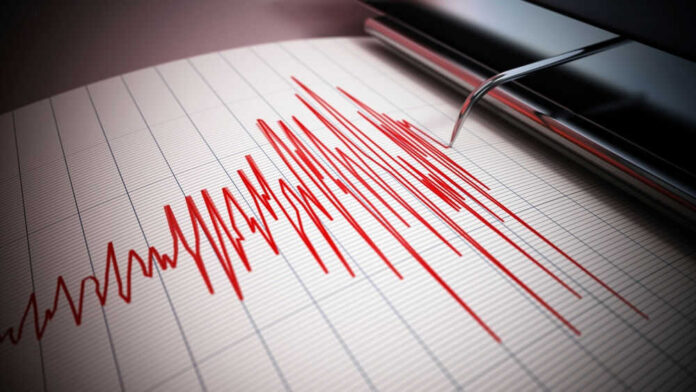
What if scientists told you that Yellowstone’s supervolcano is rumbling beneath our feet, and they have just discovered a staggering 86,000 hidden earthquakes shaking the land?
At a Glance
- Scientists detected 86,000 previously unknown earthquakes in Yellowstone.
- Recent hydrothermal activity has created new pools and altered the landscape.
- USGS maintains a normal alert level with no signs of an imminent eruption.
- Machine learning is revolutionizing volcanic monitoring and preparedness.
The Sleeping Giant Beneath Yellowstone
Yellowstone National Park is not just famous for its geysers and stunning vistas; it is also the site of one of the largest active volcanic systems on the planet. The Yellowstone Caldera, a behemoth formed 640,000 years ago, is a hotbed of geothermal activity. This volcanic system has erupted three times in the past 2.1 million years, with the last major eruption leaving a 30 by 45 mile caldera in its wake. But don’t cancel your trip just yet—scientists assure us that the giant is still snoozing.
Thanks to the wonders of machine learning, researchers have uncovered over 86,000 hidden earthquakes in Yellowstone from 2008 to 2022. These quakes, ten times more than previously estimated, mainly were part of swarms—clusters of tiny tremors shaking the region like a child with a maraca. The good news? These swarms are not linked to magma movement but are instead the result of superheated water and gases moving through the rocks.
Recent Surface Shifts and Scientific Assurances
Over the past year, Yellowstone’s landscape has undergone significant changes due to notable hydrothermal explosions, particularly at Biscuit Basin and Norris Geyser Basin. These explosive events aren’t due to magma bubbling up; they’re the result of pressurized steam and gases breaking through the surface. While these explosions have created new pools and changed some surface features, the U.S. Geological Survey (USGS) and Yellowstone Volcano Observatory (YVO) confirm that volcanic activity remains within normal levels.
USGS and YVO emphasize that all the key indicators of volcanic unrest—large earthquakes, rapid ground uplift, increased gas emissions—are conspicuously absent. The magma chamber beneath Yellowstone is neither as full nor as pressurized as feared. Thus, the volcano alert level remains comfortably at Code Green: NORMAL.
The Power of Machine Learning and Public Perception
The use of machine learning to detect these hidden earthquakes is a game-changer for volcanic monitoring, not just in Yellowstone but globally. By revealing seismic patterns previously obscured, it enhances our understanding of volcanic systems and bolsters preparedness efforts. However, as with all scientific advancements, there’s a flip side—public perception. The idea of a supervolcano eruption is as terrifying as it is fascinating, and media reports often amplify these fears, sometimes without the full scientific context.
Despite occasional dips in tourism due to safety concerns, Yellowstone remains a safe and extraordinary destination. The park’s geothermal features continue to attract millions of visitors, all eager to witness the power of nature without the threat of being buried under a pyroclastic flow. Businesses reliant on tourism are often at the mercy of public perception, which can fluctuate with every dramatic headline.
A Balanced Perspective on Yellowstone’s Future
Experts like Dr. Bing Li and Professor Valentin Troll assure us that while Yellowstone is a dynamic and fascinating geological wonder, the chances of an imminent super-eruption are low. The current seismic activity is confined to shallow depths, unrelated to any threatening magma movement. Recent studies using electrical conductivity imaging have further illustrated that, while there are magma pockets beneath Yellowstone, they lack the connectivity required for a large-scale eruption.
For now, Yellowstone’s supervolcano remains an awe-inspiring giant slumbering beneath the surface. Its rumblings and steam vents serve as a reminder of the power and unpredictability of nature, even as advanced technology like machine learning brings us closer to understanding and coexisting with these natural phenomena. So, pack your bags, bring your camera, and enjoy the wonders of Yellowstone—don’t forget to check the USGS updates along the way.