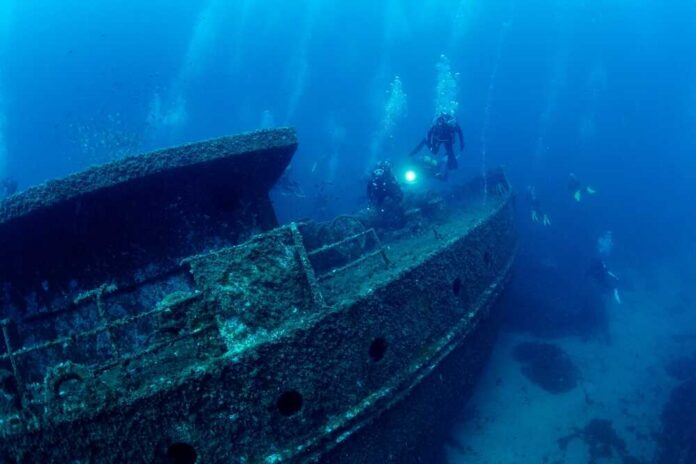
A 150-year-old Lake Michigan tragedy has resurfaced—just as invasive mussels threaten to erase America’s underwater history before it can be recorded.
Story Snapshot
- The wreck of the luxury passenger steamer Lac La Belle, which sank in 1872, was located in October 2022 and publicly announced in February 2026.
- Shipwreck hunter Paul Ehorn, 80, led the search after decades of effort dating back to his teens.
- The vessel went down during a gale after taking on water, and eight people died when a lifeboat capsized on the way to shore.
- The wreck sits about 20 miles offshore between Racine and Kenosha, Wisconsin, and remains surprisingly intact despite missing upper cabins.
- Researchers warn that quagga mussels are steadily damaging Great Lakes shipwrecks, adding urgency to documentation efforts such as 3D modeling.
A Long-Lost Steamer Found Off Wisconsin’s Coast
Paul Ehorn and his team located the Lac La Belle in Lake Michigan about 20 miles offshore between Racine and Kenosha, Wisconsin. The 217-foot luxury passenger steamer sank on October 13, 1872, during a gale, and its location remained uncertain for generations.
Ehorn and dive partner Bruce Bittner used Klein side-scan sonar, spotting a large target on a second pass that matched the steamer’s distinctive structure.
Luxury steamer that sunk in Lake Michigan more than 150 years ago has been found | CBS https://t.co/jIXGyFmS1D Shipwreck World, a group that works to locate shipwrecks around the world, revealed Friday that a team led by Illinois shipwreck hunter Paul Ehron found the wreck of the… pic.twitter.com/ZqKocCXJKC
— Igor Os (@igor_os777) February 15, 2026
The discovery was made in October 2022, but the announcement was not made until February 2026. Ehorn said the delay was deliberate: the team wanted to document the wreck properly and include a three-dimensional video model in the public release.
Weather constraints and scheduling meant the group could not return for more dives until summer 2025, which slowed the process but improved the quality of the final record.
What Happened the Night Lac La Belle Went Down
The Lac La Belle left Milwaukee on the evening of October 13, 1872, carrying 53 passengers and crew and a heavy load of cargo. Reports describe the ship developing a serious leak about two hours into the trip, with the source unknown.
The captain attempted to turn back toward Milwaukee, but conditions worsened. Large waves boarded the vessel and put out the boiler fires, leaving the ship without power and increasingly vulnerable.
The storm pushed the steamer south for hours as it continued taking on water. Around 5 a.m., the captain ordered the lifeboats lowered. The vessel went down stern first while passengers and crew watched from the boats.
Survivors later reached shore between Racine and Kenosha and recounted the ordeal to journalists. One lifeboat capsized during the dangerous trip to land, and eight people died in the icy, violent seas.
Why the Wreck Still Matters in 2026
Maritime historians view the Lac La Belle as more than a curiosity because it represents a vivid piece of Great Lakes commerce and travel from the 1800s. Built in 1864 in Cleveland, the vessel served prominent regional routes and was considered a popular passenger steamer on Lake Michigan.
The story also reflects how quickly travel could turn deadly when weather, mechanical power, and limited rescue options collided in that era’s transportation system.
The ship’s earlier history underscores how hard-won survival could be on inland waterways. The Lac La Belle reportedly sank once before, after a collision in 1866 in the St. Clair River in relatively shallow water, and it was raised and reconditioned before returning to service.
That second life ended in 1872, but the discovery now offers historians a physical reference point—wood framing, hull structure, and some visible cargo—to verify and refine the written record.
Quagga Mussels and the Fight to Document Before It’s Gone
The wreck’s exterior is now covered in invasive quagga mussels, and the upper cabins are gone, yet the hull remains notably intact with visible wooden framing. That mix—remarkable preservation alongside ongoing biological damage—is driving the team’s push to document.
Ehorn is building a 3D photogrammetric model and has said he plans to withhold the exact coordinates until the work is complete, aiming to preserve the site’s condition as long as possible.
The broader context is sobering: the Wisconsin Water Library at the University of Wisconsin–Madison estimates the Great Lakes hold roughly 6,000 to 10,000 shipwrecks, most still undiscovered.
Recent years have brought multiple finds, but Ehorn has also warned that locating remaining wrecks is getting harder as the “easy ones” have already been identified. The Lac La Belle announcement adds momentum—and urgency—to the race to document America’s submerged history.
Sources:
Lac La Belle luxury steamer Lake Michigan found discovery
Pioneer wreckhunter finds Lake Michigan passenger steamer lost for 130 years