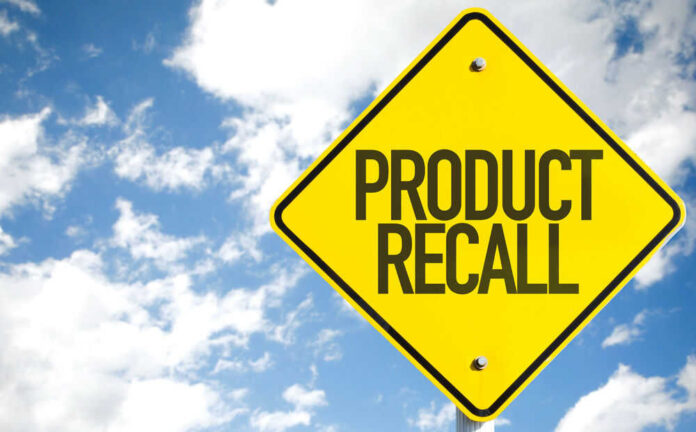
Putting thousands at risk and raising questions about food labeling oversight, over 64,000 pounds of NH European Style Butter Blend have been swept into a nationwide recall after the Food and Drug Administration (FDA) discovered undeclared milk allergens.
Story Snapshot
- FDA recalls more than 64,000 pounds of NH European Style Butter Blend due to undeclared milk allergens.
- Recall affects consumers and businesses across the U.S. and the Dominican Republic.
- The product was sold online and to food service vendors, not through specific retail chains.
- FDA classifies the recall as Class II, citing potential temporary or reversible health risks.
FDA Flags Major Butter Recall for Allergen Lapses
The FDA has recalled over 64,000 pounds of NH European Style Butter Blend supplied by Bunge North America, after routine checks revealed the presence of undeclared milk allergens.
The recall, initiated on July 14, 2025, now carries a Class II designation, meaning the product could cause temporary or medically reversible health effects for those with milk allergies.
This decision comes after the FDA’s August 3-4 announcement, which specified the recall’s scale and its cross-border impact, with affected products distributed both in the U.S. and the Dominican Republic.
The recall covers butter sold online through Amazon and Food Service Direct as well as to food service vendors, but no specific grocery chains have been cited in the distribution list.
Food recalls due to undeclared allergens are not new, but the size and scope of this butter recall have drawn national attention. The recalled butter was packaged in white paperboard cases, each containing 36 blocks, and identified by product code 5023937, UPC 1 00 78684 73961 2, and lot code 5064036503.
Bunge North America voluntarily initiated the recall, citing a commitment to consumer safety and regulatory compliance.
The FDA’s Class II risk level underscores the potential for health consequences, especially among individuals with severe milk allergies, and signals the need for heightened vigilance in food labeling.
This recall follows a series of similar incidents in the food industry, where labeling lapses have led to increased scrutiny by regulators and advocates alike.
Industry Faces Pressure After Recurring Labeling Failures
Undeclared allergens, particularly milk, remain a persistent challenge in the American food supply chain. The FDA mandates clear labeling of major allergens, but enforcement relies on manufacturers’ diligence and robust quality control.
According to food safety experts, lapses like the one seen in the NH European Style Butter Blend recall can result from cross-contamination or procedural oversights in production and packaging.
The fallout extends beyond consumer health concerns: food service vendors, online retailers, and distributors now face logistical disruptions as they work to remove affected products from circulation.
Consumers are advised to check product codes and contact the manufacturer directly if they believe they have purchased the recalled butter blend.
Public statements from Bunge North America and the FDA have emphasized transparency and rapid response. The recall’s escalation to a Class II risk level demonstrates a regulatory system determined to protect public health, while also highlighting the complexity of modern supply chains.
With products distributed across borders and through various channels, ensuring label accuracy and allergen disclosure is a growing challenge.
The recall’s economic impact will likely be felt by Bunge North America and its partners, but it may also serve as a catalyst for industry-wide reforms in allergen management and labeling compliance.
Broader Implications for Food Safety and Regulatory Oversight
This large-scale recall is a stark reminder of the stakes involved in food labeling and allergen control. For families with food allergies—a group that includes a significant number of American households—such incidents are not merely inconvenient, but potentially life-threatening.
The FDA’s public notice and swift escalation of the recall reflect a renewed commitment to consumer protection in the post-Biden regulatory landscape, where American values of transparency and accountability are being reasserted. Industry insiders argue that voluntary recalls, while disruptive, are indicative of a system that ultimately prioritizes public safety over profit.
Expert analysis suggests that the frequency of allergen-related recalls is unlikely to decrease without stricter oversight and investment in preventative measures.
Calls for tighter regulations, faster detection protocols, and harsher penalties for non-compliance are growing louder. At the same time, food manufacturers and distributors stress the challenges posed by complex supply chains and the importance of voluntary action in mitigating harm.
For conservative Americans concerned with the integrity of the nation’s food supply and the responsible use of tax dollars, this recall stands as a case study in both the vulnerabilities and strengths of the current system.
The expectation is clear: robust safeguards should protect health and freedom, without excessive government overreach or burdensome regulations that ultimately punish the responsible alongside the negligent.
Sources:
AOL: Over 64,000 Pounds of Popular Butter Has Been Recalled
Parade: Massive Butter Recall July-August 2025
WHP580: FDA Recalls 64K Pounds of Butter for Undeclared Milk
The Independent: Butter Recall FDA Bunge North America