

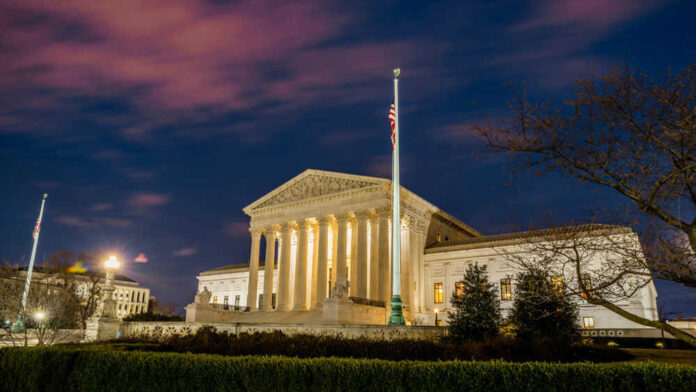
The Supreme Court agreed to decide on an expedited basis whether President Trump possessed the constitutional authority to impose the most sweeping tariffs in modern American history.
The landmark case that could redefine presidential power and determine the fate of billions in trade policy.
Story Highlights
- Supreme Court will hear Trump tariff case in November 2025, affecting nearly all imported goods.
- Small businesses claim tariffs will cost them $100 million in 2025 alone.
- The lower court initially struck down tariffs as exceeding presidential authority under the 1977 law.
- The decision could set a major precedent for future executive trade actions and emergency powers.
Presidential Authority Under Constitutional Challenge
The consolidated case centers on President Trump’s use of the International Emergency Economic Powers Act to impose tariffs on nearly all imported goods through executive orders.
The administration targeted specific countries, including Canada, China, and Mexico, for allegedly failing to curb fentanyl trafficking, while implementing a broader “reciprocal tariff” policy affecting most imports.
This represents the most comprehensive use of executive tariff authority in decades, testing the constitutional limits of presidential power in trade policy.
Small businesses led by Learning Resources, Inc. and V.O.S. Selections, Inc. have challenged the tariffs, arguing they exceed statutory authority and impose devastating economic burdens.
These plaintiffs represent the backbone of American enterprise—the small business owners who drive our economy and employ millions of hardworking Americans. Their legal challenge demonstrates how government overreach, even with good intentions, can crush the very people who make this country prosper.
Lower Courts Split on Executive Emergency Powers
The U.S. Court of International Trade initially ruled against the Trump administration on May 28, 2025, finding the tariffs exceeded presidential authority and issuing an injunction.
However, the Federal Circuit Court granted a stay just one day later, on May 29, allowing the tariffs to remain in effect while expediting the appeal process. This judicial back-and-forth highlights the complexity of determining where executive authority ends and congressional oversight begins.
The legal timeline reveals how quickly this case has moved through the federal court system.
President Trump extended the suspension of reciprocal tariffs against China on August 11, 2025, showing the administration’s willingness to adjust policy while defending its core authority.
The Supreme Court announced its decision to hear the consolidated cases on September 9, 2025, with oral arguments scheduled for early November.
Constitutional Principles and National Security at Stake
This case strikes at the heart of constitutional governance and the proper balance of power between branches. The Trump administration argues these tariffs are essential for national security and combating the fentanyl crisis that has devastated American communities.
Given the Biden administration’s complete failure to address the border crisis and drug trafficking, it’s reasonable that strong executive action would be necessary to protect American lives and interests.
Trade law experts note the unprecedented breadth of these tariffs and warn that the Supreme Court’s decision could fundamentally reshape executive power in trade policy.
The 1977 International Emergency Economic Powers Act was designed for genuine emergencies, and reasonable people can debate whether current circumstances justify such sweeping tariff authority. However, when Congress fails to act decisively on critical issues like border security and unfair trade practices, executive leadership becomes essential.
Economic Impact on American Businesses and Consumers
The plaintiffs claim these tariffs will cost them $100 million in 2025 alone, representing a dramatic increase from previous years. While supporting American manufacturing and fair trade is crucial, we must also consider the burden on small businesses that form the foundation of our economy.
These entrepreneurs didn’t create the unfair trade relationships or border security failures that necessitated strong action—they’re caught in the middle of cleaning up decades of poor governance.
The affected sectors include manufacturing, retail, and agriculture—industries that employ millions of Americans and drive economic growth.
Foreign trading partners, especially China, Canada, and Mexico, face significant impacts that could strain diplomatic and economic relationships. However, after years of America being taken advantage of in trade deals, some disruption may be necessary to achieve truly fair and reciprocal arrangements.
Supreme Court Decision Will Set Landmark Precedent
The Court’s ruling will determine not just the fate of these specific tariffs but also establish boundaries for future presidential emergency powers.
This decision comes at a critical time when American sovereignty and economic independence face unprecedented challenges from hostile foreign actors and unfair trade practices.
The justices must balance respect for executive authority in genuine emergencies against the constitutional principle that Congress holds primary power over trade policy.
Legal scholars and trade experts await this decision with intense interest, knowing it could redefine the relationship between executive action and legislative oversight for generations.
Whatever the outcome, this case represents exactly the kind of constitutional question the Supreme Court exists to resolve—protecting both executive effectiveness and constitutional limits in our system of separated powers.
Sources:
SCOTUSblog: Supreme Court agrees to decide the fate of Trump’s tariffs
U.S. Court of Appeals for the Federal Circuit: V.O.S. Selections, Inc. v. Trump