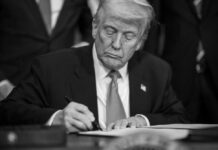


President Trump said the Federal Bureau of Investigation (FBI) is looking into the Nvidia matter, and that single sentence just fused a boardroom scandal to national security politics.
Story Snapshot
- Nvidia’s board launched an independent probe into CEO Jensen Huang’s relationship and the risk of spying.
- The board says it has no reason to believe national security or company secrets were compromised.
- Jensen Huang admitted infidelity and pledged to cooperate with the inquiry.
- Reports cite U.S. intelligence alleging the woman, Alice Huang, was tied to China’s spy service.
What Nvidia Confirmed And What It Did Next
Nvidia said a committee of independent directors, with outside counsel, is overseeing a review. The board stated it has no reason to believe national security or Nvidia secrets were compromised, while keeping the door open to any findings the probe may surface. The company retained confidence in Jensen Huang and the leadership team during the investigation. That stance sets a high bar for any claim that the alleged relationship led to leaks or influence over sensitive chip policy.
Jensen Huang publicly apologized for being unfaithful and said he supports the review and will cooperate. That admission resolves the question of whether a relationship existed. It does not, by itself, address the core security concern. The board’s move to formalize an inquiry, rather than deny allegations, reflects a risk-control mindset familiar to companies treated as national-security actors. It also positions Nvidia to show its work if outside investigators ask for more.
What The Intelligence Reporting Alleges
Public reporting cites U.S. intelligence assessments that identified Alice Huang as an asset of China’s Ministry of State Security and described electronic surveillance of her communications for at least a year. Those accounts say the objective included learning more about advanced U.S. artificial-intelligence chips and possibly pressuring Nvidia to make top chips available to China. A memo reportedly circulated among senior policymakers outlined the concern. China rejected the claims as groundless.
Coverage also linked the allegations to Megaspeed, a Singapore firm whose Malaysian unit reportedly bought billions of dollars of advanced gear containing Nvidia chips. The reporting raised diversion and export-control questions, while Megaspeed said probes found no illegal transfers. None of that, on its face, proves Jensen Huang leaked information. It creates a timeline and a motive theory. The facts that matter most now are device logs, access records, and message content—if investigators can lawfully review them.
Where The Evidence Threshold Sits Now
Two things can be true at once. U.S. intelligence may assess a real approach by a foreign service. Nvidia’s controls may still have prevented any leak. The board’s statement is careful: no reason to believe secrets were compromised, paired with a promise to examine all available information. That is prudent corporate governance, not a final verdict. From a common-sense, conservative lens, facts beat vibes: show the logs, the audit trail, and a clean chain of custody.
Congress weighs tighter chip curbs. Can NVIDIA keep Washington at bay?👇
⠀
The board at NVIDIA ($NVDA) launched an investigation on Sunday to clarify media reports that CEO Jensen Huang became the target of a foreign intelligence operation.
⠀
In the same statement, the board… pic.twitter.com/I9eqyGoCoi— Harold (@rich_compass) November 10, 2026
President Trump’s comment that the FBI is looking into the matter raises the stakes but does not, by itself, add proof. Law enforcement interest means investigators will ask for records and testimony, which is the right path in cases that blend personal conduct and national security risk. If Nvidia wants to end speculation, it can release a public summary when the independent counsel finishes, with redactions for sensitive details and a clear list of what it checked and when.
The Policy Backdrop That Makes This Different
Advanced chip makers no longer operate like ordinary firms. Export controls grew tougher in recent years because policymakers saw how often restricted technology could move through third countries or complex supply chains. Federal enforcement actions across the industry show that rerouting and gray-market channels are real problems, not hypotheticals. That is why boards are expected to treat executive vetting, insider risk, and data-loss prevention as national-security grade, not routine compliance.
Expect Congress to keep pressing. A closed-door briefing with investigators, Nvidia security staff, relevant U.S. officials, and witnesses could fix the timeline and test each access pathway. The practical checklist is simple: review device images, email and chat records, badge logs, meeting calendars, download histories, and any unusual data transfers. If those checks come back clean, the narrative shifts. If not, the remedies are fast and firm—access limits, policy changes, and, if needed, leadership consequences.
What To Watch Next
Watch for three signals first: whether Nvidia limits Jensen Huang’s access during the review. Second, whether investigators corroborate the alleged effort to influence chip availability to China. Third, whether the board releases a detailed summary that answers the hard questions without hedging; that package would give markets clarity and give national-security leaders confidence. Until then, keep the focus on verifiable facts, not rumor, and measure every new claim against the audit trail.
Sources:
washingtontimes.com, reuters.com, apnews.com, finance.yahoo.com, techpowerup.com, uscc.gov, mofo.com