President Trump’s withdrawal of National Guard troops from three Democrat-controlled cities marks a rare Supreme Court victory over executive power, exposing the constitutional limits even a strong conservative president faces when confronting lawless urban strongholds.
Story Highlights
- Trump pulls National Guard from Chicago, Los Angeles, and Portland after Supreme Court ruling limits presidential authority
- Local Democrat officials claim victory despite ongoing crime concerns in their cities
- President warns federal forces will return immediately if crime rates spike again
- Supreme Court decision sets important precedent on executive power and federalism
Supreme Court Forces Presidential Retreat
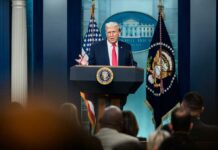
President Trump announced the withdrawal of National Guard troops from Los Angeles, Chicago, and Portland on January 1, 2026, following a Supreme Court ruling that limited his authority over Guard deployments.
The decision represents a significant constitutional check on executive power, even as Trump maintains the right to redeploy forces if crime surges. This marks the first time the high court has directly constrained a sitting president’s domestic military authority in recent memory, establishing crucial precedent for federal-state relations.
Trump says he’s dropping push for National Guard in Chicago, LA and Portland, Oregon, for now https://t.co/qaBqfNzSOF
— New York Daily News (@NYDailyNews) January 1, 2026
Democrat Cities Celebrate Federal Withdrawal
Local officials in all three cities immediately celebrated Trump’s announcement, with some organizing block parties to mark the end of federal oversight. These same leaders who have consistently failed to address rising crime rates in their jurisdictions now claim victory over constitutional governance.
Their celebration reveals the deep-seated resistance to federal law enforcement assistance, even when their own policies have proven inadequate to protect citizens from escalating violence and disorder.
Strategic Pause, Not Surrender
Trump emphasized this withdrawal represents a temporary measure, not abandonment of federal crime-fighting responsibilities. The President stated forces would “come back” if crime metrics deteriorate, maintaining pressure on local leadership to deliver results.
This approach demonstrates smart political maneuvering within constitutional constraints while keeping the threat of federal intervention alive. The conditional nature of the pullback ensures accountability for Democrat mayors who must now prove their soft-on-crime policies can actually work.
The timing coincides with reported crime declines during the Guard presence, validating the effectiveness of strong federal intervention. However, these improvements remain fragile without sustained enforcement, particularly given the progressive policies that created the original crisis.
Trump’s measured response respects judicial authority while preserving future options to protect American citizens from failed local leadership.
Constitutional Precedent Strengthens Federalism
The Supreme Court ruling reinforces constitutional boundaries between federal and state authority, even when used to constrain necessary law enforcement actions. This decision strengthens federalism principles that conservatives have long championed, despite limiting Trump’s immediate options.
The ruling demonstrates our constitutional system’s checks and balances function properly, protecting state sovereignty while acknowledging federal responsibilities. Future deployments will require more careful legal justification, potentially strengthening the constitutional foundation for legitimate federal intervention when states genuinely fail their citizens.
This development sets important precedent for executive power limits while maintaining the federal government’s ultimate responsibility to ensure domestic tranquility.
Conservative supporters should view this as reinforcing constitutional governance rather than undermining necessary law enforcement, positioning Trump as a president who respects judicial authority while maintaining vigilance against urban lawlessness.