

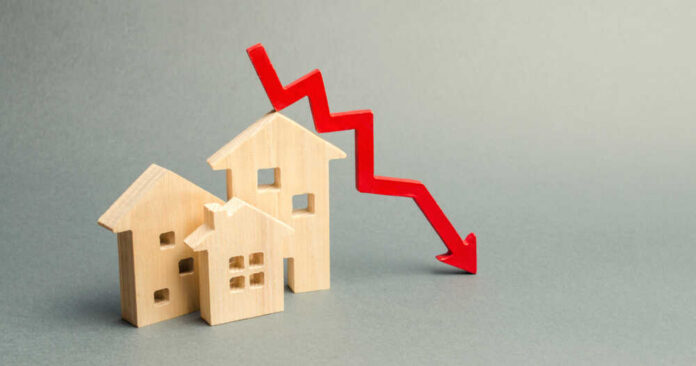
Mortgage demand is dropping fast, and the squeeze is leaving middle-class families paying the price for years of inflation and a Federal Reserve that still won’t give housing a clean break.
Quick Take
- Mortgage demand fell more than 10% as 30-year rates climbed to their highest level since October, tightening affordability for buyers.
- Existing-home sales remain stuck near the lowest levels seen since 2010, driven by high rates and limited inventory rather than reckless lending.
- A “rate lock-in” effect keeps many homeowners with sub-3% mortgages from selling, restricting supply and propping up prices even as demand weakens.
- Builders are leaning on incentives to keep new-home sales moving while resale activity stays sluggish.
- Forecasts point to weak sales in 2025 and little to no home-price growth in 2026, signaling a long grind instead of a quick reset.
Rates spike again, and buyers hit the brakes
Mortgage rates pushed higher into late 2024, with the 30-year fixed rate averaging about 6.43% in October and rising to around 6.72% by late October.
That jump landed like a tax on monthly payments, and mortgage demand fell more than 10% as the market turned cautious. Even when applications show brief improvement, the pattern has been uneven—buyers appear to pause whenever rates rebound.
The near-term picture is not a repeat of 2008, when risky lending and excess supply imploded the system. The current slowdown is being driven by affordability: higher borrowing costs stacked on top of elevated prices and still-tight supply.
That combination makes it harder for first-time buyers to enter the market and pushes many would-be move-up buyers to delay, even when employment remains relatively steady.
“Lock-in” turns the housing market into a traffic jam
Homeowners who financed during the low-rate era have a powerful incentive to stay put. With many borrowers holding mortgages at under 3%, selling a home and taking out a new loan at today’s rates can mean a dramatic increase in payments for a similar house.
Analysts have described this as a “rate lock-in,” and it matters because it reduces listings and keeps transactions depressed even when buyers want to move for life events.
Mortgage demand drops more than 10% as rates hit the highest level since October https://t.co/vKLVSFMn9Y
— CNBC (@CNBC) March 25, 2026
That lock-in dynamic helps explain why sales can fall without a major price crash. Inventory has remained meaningfully below pre-pandemic norms, preventing the rapid price declines that usually accompany weak demand.
The result is an economic stalemate: fewer homes change hands, fewer families build equity through ownership, and communities see less normal turnover. In that environment, the housing market becomes less responsive to modest rate dips.
Sales slump shows stress, but it’s not a subprime-style collapse
Existing-home sales have hovered near levels last seen in the early 2010s, including a September 2024 pace around 3.84 million—described as the lowest since October 2010.
By late 2024, sales improved somewhat but still remained soft compared with pre-2022 norms. The defining feature is scarcity: fewer sellers list homes, and buyers face payment shock, producing low volume rather than a sudden wave of distressed selling.
Industry data also point to weakness in mortgage origination volumes, with purchase and refinance activity far below levels seen in the boom years.
At the same time, builder activity has shown more resilience because incentives—rate buydowns, price cuts, and other deals—can partially offset higher financing costs. Builder confidence, however, has remained subdued, reflecting how difficult it is to sell homes when consumers are squeezed by borrowing costs.
What comes next: a slow thaw, not a political talking point
Forecasts from major housing and financial researchers generally align on a sluggish path: home sales were weak in 2024 and are expected to remain soft in 2025, and price growth may flatten in 2026.
Some outlooks anticipate origination growth if rates drift lower, but the market remains constrained by affordability and the lock-in effect. In other words, even if rates ease, supply may not snap back quickly enough to restore normal mobility.
For conservative households trying to budget through higher costs, the takeaway is straightforward: housing is still absorbing the consequences of inflation and rate policy choices made since 2022.
Limited data beyond late 2024 forecasting and reported trends exist, but the pattern is clear—elevated rates punish new buyers and freeze sellers in place.
If policymakers respond with more spending or heavy-handed market interventions, that risks extending the affordability crisis instead of solving it.
Sources:
Higher Mortgage Rate Forecast Leads to Decline in 2024 Home Sales Expectations
2024 Mortgage Applications Data Highlights Growing Demand for Homes
U.S. Economy Remains Resilient with Strong Q3 Growth
Rate Decline Not Enough to Spark More Purchase Activity
US home sales expected to drop lower still after historically weak 2024