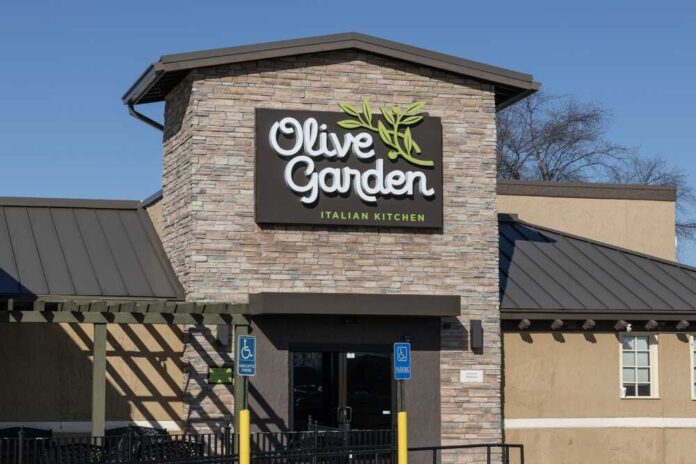
Olive Garden’s Menu Shift Sparks Consumer Interest
As everyday Americans still battle the sting of Biden-era inflation, Olive Garden’s new “lighter portions” menu quietly exposes how shrinking dollars are reshaping how families eat out.
Story Snapshot
Olive Garden will roll out a permanent lighter portions menu nationwide in January 2026.
Smaller servings at lower prices aim to appeal to cost-conscious diners squeezed by years of inflation.
Darden says test locations saw higher visit frequency and stronger “affordability” perceptions.
The new menu adds options without officially removing existing full-size entrées.
Olive Garden Bets Smaller Portions Will Bring Back Price-Weary Diners
Olive Garden’s parent company, Darden Restaurants, announced that a new lighter portion entrées menu will launch at every Olive Garden nationwide in January 2026, after testing it at roughly 40% of locations earlier this year. The chain is not inventing new dishes but resizing seven existing favorites into smaller, lower-priced options. Executives say the test produced strong results, convincing them to accelerate what was originally planned as a slower, phased rollout over an entire fiscal year.
Darden CEO Rick Cardenas told investors that guests who ordered from the lighter portions menu reported a double-digit improvement in how affordable they felt Olive Garden was, and those guests came back more often. That change in behavior mattered enough that the company decided to move faster than expected and make the menu national by January 2026 instead of stretching it into the following fiscal year. For families watching every dollar, restaurant leaders clearly see value signaling as a competitive weapon.
What “Lighter Portions” Really Mean For Families Watching Their Wallets
The lighter portions menu takes seven familiar entrées—Chicken Parmigiana, Eggplant Parmigiana, Lasagna Classico, Five Cheese Ziti al Forno, Cheese Ravioli, Spaghetti & Meatballs, and Fettuccine Alfredo—and offers them in reduced sizes at lower prices. Darden says these items will generally run between $12.99 and $13.99, with modest variation by market. The company stresses that nothing is being removed from the existing menu, calling these entrées an additional option instead of a replacement for full-size plates.
For conservative diners who remember pre-inflation price boards, this shift is a snapshot of how the restaurant industry is adjusting to years of rising costs driven by labor, food, and regulatory pressures. Rather than slashing base menu prices outright, Olive Garden is creating a lower-cost tier through portion control, hoping customers accept less food as a fair trade for a visibly smaller bill. That approach mirrors a broader “shrink and reprice” trend, where quantity quietly moves to absorb economic damage that government policy helped unleash.
Inflation Hangover: How Biden-Era Economics Show Up On Your Dinner Plate
During the Biden years, many families saw grocery and restaurant tabs climb faster than their paychecks, forcing trade-offs on everything from date nights to Sunday dinners out. Olive Garden’s own language about improved “affordability perceptions” reflects how sensitive Americans remain to menu prices after that period of aggressive fiscal spending and regulation. When a major national chain openly celebrates guests feeling a place is affordable again, it underscores how far consumer confidence had slipped and how hard brands now work to win it back.
Smaller, cheaper entrées allow Olive Garden to meet those wounded expectations without surrendering entirely to discounting that would crush margins. For value-conscious conservatives, the move may be welcome simply because it gives more flexible choices: a lighter, less expensive meal for seniors, or a way for parents to trim the bill while still taking the family out. Yet the fact this is necessary at all is a reminder that Washington’s mismanagement does not land in abstract charts; it lands in portion sizes, price points, and how often ordinary people feel they can afford to sit down at a restaurant.
Portion Control, Personal Responsibility, And The Culture Around Eating Out
The lighter portions rollout also lands in a culture conversation about health, waste, and personal responsibility. Conservative households often value stewardship—of bodies, budgets, and blessings—and oversized restaurant meals have long tempted people to overspend and overeat. Smaller, clearly labeled options can help someone stay within a budget or calorie target without feeling forced into kids’ meals or splitting plates. When restaurants provide transparent choices instead of top-down mandates, they respect individual judgment rather than pushing a one-size-fits-all agenda.
For many readers, this change will likely feel like a mixed bag: a welcome way to stretch dollars and avoid waste, but also another visible marker of how far the cost of living drifted during years of left-of-center economic policy. In Trump’s renewed pro-growth, pro-energy, anti-regulation environment, companies may finally get relief on the cost side. Until that reality fully reaches the dinner table, however, Americans will continue seeing the inflation legacy in places as ordinary—and as personal—as their plate of chicken parm.