

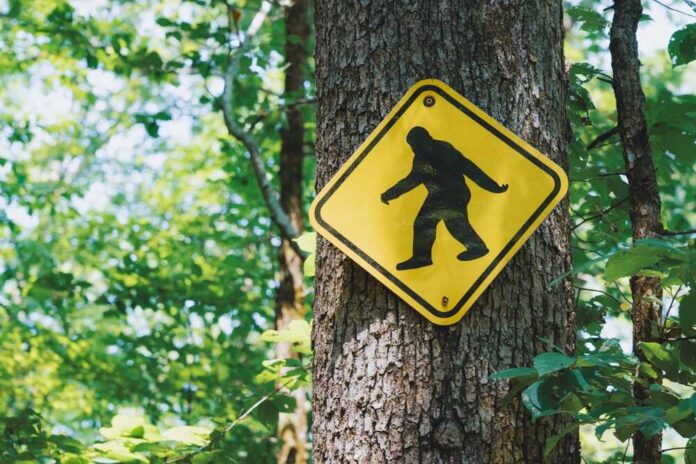
The federal government just opened a Bigfoot file drawer and, yes, it holds a 1982 field investigation by the U.S. Forest Service.
At a Glance
- The U.S. Forest Service posted a “Bigfoot/Sasquatch Records” collection in its Freedom of Information Act Reading Room.
- The files include a June 18, 1982 memo from Umatilla National Forest on alleged tracks near the Mill Creek watershed.
- The investigator documented prints, casts, and location details; the memo cautions against jumping to creature claims.
- The release is archival disclosure, not proof of a new species; it shows how federal staff document unusual reports.
A formal file on folklore: what Washington state rangers wrote down
The U.S. Forest Service uploaded a records set titled “Bigfoot/Sasquatch Records,” dated October 15, 2026, to its Freedom of Information Act Reading Room. The listing includes three files, including a June 18, 1982 memorandum from the Umatilla National Forest. The memo documents an on-the-ground review of alleged tracks reported in the Mill Creek watershed, along Washington’s Blue Mountain fringe. The reading room publishes records already cleared for the public, so people can see them without filing a request.
The 1982 memo carries the subject line “Documentation of Investigation into Sighting of ‘Bigfoot’ Tracks in the Mill Creek Watershed.” It bears the header of the U.S. Department of Agriculture and the Umatilla National Forest, with a memo number in the wildlife series. The report describes multiple footprints, their sizes, the substrate, and how the impressions appeared in sequence. It notes plaster casts and photographs. It logs the location details a wildlife professional would capture in any unusual track report.
What the 1982 field notes actually conclude
The investigator’s notes read like standard wildlife practice. The memo weighs the depth of the prints, stride length, and how the tracks interacted with ground cover. It compares the weight that might make such depressions to known animals in the area. The concluding lines say the principal track line did not match a being over a few hundred pounds walking upright without aid. The tone is measured, not mocking, and it urges caution on exotic claims without firm physical evidence.
The broader context matters. The Forest Service’s Freedom of Information Act pages explain that the law gives the public a right to agency records and that the agency posts significant records online to reduce guesswork and delay. This release fits that mission: it does not endorse a Bigfoot theory. It opens older files so citizens can read what rangers saw, wrote, and preserved at the time. That transparency aligns with common sense and with a government that serves its citizens instead of hoarding public records.
Why this archive hits a cultural nerve
Bigfoot sits at a strange crossroads of campfire tale, pop culture, and weekend science. People have chased it for decades, yet the scientific bar has not been cleared. Articles that survey the evidence note that no verified body, bone, or clear DNA has turned up that proves a large, unknown primate lives in North America. That does not stop people from looking, but it does set the frame for what a 1982 memo can and cannot do. A memo can document claims and method, not settle a species debate.
TRUMP ADMINISTRATION QUIETLY RELEASES GOVERNMENT BIGFOOT / SASQUATCH FILES
Well, this wasn’t on my 2026 bingo card!
On October 15, the U.S. Forest Service quietly published three historical government files documenting alleged Bigfoot encounters and investigations dating back… pic.twitter.com/TuU8R4ThlA
— Paul White Gold Eagle (@PaulGoldEagle) November 23, 2026
This release will draw readers because it makes the hunt tangible. You can see what a trained land steward did with a hot tip: visit the site, mark the map, cast the track, and write the facts as they appear. That discipline is the unsung virtue in odd cases. It protects wildlife from rumor-driven pressure, and it protects the public from tall tales sold as science. It also reminds us that good government work is often quiet, careful, and in the daylight.
What comes next and what not to expect
Do not expect a federal proclamation about a new ape in the pines. Expect more archival uploads as staff process older records for public view. That process follows the law and helps researchers, journalists, and curious citizens. If a future file held hard biological proof, it would move fast through state and federal wildlife channels. This file does not do that. It shows due diligence in 1982 and how the Forest Service now shares that history under the Freedom of Information Act.