The most advanced missile Russia has ever fired at Ukraine was not really about the battlefield at all—it was about sending a strategic message that nobody could ignore.
Story Snapshot
- Russia folded a nuclear-capable hypersonic missile into one of its largest mixed drone-and-missile barrages of the war, hammering Kyiv and nearby areas.
- Ukrainian and Western outlets say the Oreshnik (often misnamed) has been used only three times, but each shot is theater as much as warfare.[1][3][4]
- Moscow calls the strike “retaliation” for Ukrainian attacks, while Kyiv and European leaders frame it as reckless nuclear saber-rattling.[1][2]
- For all the hype about “unstoppable” hypersonics, the real power here lies in psychology, not physics—and that matters for American security thinking.
How the Kyiv hypersonic strike actually unfolded
Russia did not just launch a single wonder-weapon; it unleashed a saturation attack designed to swamp every radar screen in and around Kyiv.
Ukraine’s Air Force reports roughly 90 missiles and about 600 drones launched in the hours-long overnight barrage, one of the heaviest assaults on the capital since the war began.[1][3][4]
Shopping centers, apartment blocks, government buildings, and even water infrastructure were hit, with several people killed and many more wounded.[1][2][3]
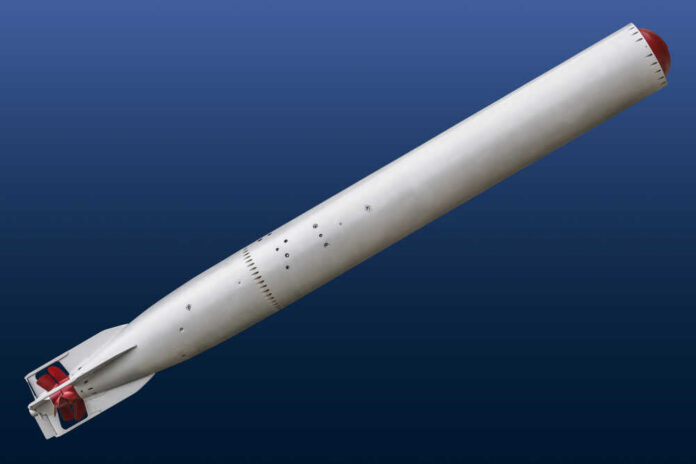
Amid that chaos, Russian forces fired what Western and Ukrainian reporting call the Oreshnik, described as an intermediate-range hypersonic ballistic missile capable of carrying a nuclear warhead.[1][2][3][4]
Video from near Bila Tserkva, south of Kyiv, shows the moment one such missile, or its re-entry vehicle, slams in at extraordinary speed, with little warning and enormous kinetic impact.[4]
Ukrainian authorities and multiple outlets say this was only the third recorded use of this system in the war, following earlier strikes near Dnipro and Lviv.[1][3][4]
Why this particular missile matters so much
Hypersonic in this context means speeds on the order of ten to eleven times the speed of sound, combined with some ability to maneuver in the upper atmosphere rather than following a purely predictable ballistic arc.[1][3][4]
Analysts note that the Oreshnik can carry a 300–400-kilogram payload and is designed primarily as a nuclear delivery system, not a conventional precision weapon.[1][4]
Some reporting even suggests Russia may have used inert or minimal warheads in earlier shots, relying on sheer velocity to cause damage.[4]
Russia uses hypersonic Oreshnik missile in mass attack on Kyiv https://t.co/1uODtIX6Pt
— The Washington Times (@WashTimes) May 24, 2026
This is why European leaders reacted so sharply. Public condemnation focused less on the body count—tragic but not unprecedented in this war—and more on the symbolism of firing a nuclear-capable hypersonic missile at or near a European capital.[1][2][4]
It looks like a live-fire demo for NATO as much as punishment for Ukraine. A grounded in deterrence and peace through strength, that is exactly the kind of capability you take seriously long before it is pointed anywhere near your own cities.
Two competing stories: retaliation or escalation?
Moscow insists the mass strike was retaliation for Ukrainian attacks on “civilian facilities” in Russian territory, especially a deadly hit on a student dormitory at a college in Russian-occupied Luhansk.[1][3]
Kyiv denies targeting civilians and says it struck a military drone unit instead.[1] This split narrative is textbook wartime information warfare: Russia frames itself as responding to Ukrainian “terror”; Ukraine presents the attack as criminal escalation using a quasi-strategic weapon against a capital city.[1][2][3][4]
What stands out is what Russia does not do. In the available reporting, Russian officials do not explicitly deny using the Oreshnik; some summaries say Moscow actually confirmed its use as part of the overnight barrage.[1][2]
The Kremlin argues about motive, not about the missile. That silence on the technical point matters. When an accused power admits to the class of weapon but quibbles only over justification, it signals that the capability itself is part of the message.
The fog around “Oreshnik” and why that ambiguity is dangerous
The record, however, is far from crystal clear. Different outlets and transcripts refer to the weapon as Oreshnik, Archnik, Arashnik, and even assign it the designation 9M723, a number associated with the Iskander family of missiles.[1][3][4]
That kind of naming chaos usually means reporters are chasing a mix of translation glitches, codenames, and perhaps Russian efforts to keep exact specifications muddy.
No public debris analysis, serial numbers, or detailed radar plots have been released to tie the Kyiv-area impact definitively to a single cataloged missile variant.[1][3][4]
BREAKING:
Russia Confirms Use of Oreshnik Hypersonic Missiles in Ukraine AttackBila Tserkva, Ukraine — In a striking display of military technology, Russia has officially confirmed the deployment of Oreshnik hypersonic missiles in an attack on a Ukrainian military airfield… pic.twitter.com/EuYXXgNfWu
— the FlyingDutchmen🇳🇱🇵🇭🇷🇺🇭🇺🇷🇺 🇨🇳 (@GerritdeH) May 25, 2026
This is where the average news consumer gets whiplash. One clip says “missile nobody can stop”; another points out that United States systems like Ground-based Midcourse Defense might well handle such a threat; and Ukrainian sources quietly note they have shot down some hypersonic-class missiles with Western air defenses.[4]
The most sensible reading, aligned with skepticism, is that both sides are spinning. The missile is real and dangerous; “unstoppable” is marketing, not physics.
What this episode really signals for the West
For Ukraine, the Oreshnik strike underscores how hard it is to defend a modern city when the attacker combines cheap drones, legacy cruise missiles, and a few exotic high-end systems in the same wave. Saturation, not novelty, is what overwhelms air defenses.[1][3][4]
For Russia, every hypersonic launch doubles as a strategic advertisement: to domestic audiences, proof of technological prowess; to Western capitals, a reminder that Moscow can reach out and touch targets that matter.
The Kyiv barrage shows how a country willing to ignore civilian risk can blend advanced missiles with massed low-cost systems to stress even sophisticated defenses.[1][3][4]
That is not some distant European problem. It is a preview of the kind of layered threat American planners must assume—and be ready to beat—before the next crisis arrives.
Sources:
[1] YouTube – At least 4 dead after Russia fires hypersonic Oreshnik …
[2] YouTube – Russia’s deploys Oreshnik hypersonic missiles on deadly …
[3] YouTube – Russia hits Kyiv with hypersonic missile in massive assault
[4] YouTube – Russia condemned for using Oreshnik hypersonic missile …