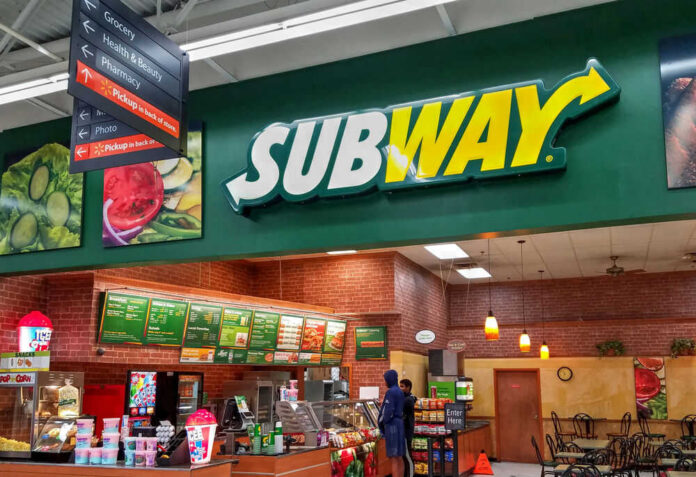
Subway hemorrhaged 729 U.S. stores in 2025—the sandwich giant’s worst single-year bloodletting on record—yet somehow posted its highest net income in years, exposing a jarring paradox that should worry every franchise investor in America.
Story Snapshot
- Subway shuttered a net 729 U.S. locations in 2025, dropping below 19,000 total stores from over 27,000 at its 2015 peak
- Franchise revenue fell over 6 percent to $767 million, while net income mysteriously surged to $688 million despite the carnage
- Average store sales languish near $500,000 annually—crushing franchisee margins and triggering a silent bankruptcy wave across the system
- Over 800 stores sat temporarily shuttered on December 31, 2025, many awaiting cosmetic reopenings to pad future “new location” statistics
- The chain has evaporated 7,600 locations since 2015, equivalent to deleting Taco Bell’s entire footprint from the American landscape
The Profitability Paradox Nobody Saw Coming
Subway’s 2025 franchise disclosure filing tells two contradictory stories. The chain closed stores at a historic pace—729 net closures after accounting for 499 openings, half of which simply reopened previously shuttered locations. Yet corporate net income rocketed from $15 million in 2023 to $688 million in 2025.
The math reveals an uncomfortable truth: Subway profits by shrinking, slashing costs faster than revenue declines. For corporate executives in Miami, fewer stores mean streamlined operations and fatter margins. For franchisees stuck with $500,000 average unit volumes—a figure that barely covers rent, labor, and royalties in most markets—the model bleeds red ink daily.
Subway is continuing to shrink its U.S. footprint, closing a net 729 locations in 2025 — its steepest decline in years. https://t.co/BkK2cLi3WN
— KTVU (@KTVU) May 7, 2026
How Greed Built a House of Cards
The chain’s implosion traces directly to decisions made when Subway chased McDonald’s crown through raw store count. By 2015, Subway had crammed 27,100 locations into U.S. markets, often planting stores mere blocks apart in a cannibalization frenzy that destroyed individual unit economics.
Franchisees paid fees to compete against themselves while corporate collected royalties from both sides. The infamous $5 footlong promotion, which ran from 2008 to 2018, cemented customer expectations of rock-bottom pricing that franchisees couldn’t sustain.
Outdated stores with 1990s decor and stale menus completed the recipe for disaster, leaving operators trapped in unprofitable leases with no viable exit strategy.
The Closure Iceberg Media Won’t Show You
News outlets consistently report net closures—the difference between openings and shutdowns—masking the true devastation. Detailed analysis of Subway’s franchise disclosure documents reveals gross closures likely exceeded 1,000 annually in recent years, meaning the chain actually lost 11,000 to 12,000 locations since 2015 when accounting for simultaneous openings.
The 2025 filing showed 800 stores in temporary closure status on year-end, a category that allows Subway to count eventual reopenings as “new” locations despite serving the same neighborhoods. California, Florida, and New York absorbed the heaviest damage from 2022 to 2024, shedding a combined 1,645 locations as franchisees in high-cost states faced impossible economics first.
Why Your Local Subway Keeps Disappearing
Franchise advisor Robert Edwards warns the closure spiral creates “baggage” that poisons franchisee recruitment and brand perception. Each shuttered location signals to potential investors that the model doesn’t work, making Subway’s goal of 100 new openings in 2026 increasingly fantastical.
The chain still holds the title of America’s largest restaurant chain by unit count, surpassing even Starbucks, but that crown means nothing when average sales lag competitors by hundreds of thousands of dollars per location.
Jersey Mike’s and Jimmy John’s steadily capture market share with higher unit volumes and better franchisee economics, leaving Subway to tout “data-driven optimization” while the foundation crumbles. The temporary closure tactic—800 stores in limbo—suggests corporate desperation to show growth on paper while the actual network contracts.
Subway closed over 700 US stores as franchise model faces strain https://t.co/brSHxwYTlQ
— FOX Business (@FoxBusiness) May 6, 2026
Subway’s “Fresh Forward” redesign initiative and promises of strategic relocations ring hollow when the fundamental problem remains unaddressed: franchise operators cannot make money at current sales levels. The corporate income surge proves the franchisor can thrive by extracting maximum value from a shrinking base, but that extraction accelerates franchisee exits.
This death spiral—profitable for corporate, catastrophic for operators—illustrates everything wrong with modern franchise models that prioritize growth metrics over unit-level profitability. The 93 franchise agreements signed for 2026 openings look less like recovery and more like finding the last few investors who haven’t checked the disclosure documents closely enough.
Sources:
Subway closed over 700 US stores as franchise model faces strain – Fox Business
Subway closed more than 500 US stores in 2022: report – Fox Business
Subway closed 600 locations last year, 7,600 since 2015: report – LiveNOW from FOX
Subway closures: US stores drop below 20,000 for first time in 20 years – Business Insider
Subway Has Closed 1,645 Locations: See Which States Lost the Most – Cheapism