
President Trump’s newly announced designation of Antifa as a “major terrorist organization” signals a decisive federal crackdown on what many see as a threat to American law and order.
Story Highlights
- President Trump moves to designate Antifa a “major terrorist organization,” marking a historic escalation in federal response to left-wing unrest.
- Antifa’s decentralized, leaderless structure complicates enforcement.
- Recent convictions of anti-fascist activists for conspiracy to riot against Trump supporters fuel calls for stricter action and legal classification.
- Experts and civil rights advocates question the legality and effectiveness of labeling Antifa as a terrorist group under current U.S. law.
Trump Administration Targets Antifa with Terrorist Designation
On the heels of rising unrest and violent demonstrations linked to Antifa, President Trump has formally announced plans to designate the group a “major terrorist organization.”
This bold move reflects Trump’s ongoing focus on restoring order and protecting Americans from what he calls “sick, dangerous” extremist elements that threaten the nation’s constitutional values.
The decision follows recent high-profile convictions of anti-fascist activists for conspiracy to riot against Trump supporters, amplifying conservative demands for tougher enforcement and accountability for left-wing violence.
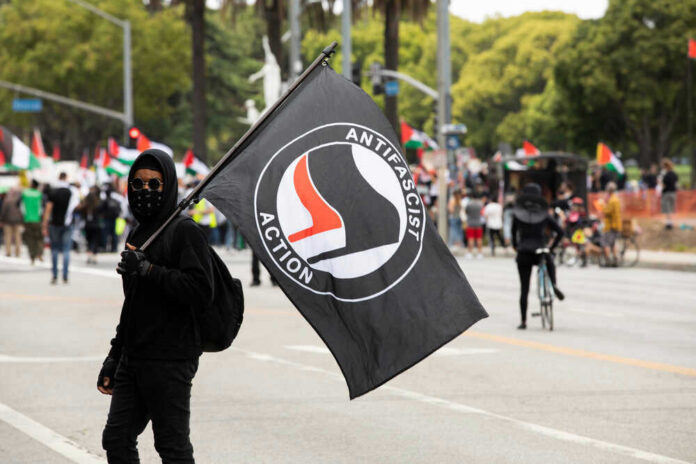
Antifa, short for “anti-fascist,” is not a traditional organization but rather a loosely connected network of activists known for disruptive tactics at political events, property damage, and direct clashes with law enforcement. Its members, often dressed in black and concealing their identities, have been a visible presence at protests since the mid-2010s.
The group’s decentralized, non-hierarchical structure presents unique challenges for law enforcement, as there is no formal leadership to target or negotiate with. The Trump administration’s approach aims to treat Antifa’s collective activities as terrorism, raising serious questions about how such a designation will be enforced in practice.
Trump announces ‘sick, dangerous’ Antifa will be designated ‘a major terrorist organization’ https://t.co/culKVKPNrY pic.twitter.com/9YmHfuPrbc
— New York Post (@nypost) September 18, 2025
Legal and Constitutional Controversies Surrounding the Move
The push to define Antifa as a terrorist organization has ignited fierce debate among legal experts and civil liberties advocates. Critics argue that U.S. law does not currently allow for the designation of domestic groups as terrorist organizations in the same manner as foreign entities. This limitation may set up a prolonged legal battle over the First Amendment, as many fear the move could chill protected speech and protest activities.
Supporters counter that Antifa’s pattern of violence, property destruction, and direct threats to public safety demand extraordinary measures to uphold law and order, particularly as past policies have failed to curb street-level unrest.
Recent legal outcomes further highlight the tensions at play. In 2024, two anti-fascist activists were convicted of conspiracy to riot against Trump supporters, each receiving two-year prison sentences. These convictions underscore a growing judicial willingness to prosecute violent protestors, but they also fuel concerns about selective enforcement and government overreach. As the Trump administration ramps up its crackdown, the courts are likely to serve as a key battleground in defining the line between legitimate protest and criminal conspiracy.
Impact on Political Discourse and Law Enforcement Strategy
Designating Antifa as a terrorist organization is expected to reshape both political discourse and law enforcement tactics nationwide. For Trump supporters and many conservatives, the announcement delivers on campaign promises to restore order and confront what they see as the excesses of the previous administration’s lenience toward “woke” activism and lawlessness.
Law enforcement agencies may receive expanded powers and resources to investigate, disrupt, and prosecute Antifa-affiliated activities, though the decentralized nature of the movement will likely complicate these efforts.
At the same time, the designation risks deepening polarization and fueling further unrest in urban centers where Antifa has traditionally operated. Media coverage and political rhetoric will likely intensify, with each side invoking constitutional principles—security versus liberty—to rally their respective bases.
The ultimate effectiveness of Trump’s move will depend on the courts, the resilience of Antifa’s network, and the American public’s appetite for balancing safety with fundamental freedoms.