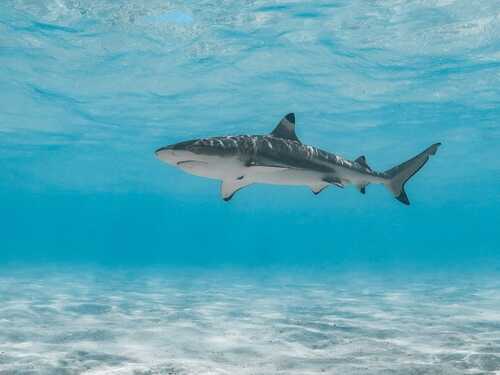
A massive 1,700-pound great white shark named Contender has surfaced just 45 miles off North Carolina’s coast, reminding coastal families of nature’s raw power amid President Trump’s renewed focus on securing American borders from all threats.
Story Snapshot
- Contender, a 13.8-foot mature male great white, pinged 45 miles southeast of Cape Fear on February 9, 2026, after tagging in January 2025.
- Multiple sharks, including Nori, Cayo, and Jason, were detected nearby, signaling heavy winter activity along southeastern U.S. waters.
- OCEARCH’s satellite tracking reveals predictable migrations, aiding conservation without government overreach into private coastal lives.
- Coastal communities gain vital awareness of safety, fishing, and tourism in an era that prioritizes American sovereignty.
Contender’s Detection Details
OCEARCH detected Contender 45 miles southeast of Cape Fear near Wilmington, North Carolina. This 1,700-pound, 13.8-foot mature male great white shark was tagged in January 2025.
After months in Florida waters, he migrated northward along the Atlantic coast. The ping confirms his position in this intermediate winter zone.
Real-time data from his dorsal fin tag supports ongoing migration studies. Coastal residents monitor these updates for family safety during recreational activities.
Record-setting great white shark spotted off North Carolina coast https://t.co/w8AOkISty4 pic.twitter.com/yijg1ME34q
— New York Post (@nypost) February 12, 2026
Cluster of Sharks in the Region
Several tagged great whites appeared simultaneously near Cape Fear. Nori, a juvenile female, pinged 36 miles east on February 8. Cayo, another juvenile female, surfaced 67 miles southeast that Saturday. Jason, a subadult male, was detected 32 miles south in early February.
Three more sharks pinged near Charleston. This concentration highlights winter patterns along the southeastern coast. OCEARCH’s network tracks these movements precisely. Fishermen and beachgoers adjust plans based on public data, preserving local economies without federal mandates.
Tracking Technology and Limitations
OCEARCH attaches satellite-linked tags to sharks’ dorsal fins for real-time data collection. Senior Data Scientist John Tyminski explains that transmissions occur when sharks surface during Argos satellite passes, lasting about 13 minutes.
Multiple messages confirm locations; single “Z-pings” offer less precision. The contender’s tag has functioned for years, with data accessible online.
This non-intrusive method advances science. Americans value such innovation that informs without infringing on Second Amendment-backed self-reliance or coastal freedoms.
Great white sharks follow seasonal migrations, heading south for winter after northern summers rich in prey near Maine and Canada. North Carolina serves as a key corridor.
OCEARCH emphasizes conservation through knowledge, not restrictions. Public awareness influences short-term recreation and fishing. Long-term datasets shape ocean management without eroding individual liberties.
1,700-pound great white shark named Contender spotted off North Carolina coast. https://t.co/XIZBhzkPpt
— CBS News (@CBSNews) February 12, 2026
Impacts on Coastal Communities
Residents of North Carolina and South Carolina receive direct shark location alerts. Commercial fishing operations review data to avoid encounters. Recreational boaters and swimmers prioritize vigilance. The tourism sector balances safety messaging with economic vitality.
Research benefits marine ecosystems broadly. In President Trump’s America, strong borders extend to ocean stewardship—protecting citizens from unseen dangers while rejecting wasteful globalist overregulation. Families stay informed, upholding self-defense and traditional values.
Sources:
CBS News: OCEARCH shark Contender off North Carolina coast
OCEARCH Official Tracker: Contender