
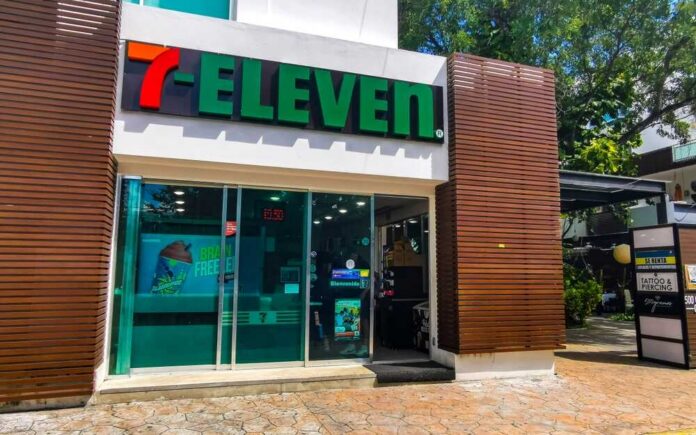
7-Eleven’s bold plan to shutter 645 North American stores in 2026 reveals a convenience empire fighting for survival amid vanishing foot traffic and vanishing cigarette sales.
Story Snapshot
- Seven & i Holdings announces 645 closures and 205 openings for FY2026, resulting in a net reduction of 12,272 stores from over 13,000.
- Fifth straight year of net reductions targets underperforming sites, converting some to fuel outlets.
- Strategy counters declining traffic, inflation, and consumer shifts toward food-focused hybrids.
- Preceded by 444 closures in 2024 and more in 2025, totaling over 600 in two years.
- Prepares for a 2027 IPO with remodels that emphasize prepared foods over traditional snacks.
Announcement Details from Seven & i Holdings
Seven & i Holdings released its FY2025 Brief Summary on April 9, 2026, detailing 645 North American 7-Eleven closures for fiscal 2026, spanning March 1, 2026, to February 28, 2027. The company targets underperforming locations plagued by weaker customer traffic and sales declines.
Some sites convert to wholesale fuel stores and are excluded from retail counts. Meanwhile, 205 new stores will open, yielding a net drop to 12,272 locations.
Historical Roots and Recent Struggles
7-Eleven launched in 1927 Texas as a pioneering convenience chain, now boasting over 86,000 global stores across 19 countries. North America holds over 13,000, but performance softened.
Customer traffic plunged due to inflation and behavior shifts away from impulse buys like tobacco, once a top category, down 26% since 2019. The chain closed 444 U.S. and Canadian stores in 2024 alone, part of over 600 stores closed in 2024-2025.
7-ELEVEN CLOSING STORES | The shift reflects a broader trend in the convenience store industry.https://t.co/XvELdksBh2
— WPEC CBS12 News (@CBS12) April 15, 2026
Strategic Shift to Food-Centric Model
Executives at Seven & i drive portfolio optimization, pruning weak performers while expanding food offerings. New large-format stores feature expanded kitchens, seating, and prepared meals, mimicking Wawa and Sheetz’s successes.
This hybrid model—convenience plus restaurant—addresses sector growth in beverages and foods. Closures outpace openings for the fifth year, with annual nets favoring reductions despite 122-315 new builds previously.
Franchisees and employees face job uncertainty, especially in low-traffic rural or urban spots. No specific locations were disclosed, leaving communities guessing about access disruptions. This common-sense retrenchment aligns with conservative fiscal discipline: cut losses to strengthen the core before a potential 2027 IPO.
Popular convenience store chain to close hundreds of stores https://t.co/UOCSukPkEm
— FOX Business (@FoxBusiness) April 15, 2026
Industry Expert Views on Transformation
eMarketer analyst Blake Doersch calls it a transformation from pure convenience to stores plus food service and grocery. Convenience Store Dive highlights the record 645 as optimization amid demands.
Consensus views strategic pruning as essential evolution, not retreat—closures exceed openings to boost profitability. Broader retail mirrors this, from Papa John’s to Walmart’s adaptations, signaling hybrid futures over outdated formats.
Short-Term Pain and Long-Term Gains
Job losses and local disruptions hit immediately, straining economies reliant on these outposts. Long-term, a leaner network hones high-performers, fortifying IPO readiness.
Underperforming sites in fading areas bear the brunt, preserving viable ones. This pragmatic approach reflects American values of efficiency and adaptation, rejecting bailouts in favor of market-driven renewal.
Sources:
Popular convenience store chain to close hundreds of stores
7-Eleven closing 645 stores in 2026
Iconic convenience store chain to shut down 600 locations in 2026