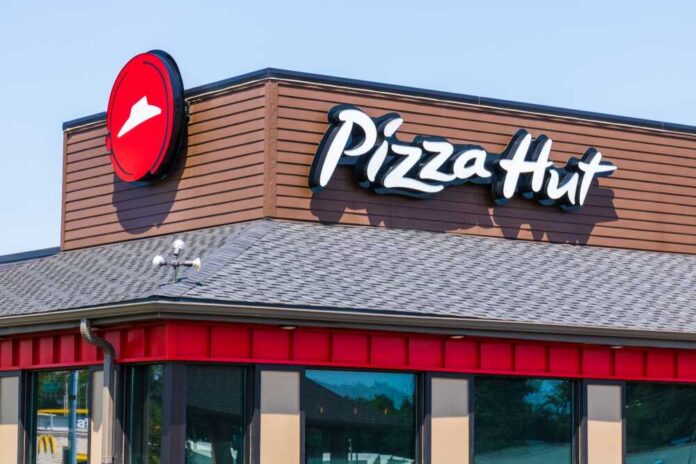
Yum Brands just sold Pizza Hut for $2.7 billion and quietly turned the page on an entire era of American fast food.
Story Snapshot
- Pizza Hut is leaving Yum’s portfolio after nearly three decades together in a $2.7 billion split-sale.
- Taco Bell and KFC are now the clear stars, with stronger sales momentum and more room to grow.
- Yum plans to turn about $2.3 billion in cash into buybacks and a tighter, higher-growth empire.
- The deal shows how big food giants “prune” slow brands to protect shareholders in a tougher market.
Pizza Hut’s long slide finally forced a decision
Yum Brands did not wake up one June morning and suddenly decide to dump Pizza Hut. The company launched a formal review of “strategic options” for the brand back in November 2025, after years of weaker sales and missed expectations.[9]
Management told investors then that Pizza Hut’s full potential might be better reached outside Yum, which is polite corporate code for: this chain is dragging down the rest of the portfolio.[11] For a legacy brand with deep nostalgia, that is a harsh reality check.
Yum Brands sells Pizza Hut for $2.7B, sharpens focus on Taco Bell and KFC https://t.co/xUPWRZPe2S
— FOX Business (@FoxBusiness) June 17, 2026
While Pizza Hut was slipping, its siblings were pulling ahead. Same-store sales at Taco Bell and KFC were growing while Pizza Hut’s comparable sales fell quarter after quarter.[9]
A pizza category hangover after the pandemic, more cost-conscious diners, and fierce competition from rivals like Domino’s all hit at once.
At some point, keeping the brand in-house became less about loyalty and more about opportunity cost. Every dollar stuck in a laggard brand is a dollar not working in a winner.
The $2.7 billion break-up and how it is structured
The sale itself is not one clean handoff; it is two coordinated deals that split Pizza Hut along geographic lines.
Yum Brands agreed to sell Pizza Hut’s operations outside mainland China to LongRange Capital, a private equity firm, for about $1.5 billion, with a possible extra $75 million earn-out if targets are hit by 2030.[1]
At the same time, Yum China will buy the Pizza Hut China business for roughly $1.2 billion, keeping it under a familiar regional owner that already runs KFC in that market.[6]
Across both pieces, the headline price comes to $2.7 billion, but what really matters to shareholders is the cash that stays in the door. Yum says it expects to net around $2.3 billion after taxes, adjustments, and transaction fees, not counting the earn-out.[6]
The company also flagged about $85 million in one-time separation costs to fully carve out Pizza Hut from the system.[1] That is real money, but on balance, it is a modest price to pay to reset a global portfolio the size of Yum’s.
Sharpening the bet on Taco Bell and KFC
Yum’s press language stresses “portfolio optimization,” but the market translation is simpler: lean into the brands that still grow. Analysts have long viewed Taco Bell as Yum’s crown jewel, with strong same-store sales and a knack for low-cost menu stunts that drive traffic.[5]
Chicken-focused chains are also among the fastest-growing fast-food segments, which puts KFC in a stronger lane than a struggling pizza category, weighed down by changing tastes and weight-loss drug trends.[21]
The board’s capital moves underline that focus. Alongside approving the Pizza Hut sale, directors authorized an extra $4 billion stock buyback program, signaling confidence that a Taco Bell–KFC–Habit core can support higher returns.[4]
Critics may grumble that $2.7 billion is a low price for such an iconic brand, but buybacks at least send the proceeds straight to owners instead of chasing another risky acquisition. In a choppy consumer market, rewarding existing shareholders is hardly reckless.
What changes for Pizza Hut and for everyday diners
Under LongRange Capital, Pizza Hut outside China will no longer share a parent with KFC buckets and Taco Bell tacos. For now, it will continue to use Yum’s Byte technology platform during a transition period, which should limit short-term disruption for franchisees and customers.[8] But private equity firms do not buy sleepy brands for fun.
They buy them to squeeze higher returns, often with sharper cost cuts, menu simplification, and aggressive digital ordering pushes. Expect less sentiment and more spreadsheets in the years ahead.
Yum Brands, a Louisville, Kentucky-based fast food conglomerate, has agreed to sell Pizza Hut for $2.7 billion. Here's what the sale means. https://t.co/sKKnobjYZ2
— HutchNews (@HutchNews) June 17, 2026
For diners, the split will feel more symbolic than practical at first. Your local Pizza Hut will still sell pies, your KFC will still sell chicken, and your Taco Bell will still sell late-night “fourth meal” experiments. The real story plays out behind the scenes. Yum now runs a tighter lineup, more in sync with where the fast-food growth is going.
Pizza Hut heads into a turnaround lab run by investors who answer to their own funds, not to public markets. That quiet shift tells you how the modern food empire really works.
Sources:
[1] Web – Yum Brands sells Pizza Hut for $2.7B, sharpens focus on Taco Bell and …
[4] Web – Yum! Brands Agrees to Sell Pizza Hut for $2.7 Billion – QSR Magazine
[5] Web – Pizza Hut sale: Yum! Brands selling restaurant chain in $2.7 billion …
[6] X – Yum Brands to Sell Pizza Hut for $2.7 Billion
[8] Web – Yum! Brands Inc. initiates review of strategic options for Pizza Hut …
[9] Web – Yum Brands begins strategic review for struggling Pizza Hut chain
[11] Web – Yum Brands begins strategic review for struggling Pizza Hut chain
[21] Web – The Fast Food Industry in America | Market Overview & Insights