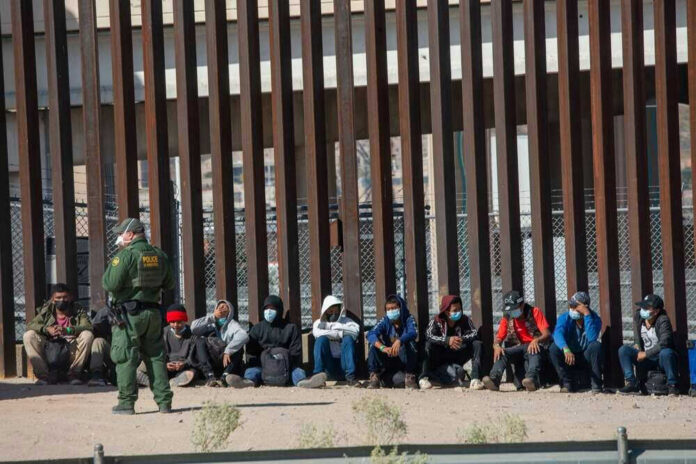
Federal immigration agents booked more than 43,000 people into detention in June, marking the largest monthly enforcement push since President Trump returned to the White House and underscoring a major shift toward interior arrests.
Story Snapshot
- ICE made 43,138 arrests in June, the highest monthly total so far in Trump’s second term.
- More than 10,000 people were arrested in the final five days of June alone, after leaders ordered a clampdown.
- Detention numbers climbed above 65,000 in mid-July, showing the system can now hold far more people.
- Critics say many detainees have no criminal record, raising questions about arrest priorities and transparency.
Record ICE Arrests Under Trump’s Second-Term Crackdown
Newly released Immigration and Customs Enforcement data show **43,138 arrests in June 2026**, the most in any month since President Trump began his second-term immigration crackdown.
That figure averages more than 1,400 arrests per day and tops earlier 2026 levels, confirming a clear escalation in enforcement activity across the country.
The numbers come after months of rising interior operations, where agents focus on people already living inside the United States, not just new border crossers.
Reports from major outlets describe the June surge as part of a broader campaign of mass deportations promised during Trump’s return to office.
Immigration and Customs Enforcement leaders, backed by a sharply higher Department of Homeland Security budget, have steadily expanded arrest teams and detention capacity, giving the agency more room to hold and move people through the removal pipeline.
More than 43,000 people were booked into immigration detention in June, the highest monthly total since President Trump returned to office, newly released Immigration and Customs Enforcement data shows. https://t.co/dIl2d71cj4
— CBS News (@CBSNews) July 22, 2026
Late-June Clampdown: 10,000 Arrests in Five Days
Documents reviewed by one national newspaper show Immigration and Customs Enforcement leaders ordered top officials to shift more officers into arrest operations at the end of June, targeting people they “want to deport.”
In those final five days of the month, agents detained more than 10,000 people nationwide, roughly double the pace seen earlier in the year.
Officers carried out arrests at immigration check-ins, during traffic stops, and on city streets, reflecting a broad interior clampdown rather than a narrow border push.
Other reporting says the White House had pressed Immigration and Customs Enforcement to aim for roughly 2,000 arrests per day, turning daily enforcement numbers into a key performance benchmark. The June totals show the agency came close to that target, especially in the late-month window.
For readers who support firm immigration rules and expect existing deportation orders to be enforced, that kind of focused surge can look like long-delayed follow-through on the rule of law. But it also raises questions about how agents choose targets when numbers become the main goal.
Detention Capacity Hits New Highs
Alongside the arrest surge, detention levels rose sharply. One analysis of Immigration and Customs Enforcement data found the agency held about 59,400 people on an average day in June, then more than 65,700 people by July 11.
Those totals are just below a January peak of more than 70,000 detainees, the highest since the Department of Homeland Security was created, and they show that bed space and contracts have expanded to support sustained mass detention.
The Department of Homeland Security, backed by tens of billions in new funding, has poured money into detention facilities and transport networks, allowing Immigration and Customs Enforcement to move and hold far more people than in prior years.
For those worried about “catch and release,” this expanded capacity is a major change: more people arrested now stay in federal custody while their cases move forward.
At the same time, watchdogs warn that rapid growth has brought overcrowding, strained medical care, and due-process concerns inside many facilities.
Who Is Being Arrested? Criminal Records and Accountability Questions
Administration officials and allies stress that Immigration and Customs Enforcement is targeting immigrants with criminal records, prior removal orders, or serious immigration violations, and they often highlight cases involving violent offenses to defend the crackdown.
That message lines up with long-standing priorities: remove lawbreakers first, protect American communities, and uphold court-ordered removals.
However, recent data paint a more complex picture of who is actually filling detention beds during this surge.
Department of Homeland Security figures reviewed by one outlet show that people without a criminal record made up 37% of detainees from Immigration and Customs Enforcement arrests in June, far higher than in early 2025.
Other research finds that much of the rise in detention since last summer has come from people with no criminal convictions or charges, only alleged immigration violations.
Human Rights Watch reports that 52 people died in Immigration and Customs Enforcement custody in the first 500 days of Trump’s second term, a record-high mortality rate that fuels criticism of detention conditions.
These gaps in transparency and the human cost inside facilities give opponents new talking points, even as many still see strong enforcement as necessary to secure borders, uphold the law, and protect American families from crimes tied to illegal immigration.
Sources:
cbsnews.com, latimes.com, visaverge.com, detroitnews.com, hrw.org, washingtonpost.com, deportationdata.org, americanimmigrationcouncil.org, usafacts.org, pressureoftruth.com