

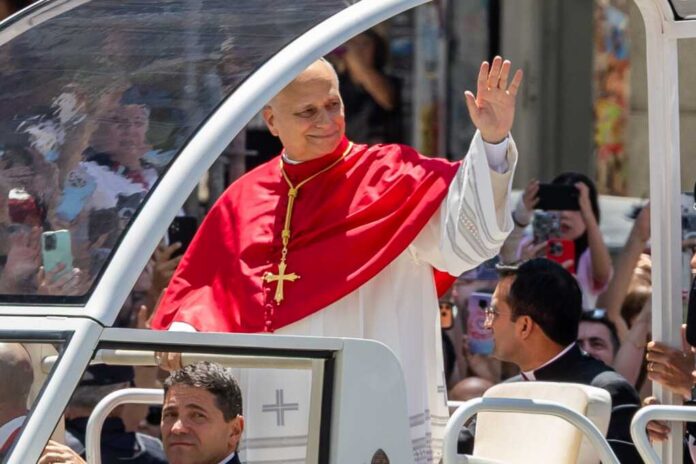
At Lourdes, a place famed for cures, the pope called assisted dying “false compassion” and drew a hard moral line.
Story Snapshot
- Pope Leo XIV condemned assisted dying as immoral “false compassion” at Lourdes.
- He told a crowd of about 150,000 that legality does not equal morality.
- He tied the stance to human dignity, sickness, and old age within Catholic teaching.
- The remarks landed as France advances assisted-dying legislation backed by public polls.
A direct challenge from a healing shrine
Pope Leo XIV preached at the Lourdes shrine in France and denounced medically assisted death as “false compassion.” He said, “What is legal is not necessarily moral,” and warned against ending life under the cover of care.
He spoke before a large crowd, including many who were ill and in wheelchairs, underscoring the message with the setting’s history of healing and hope. He framed care for the sick as a duty to uphold life, not to cut it short, and called that duty non-negotiable.
The pope rooted the claim in Catholic teaching on the dignity of every person. He urged caregivers to see the patient, not the problem, and to resist the idea that suffering erases worth. He stated that no one holds the right to take life from the embryo to the elderly.
The line drew a stark moral border for doctors, families, and lawmakers. America Magazine reported he stressed that healthcare’s aim is to care for a person, not to eliminate that person.
Pope Leo XIV criticized the legalization of medically assisted dying, calling it immoral and an example of "false compassion" during a visit on Sunday to Lourdes, the Catholic shrine in France associated with miraculous cures of the sick.
https://t.co/RKJ7axZh2A— CBS News (@CBSNews) September 27, 2026
Why Lourdes made the words heavier
Lourdes is the site many associate with miraculous cures. The Church investigates such reports with strict standards, and the shrine remains a symbol of care, pilgrimage, and patient dignity. Speaking there, the pope linked a place of healing to a claim about endings.
The contrast sharpened the point: medicine should ease pain and guard life, not speed death. The crowd and the wheelchairs around the altar rendered the speech’s moral stakes vivid and near.
The setting also echoed policy debates across France. Lawmakers have pressed forward with bills that would allow some form of assisted dying. Polls cited by major outlets show broad public support for legalization, often exceeding four in five adults.
The move has momentum, and that is exactly why the shrine speech hit with force. The pope’s warning met a legal tide moving the other way, and it asked leaders to slow down and think again.
Care, not killing: a line for professionals and lawmakers
The message addressed caregivers directly. He urged clinicians to resist systems that treat death as a fix. Many professionals in palliative care share worry about legal change; a national consultation found a clear majority of palliative stakeholders opposed to legalizing medical help to die.
That debate reaches beyond religion. It touches on what real compassion looks like when pain grows and time runs out. The pope said compassion stands with the weak, even when it costs.
Pope Leo XIV criticized the legalization of medically assisted dying, calling it immoral and an example of "false compassion" during a visit on Sunday to Lourdes, the Catholic shrine in France associated with miraculous cures of the sick.
https://t.co/RKJ7axZh2A— CBS News (@CBSNews) September 27, 2026
The remarks also fit a wider pattern across Europe. End-of-life policy moves through long fights between public opinion, medical norms, and moral claims.
In France, support for some form of assisted dying has risen for years, and the National Assembly has advanced a landmark bill. The pope’s teaching does not set French law, but it sets a clear Catholic standard for the faithful and for anyone who accepts the idea that human dignity is not up for a vote.
What to watch next in France’s end-of-life saga
Lawmakers will keep shaping rules, safeguards, and oversight. Hospitals and hospices will wrestle with conscience protections, training, and the line between sedation and intent to kill. Families will face hard choices in rooms where pain and love live together.
The pope’s words give those rooms a compass: ease pain, do not cause death. That map may not change every mind. But it gives believers and many nonbelievers firm ground to stand on while the law shifts around them.
Sources:
abcnews.com, americamagazine.org, 2news.com, reuters.com, spcare.bmj.com