

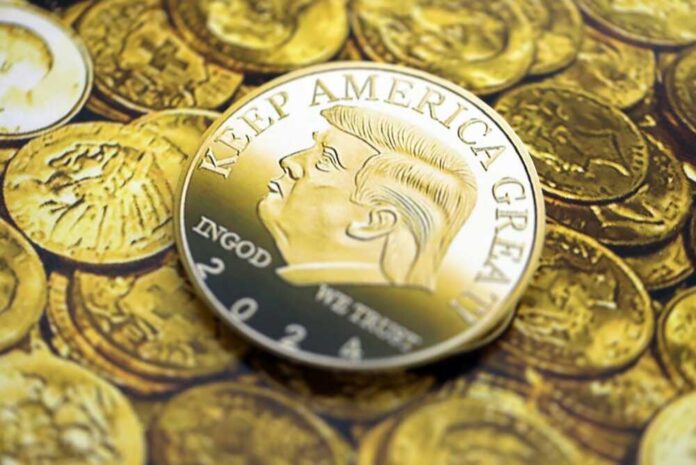
The U.S. Treasurer told Americans to take new Trump dollar coins to “liberal coffee shops” and buy a cup of coffee.
Story Snapshot
- U.S. Treasurer Brandon Beach promoted the new Trump $1 coin in an official video.
- Beach urged viewers to get rolls of coins and spend them at liberal coffee shops.
- The United States Mint offered rolls and bags for sale at a premium.
- The issue marks the nation’s 250th anniversary with a high-profile design.
Treasury’s viral push puts politics next to the cash register
U.S. Treasurer Brandon Beach used the Treasury Department’s official social media to challenge Americans to buy coffee with the new Trump dollar coin. He said to get a roll next month and walk into a favorite liberal coffee shop to spend them. The clip framed the coin as everyday money, not a shelf piece. It also cast the spend as a culture test. That mix lit up phones because it turned a mint launch into a counter-messaging moment.
Beach’s on-camera push arrived as the United States Mint rolled out sales channels. The Mint offered 25-coin rolls for $61 and 100-coin bags for $154.50, well over face value. Beach also said banks would have the coins the following month, though the reporting did not list which banks or confirm face-value access at the counter. The price gap raises a plain question for shoppers: hold as a collectible, or spend at par on a latte.
What the coins are meant to mark, and how to actually get them
The program ties to the nation’s 250th anniversary. The coin puts a sitting president’s face into millions of hands and puts a milestone year at the center of daily transactions. The United States Mint handles design, minting, and product sales. Collectors buy direct at a premium, while banks can distribute at face value when supplied. The report said the coins would reach banks next month but did not name participating branches or provide a distribution calendar.
The consumer path splits into two lanes. Collectors order from the Mint for sealed packaging, guaranteed condition, and official product cards. Regular spenders ask their bank teller for $1 coins at face value once shipments arrive. The first lane pays more than the coin’s worth because it buys collectibility. The second lane treats the coin like any other buck. Beach’s challenge steers people into the second lane and into a visible, real-world test.
The U.S. Treasury is telling Americans to go to spend the new Trump $1 coins at liberal coffee shops.
Legendary trolling 🤣 pic.twitter.com/xRzDeW8nnj
— Benny Johnson (@bennyjohnson) October 15, 2026
Why the “liberal coffee shop” line hit a nerve
Federal agencies often promote programs, but the language here used faction labels and promised strong reactions. That turned a routine rollout into a culture marker. Government ethics guidance says official agency accounts should stick to government business and stay politically neutral. The U.S. Office of Special Counsel has warned that agency pages are not places for partisan engagement, especially on social media. Beach’s words did not ask for votes or donations, yet the framing invited a political read.
One principle still applies: keep taxpayer channels focused on mission, not team jerseys. A clean message would highlight legal tender status, bank access, and the history it marks. It would ask people to spend the coins to boost circulation and awareness, without tagging any store or customer as liberal or conservative. Americans of all views can align with that. They want a government that explains, delivers, and lets them choose, not a government that trolls from the cash drawer.
What happens when a collector coin meets the morning rush
Merchants can accept $1 coins like any other dollar. Many baristas can drop them straight into the till. Some shops will pause or refuse out of habit, not law. That is why bank distribution and face-value access matter. If banks provide steady supply, people will try the coins at counters, and clerks will get used to them again. If supply stays in premium-priced packaging, the coins will live in drawers, not in change cups, no matter how catchy the video was.
What to watch next: supply, uptake, and tone
Track three things. First, which banks actually stock the coins at face value, and when. Second, how many shops accept them on the first try versus the second. Third, how Treasury talks about the coin from here on out; results will tell the story. Coins that flow through banks and tills become part of daily life. Coins that launch as political theater fade with the clip. Celebrate the quarter-millennium by letting the dollar do what it does best—move.