
Police in Britain rearrested two young men over a suspected Iran-linked plot tied to a U.S.-run air base, and they did it under a tough new national security law.
Story Snapshot
- Two men, ages 24 and 25, were rearrested under the National Security Act 2023 for allegedly assisting a foreign intelligence service.
- The case centers on activity near Royal Air Force Fairford on September 27, 2026, a base used by the United States Air Force.
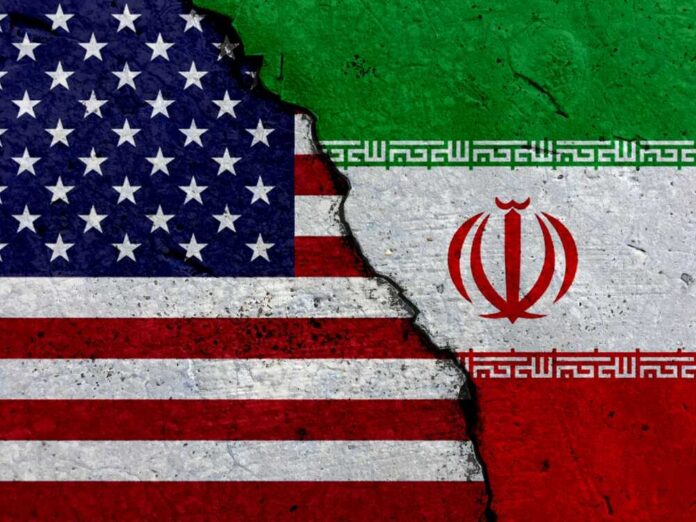
- Police say it is highly likely Iran was involved; the Home Secretary tied direction to Iran’s Islamic Revolutionary Guard Corps.
- Both suspects were first arrested, bailed, and then rearrested as the inquiry moved forward.
What Happened And Why RAF Fairford Matters
Counter Terrorism Policing said officers rearrested a 24-year-old British national and a 25-year-old dual British-Iranian national under Section 3 of the National Security Act 2023, which covers assisting a foreign intelligence service. The inquiry tracks back to suspected activity near Royal Air Force Fairford on September 27, 2026. One man was arrested close to the base that day, and the other in Westminster on October 1. Both were bailed, then picked up again in October as detectives deepened the case.
Assistant Commissioner Laurence Taylor, who leads National Counter Terrorism Policing, said investigators still gather evidence but consider Iranian state involvement highly likely at this stage. The Home Secretary told Parliament the wider incident was highly likely coordinated by a known individual in Iran and almost certainly directed by Iran’s Islamic Revolutionary Guard Corps. Those statements show strong confidence from senior officials. They also mark one of the most explicit public attributions in a live United Kingdom counterintelligence investigation in recent years.
The New Law: How Section 3 Changes The Game
The National Security Act 2023 modernized how the United Kingdom confronts hostile state activity. Section 3 targets assistance to a foreign intelligence service, reaching conduct that may not look like classic spycraft. Lawmakers built a wider “state threats” framework to address sabotage, foreign interference, and support operations that can unfold in gray zones, far from Cold War-era cloak-and-dagger scenes. Prosecutors recently used the act in other contexts, showing how it captures plots short of traditional espionage while still hitting serious conduct.
That matters at a base like Royal Air Force Fairford. The site supports United States bombers and sensitive logistics. Any help to a foreign service near that base can become a national and allied concern fast. Under the act, intent and foreign power links are central. The law also carries up to 14 years in prison for some offenses, which signals the stakes to would-be helpers of hostile states.
Timeline And Claims Officials Put On The Record
Reports align on key dates: September 27 near the base for the younger suspect, October 1 in central London for the older one, then bail, then rearrests in October. Media accounts and police updates ground the case in that timeline and location. Officials did not publish the specific acts the men allegedly carried out. But the public record ties the arrests to suspected Iran-linked activity around the base on the stated date. Police described the probe as live, which is normal for counterintelligence work.
Iran’s government has rejected blame in other public comments, but United Kingdom officials have kept their assessment firm on likely Iranian involvement and direction by the Islamic Revolutionary Guard Corps. Given the pattern of Tehran-linked pressure operations on British soil reported by researchers and advocates, those official statements track with a known risk picture, though each case must stand on its own facts.
Why This Fits A Larger Security Pattern
Security groups and government assessments describe a rise in transnational repression: intimidation, surveillance, and plots that cross borders to target people in the United Kingdom. Studies have logged hundreds of such incidents since the mid-20th century, with Iran among named actors in recent years. The Royal Air Force Fairford case slots into that broader concern, where reconnaissance or access support can be as dangerous as a direct attack. The United States-United Kingdom defense link makes any probe near a shared base a top priority for both countries.
🚨UK Fairford Spying Arrests:
UK Counter Terrorism Policing re-arrested two men on suspicion of assisting Iranian state intelligence following an espionage incident at the US-run RAF Fairford air base.
Authorities stated that #Iranian state involvement is "highly likely".#Iran pic.twitter.com/a62QkaSz5H— Almuhaqiq (@almuhaqiq777) October 21, 2026
American conservative values point to some clear lodestars here: protect the homeland, back allies, deter hostile regimes, and punish those who help them. A base that hosts United States bombers is not an abstract target; it is a symbol of strength and a real military node. If investigators prove that anyone aided a hostile state’s intelligence work against that base, prosecutors should seek the toughest penalties the law allows. That is not saber-rattling. That is common sense security.
Sources:
cbsnews.com, apnews.com, lbc.co.uk, bbc.co.uk, ibtimes.co.uk, timesofisrael.com, gov.uk, english.alarabiya.net, cnn.com, independent.co.uk