
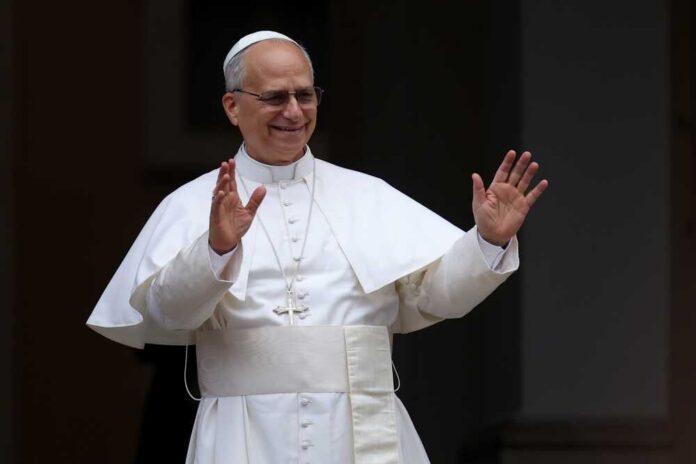
Pope Leo the Fourteenth’s doctors say his lung cancer surgery worked, and he needs no more treatment.
Quick Take
- Doctors confirmed the Pope’s tumor was pulmonary adenocarcinoma, a type of lung cancer, and that it was fully contained.
- Surgeons removed the lower lobe of his right lung on October 13, 2026, at Rome’s Gemelli Hospital.
- The Holy See Press Office says a follow-up cancer evaluation found no further treatment is needed.
- The Pope’s surgeon says there is no medical reason to cancel his planned trip to South America.
What The Vatican Announced This Week
The Holy See Press Office delivered the news on October 21, 2026. Doctors Luigi Carbone and Stefano Margaritora said tests confirmed the tumor was pulmonary adenocarcinoma and that the disease stayed localized. A follow-up cancer evaluation backed that up. Their exact words: “A subsequent oncological evaluation confirmed that no further treatment is necessary.”
That statement capped a two-week stretch of hospital updates, surgery reports, and recovery notes. It also answered the question hanging over Vatican City since the Pope’s diagnosis became public: would he need chemotherapy, radiation, or more surgery. The answer, according to his own medical team, is no.
How The Surgery Unfolded At Gemelli Hospital
Surgeons operated on October 13, removing the lower lobe of the Pope’s right lung. The Holy See Press Office called the operation successful with no complications. A tissue sample taken during surgery confirmed what doctors had already suspected: lung adenocarcinoma, found before the operation even began.
Professor Stefano Margaritora, the surgeon who performed the operation, later explained the decision to Vatican News. He said removing the entire lobe is standard practice for a tumor of that size. He also said the surgery went smoothly, with nothing unusual turning up once doctors got a direct look.
Recovery Moved Quickly After The Operation
The days after surgery brought steady, ordinary progress. The Vatican reported normal lab results, and the Pope was soon eating, walking, and doing breathing exercises meant to strengthen his lungs after the procedure. Blood tests and a chest X-ray later confirmed he was fit enough to leave the hospital.
By the time he appeared for his Sunday Angelus address, the Pope spoke directly about the support he’d received during the ordeal. He told the crowd, “I have truly felt your support,” a brief but telling sign of how closely the public had followed his hospital stay.
The Holy See Press Office announced that no further treatment is necessary for Pope Leo XIV following his surgery to remove a tumor in his lung. We thank the Lord for this positive outcome and continue to hold the Holy Father in our prayers! pic.twitter.com/8E1dmIQqgv
— Diocese of Madison (@MadisonDiocese) October 21, 2026
Why Doctors Say The Trip Is Still On
Margaritora didn’t stop at describing the surgery. He told Vatican News there is no clinical reason to cancel the Pope’s planned trip to South America in November. That’s a notable vote of confidence from the man who operated on him, and it lines up with the broader message coming out of the Vatican: recovery is on track, and daily duties can resume.
What “No Further Treatment” Actually Means
Doctors draw a real distinction between saying a patient needs no more treatment right now and declaring someone permanently free of cancer. Medical groups describe “no evidence of disease” as meaning tests show nothing detectable at present, not that recurrence can never happen. Complete remission means exams, scans, and bloodwork find no sign of illness at that point in time, which still leaves room for ongoing monitoring.
That distinction matters here because the Vatican’s language tracks closely with how oncologists talk, not looser terms like “cured” or “cancer-free” that sometimes show up in headlines. Lung cancer patients typically follow a structured surveillance schedule after surgery, with checkups every few months for the first couple of years and annual visits after that. Nothing in the Vatican’s statements suggests the Pope is skipping that kind of follow-up.
The bottom line is straightforward and worth taking at face value: a pope had lung cancer, surgeons removed it, and his own medical team says it worked well enough that no chemotherapy or radiation is needed. That’s good news by any honest reading of the facts, delivered by named doctors who operated on him and spoke plainly about the result. Catholics worldwide, and plenty of non-Catholics following the story, got a clear answer instead of vague reassurance.
Sources:
abcnews.com, vaticannews.va, nbcboston.com, mdanderson.org, roswellpark.org