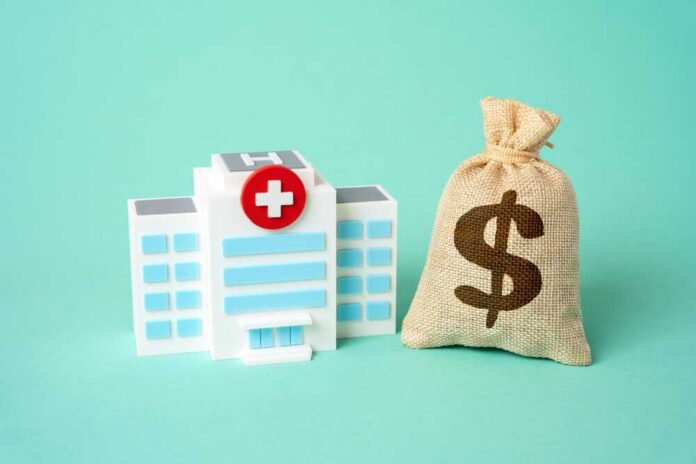
Hospitals are asking for money before care more often because deductibles and patient bills keep climbing.
Quick Take
- Hospitals say upfront payment helps them collect money they often never get after treatment.
- Higher deductibles have pushed more of the bill onto patients before insurance helps pay.
- Recent reporting found hospitals collected about 23% of patient-owed amounts before treatment in early 2024, up from about 20% a year earlier.
- The practice is common for planned care, but emergency rooms are different because hospitals must stabilize patients first.
Hospitals Want the Money Earlier
Hospitals across the country are moving more billing to the front end of care. They are not just asking for a co-pay at check-in. They are asking patients to settle part of a deductible, a coinsurance bill, or even the full expected amount before a planned procedure.
The reason is simple. Hospitals say it costs time and money to chase unpaid bills after the visit ends, and those costs rise when patients owe more out of pocket.
Reporting from The Wall Street Journal says hospitals prefer payment up front because post-treatment collection is harder, and data from Kodiak Solutions showed a rise in the share collected before treatment.
The trend of hospitals asking for money up front represents a double whammy for patients. https://t.co/fzo3BqGvs7
— CBS Miami (@CBSMiami) August 12, 2026
Why Deductibles Changed the Game
The pressure comes from the way American health insurance now works. Many patients have high deductibles, which means they pay more before their plans begin covering the bill.
CBS News reported that hospitals are collecting larger shares of what patients owe while rising deductibles leave patients responsible for more of the cost.
That shift has changed the hospital desk from a place of care into a place of financial triage. A patient may arrive for an imaging scan, a surgery, or another scheduled service and learn that the hospital wants part of the bill before the appointment starts.
Some systems now collect roughly a quarter of what they expect the patient to owe before care begins.
The Business Logic Behind the Request
Hospitals do not like bad debt. They also do not like the staff time needed to send bills, make calls, and set up payment plans after the fact. Industry reporting has described upfront collection as a response to both rising collection costs and the growing chance that patients will not pay later.
The trend is old, but it has deepened as patient responsibility has grown. The Health Care Financial Management Association has described pre-payment and point-of-service collection as common, and NPR reported years ago that about three-quarters of hospital systems asked for payment when services were provided.
Hospitals push for upfront payments as patient deductibles and out-of-pocket costs rise – CBS News https://t.co/R8ADcliL6R
— lycangal29 (@lycangal29) August 12, 2026
Hospitals also argue that asking early gives patients a clearer picture of what they owe. In that view, the bill should not arrive as a surprise after care is finished. The strongest version of that argument is not about greed. It is about cash flow, price estimates, and the reality that someone has to carry the risk when insurance leaves a big gap.
Where Patients Push Back
Patients often see the same policy very differently. For families already stretched by rent, food, and gasoline, an upfront medical bill can feel less like a reminder and more like a wall.
That tension is why the debate never really goes away. Even reporting that is sympathetic to hospitals makes clear that the practice lands hardest on people who already face higher out-of-pocket costs.
There is also a line hospitals cannot cross in emergencies. CBS News noted that hospitals accepting federal Medicare financing cannot demand payment before stabilizing a patient who arrives at an emergency room.
That limit matters. It keeps the upfront-payment push tied to planned care, where hospitals have more room to estimate the bill and patients have more time to prepare.
What the Trend Says About Health Care Today
Upfront payment is a symptom of a larger change in American health care. Insurers shifted more costs to patients to slow premium growth. Hospitals then shifted their billing toward the moment of service, because that is where the money is most reachable.
The plain lesson is familiar: when incentives change, behavior changes fast. Hospitals are acting like businesses because they have to survive like businesses.
Patients, meanwhile, are being asked to absorb more cost before care is even delivered. That is why the fight over upfront billing is likely to stay sharp as long as deductibles stay high and medical bills keep arriving with more zeros attached.
Sources:
pnhp.org, fiercehealthcare.com, darkdaily.com, nbcnews.com, drwhealth.com, reddit.com, pmc.ncbi.nlm.nih.gov, patientrightsadvocate.org, elibrary.judiciary.gov.ph, hfma.org