
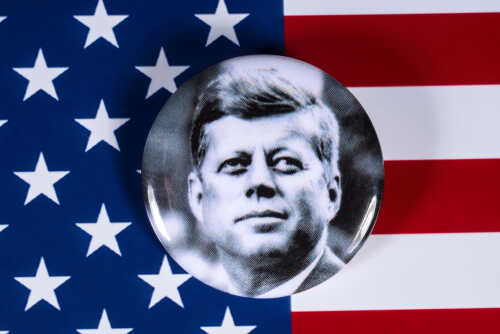
Nine Kennedys say a 250-foot arch by Arlington would erase a sacred American sightline in one stroke.
Story Snapshot
- Kennedy heirs joined a lawsuit to block President Trump’s proposed arch near Arlington Cemetery.
- The filing says the arch would block views to the Kennedy gravesites and the Eternal Flame.
- The administration frames the arch as a tribute, a gateway, and part of the nation’s 250th anniversary.
- Plaintiffs also argue federal law requires explicit congressional authorization before building.
The Legal Fight Lands on Hallowed Ground
The Kennedy family moved to join existing lawsuits that target President Trump’s proposed “triumphal arch” near Arlington National Cemetery. Their claim is blunt: the 250-foot structure would intrude on the clear view from the Arlington Memorial Bridge to the Kennedy gravesites and the Eternal Flame, a view they call central to the design of the site. They ask a court to halt the project unless it meets clear legal steps, including explicit approval by Congress where required.
The administration describes a very different purpose. Officials say the arch would serve as a monumental gateway that honors veterans, anchors the entrance to Arlington, and marks the country’s 250th birthday. President Trump has called it the greatest and most beautiful arch, presenting renderings to federal design bodies this spring. The Interior Department has also linked the circle improvements tied to the project to better traffic management and pedestrian safety near the bridge.
What the Family Says the Arch Would Change
The family’s filing points to a specific harm, not a vague dislike of change. It claims the arch would block a long-standing, symbolic vista between the Lincoln Memorial, the bridge, and Arlington’s slopes, including the Kennedy gravesites. The complaint argues that view reflects national unity after the Civil War and has endured for generations. That claim tracks with concerns raised by other challengers, including local governments and veterans groups, about visual encroachment on sacred and historic ground.
Courts often look harder at concrete, site-specific impacts than at broad aesthetic fears. That is why the plaintiffs emphasize line-of-sight, scale, and place. They say the arch would not just sit nearby; it would dominate and sever the visual thread that links Lincoln’s shrine to the hillside where service members and a president rest. Skeptics may want a sun-path study or modeling for shadows. The heart of the case, however, is obstruction of a landmark view rather than hours of shade.
Who Has the Power to Approve This Monument?
The Commemorative Works Act sets the ground rules in Washington’s monumental core. It says a commemorative work on covered federal lands must be authorized by law. It also instructs that new works should not interfere with or encroach on existing memorials, and that agencies must protect open space, public use, and cultural resources during siting and design reviews. Those limits reflect common sense and conservative stewardship: honor the past without bulldozing it.
The plaintiffs argue the approvals to date do not clear that legal bar. On process, they want a judge to declare that construction without specific congressional authorization is unlawful where the statute applies. On substance, they say the design violates the act’s direction against interference because it would disrupt iconic, historic views. That framing puts the case on stronger legal ground than a taste test. The question becomes what the law allows, not who likes which look.
The Administration’s Counter and the Stakes
Trump officials counter that the arch honors the nation and its veterans and would give Arlington a proper monumental gateway. They have also linked the height to security needs in the capital, suggesting the structure can carry dual roles. Early pitches stressed the semiquincentennial theme, but later statements emphasized homeland defense features that could be integrated without changing the basic design, according to public comments from cabinet officials.
Both visions claim patriotism. One stresses reverence through restraint, keeping sightlines intact. The other seeks grandeur through addition, arguing a bold gateway helps people remember sacrifice. The facts that matter in court will be more grounded: where the arch sits, how tall it stands, what it blocks, and whether Congress gave the green light the statute requires. A judge already paused work once, showing the legal stakes are real, not rhetorical.
How This Likely Plays Out
Expect sharper evidence on views and process to decide the fight. A certified visual analysis from the bridge to the Eternal Flame would weigh heavily. So would the full administrative record showing who approved what, under which authority, and with what findings. If the record shows clear interference with a protected vista and no specific act of Congress, the challengers’ case tightens under the plain text of the Commemorative Works Act.
If the administration proves it met the statute’s demands and respected existing memorials, the project’s purpose statements will matter more. Honor and security are worthy goals. But in Washington, the route to both runs through the law and through respect for the places that already carry our memory. That is not partisanship; it is the price of building in America’s front yard.
Sources:
bbc.co.uk, usatoday.com, wusa9.com, nytimes.com, bostonglobe.com, congress.gov, uscode.house.gov