

Buc-ee’s is turning the humble highway pit stop into a competitive weapon, and six to seven new states are about to feel the blast radius.
Quick Take
- Buc-ee’s plans first-ever locations in at least six to seven new states, pushing from 12 to about 20 states by 2028.
- 2026 openings lead with Ohio (already opened April 6), then Arizona (Goodyear, June 22) and Arkansas (Benton, early to mid-August).
- 2027 adds Wisconsin, Louisiana, Kansas, Tennessee, and North Carolina, extending the brand into the Midwest and deeper into the Southeast.
- Facilities run roughly 70,000–74,000+ square feet with 100–120+ fuel pumps, a scale that forces rivals and towns to react.
A gas station that behaves like a destination
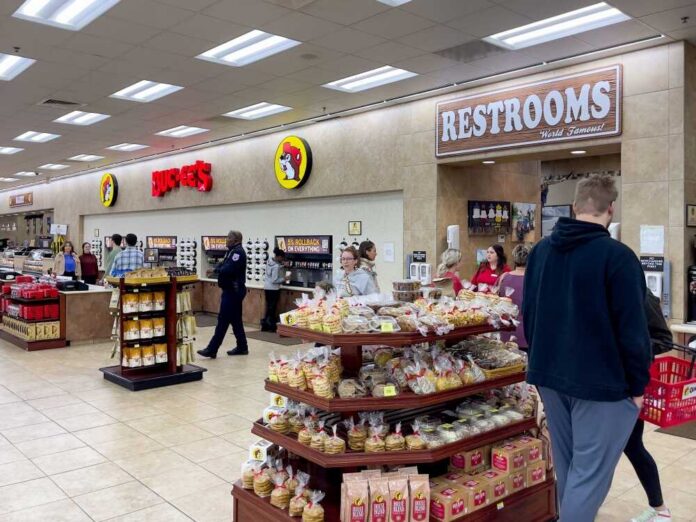
Buc-ee’s started in 1982 as a Texas gas station and grew into something that doesn’t fit the category anymore: part travel center, part retail carnival, part cleanliness crusade.
The chain’s reputation for oversized buildings, spotless restrooms, and beaver-branded merchandise matters because it changes why people stop. Travelers don’t just refuel; they plan the stop. That distinction is the engine behind the current expansion push.
The numbers tell you this isn’t casual growth. Buc-ee’s sits at about 55 locations across 12 states, yet the company’s pipeline aims to lift its state footprint to around 20 by 2028. That kind of geographic leap tests whether the brand is a Texas-and-the-South phenomenon or a national habit. The answer will come fast because the opening calendar stacks multiple launches in tight succession.
The opening sequence: Ohio first, then the desert and the Delta
Ohio drew first blood on April 6, 2026, with a Huber Heights opening that signals Buc-ee’s seriousness about the Midwest. Arizona follows on June 22, 2026, in Goodyear, a Phoenix-area play positioned for interstate traffic and regional growth.
Arkansas comes next in Benton, with local officials pointing to early to mid-August for the grand opening. Each site functions as a proving ground for staffing, supply, and local traffic impacts.
2027 turns the trickle into a wave. Plans call for Oak Creek, Wisconsin in early 2027, Ruston, Louisiana in mid-2027, and a Kansas City, Kansas site in 2027 near I-70 and West Village Parkway.
Tennessee (Murfreesboro) and North Carolina (Mebane, targeted for Q4 2027) broaden the Southeast presence. The pattern is consistent: interstate corridors, metro adjacency, and enough land to build a small airport terminal’s worth of retail.
The real product: scale, cleanliness, and time saved
Buc-ee’s mega-format model leans on a blunt insight: road trips punish uncertainty. A typical exit offers cramped bathrooms, weak lighting, and the creeping suspicion the coffee has been cooking since Tuesday.
Buc-ee’s sells the opposite—predictability at scale. Buildings in the 70,000–74,000+ square-foot range and 100–120+ pumps reduce friction: fewer lines, faster fueling, more stalls, more registers, more everything. Convenience becomes a measurable advantage.
That focus aligns with common sense and with what most families want: safe, clean, efficient, and open. The chain’s “clean restrooms” reputation isn’t a cute detail; it’s a trust signal.
After the pandemic era raised expectations for cleanliness, Buc-ee’s standardized what many competitors treated as optional. When a brand turns hygiene into identity, it doesn’t just win customers; it raises the minimum standard for everyone else on the interstate.
Why towns chase Buc-ee’s, and what they worry about
Municipal leaders treat a Buc-ee’s announcement like an economic development trophy because it tends to bring construction dollars, permanent jobs, and sales tax activity concentrated in one site. Typical stores employ roughly 100 to 200+ staff, which can matter in smaller communities.
Cities also compete because a travel center can redirect interstate spending that would otherwise pass through. Local officials in Benton publicly confirmed the Arkansas opening window, showing the civic buy-in behind these deals.
The trade-offs are not imaginary. A facility designed to attract heavy traffic will create heavy traffic, and local roads must absorb it.
Planning boards and zoning officials end up negotiating turn lanes, signal timing, and utility demands that match the site’s sheer appetite for water, power, and access.
Locations for new Buc-ee's locations have been unveiled as the popular gas station chain expands into several new U.S. states. https://t.co/Lylb9W73JI
— FOX 9 (@FOX9) May 11, 2026
Competitors don’t lose to Buc-ee’s on price; they lose on experience
Traditional operators—Love’s, Pilot Flying J, Speedway-style convenience stores, and major-branded gas stations—can copy pieces of the formula but not the whole machine.
Matching a 70,000+ square-foot footprint with massive parking, dozens of restrooms, and a retail assortment that feels like a regional gift shop requires land, capital, and operational discipline. Buc-ee’s also benefits from a word-of-mouth marketing flywheel: people talk about it because it’s excessive on purpose.
That creates a subtle industry shift. If travelers begin to expect Buc-ee’s-level cleanliness and capacity, competitors either invest or watch higher-income families concentrate spending at the exits with the “good stop.”
Over time, the winners will be the brands that respect the customer’s time and basic standards, not the ones betting that a captive audience will accept grimy bathrooms because “it’s just a gas station.” The expansion forces the question in new markets.
What to watch as the beaver goes national
The expansion timeline compresses risk into a short window: staffing new labor markets, extending supply chains into unfamiliar regions, and maintaining consistent standards while opening multiple giant boxes.
Buc-ee’s has stayed methodical historically, which is why this push stands out. If the company holds quality steady as it adds Ohio, Arizona, Arkansas, then Wisconsin, Louisiana, Kansas, Tennessee, and North Carolina, it proves the model travels. If standards slip, the cult loyalty turns picky fast.
Buc-ee's set to debut in 6 new states in major expansion push across US https://t.co/C0l3i5sQi1 pic.twitter.com/6AyDXWGHM3
— NY Post Business (@nypostbiz) May 11, 2026
The most interesting outcome may not be Buc-ee’s success—it already knows how to build a crowded store—but what it does to the American road trip.
When the best bathroom on your route becomes a planned destination, the old rhythm of travel changes: fewer desperate exits, fewer disappointments, and more money staying in communities that win the Buc-ee’s sweepstakes. The beaver isn’t just expanding; it’s rewriting what “stopping for gas” means.
Sources:
Location reveal: New Buc-ee’s locations opening in major expansion
Buc-ee’s set to debut in 6 new states in major expansion push across US