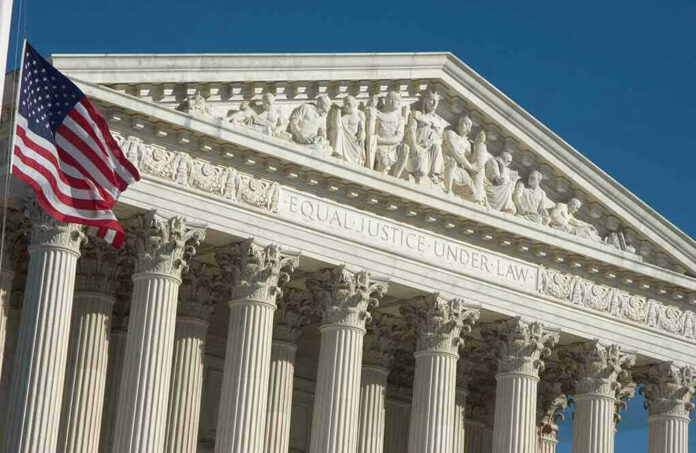
Chief Justice Roberts has handed President Trump a critical win by temporarily freezing $5 billion in foreign aid, fueling a fierce constitutional showdown between the White House and Congress over who holds the nation’s purse strings.
Story Snapshot
- Supreme Court, led by Chief Justice Roberts, allows Trump administration to keep $5 billion in foreign aid frozen as legal battle unfolds.
- Trump’s executive order invokes “America First,” asserting greater executive control over foreign aid spending and challenging Congressional authority.
- The administration employs a rarely used “pocket rescission” to halt funds already approved by Congress, intensifying concerns about the separation of powers.
- Humanitarian projects and foreign contractors face immediate uncertainty, while legal experts warn of long-term shifts in the balance of government power.
Trump Administration Moves to Freeze Billions in Foreign Aid
President Donald Trump’s administration has reignited the debate over who controls U.S. foreign aid by seeking to freeze $5 billion already appropriated by Congress. Through an executive order signed in early 2025, Trump mandated a comprehensive review of foreign aid outflows, arguing that taxpayer dollars should only serve American interests. This move echoes longstanding conservative frustration with decades of unchecked international spending, often benefiting countries that do not reciprocate in kind.
Secretary of State Marco Rubio, acting on Trump’s directive, implemented the freeze through the State Department and USAID. The administration’s legal team, led by Solicitor General D. John Sauer, defended the pause in court, contending that the executive branch must have discretion in administering foreign aid to ensure alignment with national priorities. The legal battle escalated when U.S. District Judge Amir Ali ordered the immediate release of the funds, prompting the administration to appeal to the Supreme Court.
Supreme Court Steps In: Roberts Temporarily Upholds the Freeze
In September 2025, the Trump administration made an emergency appeal to the Supreme Court after the lower court’s injunction. Chief Justice John Roberts responded by issuing a temporary stay, allowing the freeze on foreign aid to continue while the Supreme Court reviews the case. The case centers on whether the executive branch can use a “pocket rescission”—a rarely used tool—to withhold funds already approved by Congress, raising profound constitutional questions about separation of powers and the limits of executive authority.
Solicitor General Sauer has publicly warned that the district court’s injunction poses “a grave and urgent threat to the separation of powers,” framing the dispute as a defense of executive prerogatives against Congressional encroachment. Legal scholars and policy analysts note that a Supreme Court ruling in favor of the administration could dramatically shift the balance of power, potentially weakening Congress’s constitutional “power of the purse” and setting a precedent for future presidents to bypass legislative intent on spending.
Impact on Foreign Aid Recipients and U.S. Policy
The immediate effect of the freeze is felt by NGOs, contractors, and foreign governments dependent on U.S. aid. Many ongoing health, humanitarian, and development projects face sudden funding gaps, threatening vital services in regions already experiencing crisis. The administration, however, maintains that stricter oversight is needed to prevent waste and ensure that aid advances tangible American interests. Opponents argue that the disruption undermines U.S. credibility and harms vulnerable communities worldwide, while supporters see it as a necessary corrective to irresponsible globalism and fiscal mismanagement.
The dispute extends beyond the fate of this year’s aid package. Should the Supreme Court side with the administration, future presidents could gain new leeway to block or reshape foreign aid, potentially transforming how America engages the world. Critics in Congress warn of eroding checks and balances, while the Trump administration frames the fight as a long-overdue reassertion of executive leadership and national sovereignty.
Separation of Powers and the Future of “America First”
At its core, the legal battle is a test of constitutional boundaries. The Trump administration’s aggressive use of executive orders and legal appeals signals a broader push to centralize foreign policy and reduce international entanglements, consistent with the “America First” agenda. The Supreme Court’s ultimate decision will not only determine the fate of billions in foreign aid but could also redefine the contours of American governance for years to come. Conservative supporters welcome this assertive approach, seeing it as a vital stand against decades of unchecked spending, globalist priorities, and Congressional overreach.
Until the Supreme Court issues a final ruling, the freeze remains in effect—delivering a clear message: under President Trump, America’s resources will serve its own interests first, and the days of blank-check foreign aid are over.
Sources:
Kaiser Family Foundation (KFF)