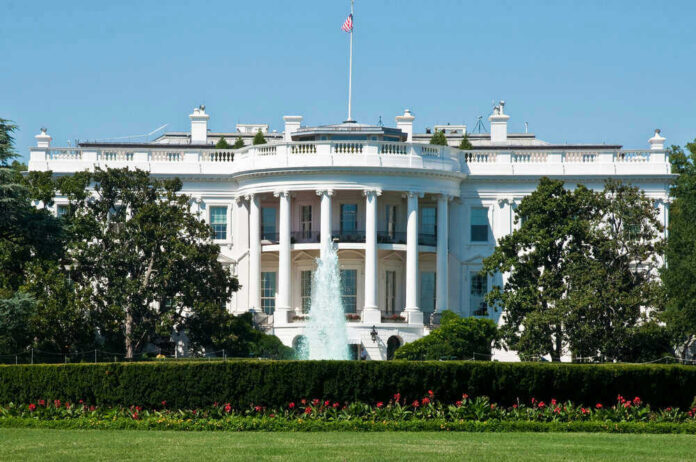
President Trump’s demolition of the historic White House East Wing for a $250 million privately funded ballroom is igniting fierce debate over tradition, legacy, and the future of America’s most iconic residence.
Story Snapshot
- The White House East Wing facade is being demolished to build Trump’s grand ballroom, the first major removal of a White House wing since WWII.
- The new event space is entirely funded by private donors, including major corporations, and will seat up to 999 guests in lavish style.
- The project raises questions about historical preservation, constitutional symbolism, and presidential legacy.
- Construction disrupts key White House functions and divides opinion among historians, preservationists, and the public.
Trump’s Ballroom Project Begins with Historic Demolition
On October 20, 2025, demolition crews began tearing down the White House’s East Wing facade, kicking off construction for President Donald Trump’s long-promised ballroom.
This marks the first major removal of a White House wing since post-WWII renovations, with the new space designed to host nearly a thousand guests in ornate, secure surroundings.
The demolition, visible from Pennsylvania Avenue and confirmed by Trump himself at a White House event, sets in motion a transformation with architectural, political, and cultural implications.
🚨 JUST IN: Construction workers at President Trump's direction have BEGUN demolition on the East Wing facade to build the DJT-funded ballroom
Trump has PROMISED it will match up perfectly with the current White House architecture. No "modernist" BS.
Amazing things are… pic.twitter.com/dwSqd6MLGr
— Eric Daugherty (@EricLDaugh) October 20, 2025
This privately funded project, estimated at $250 million, is supported by donations from large corporations like Apple, Amazon, and Lockheed Martin, as well as individuals seeking to contribute to a high-profile national development.
The construction team, led by Clark Construction and AECOM, will build a ballroom featuring bulletproof glass and lavish decor, fulfilling Trump’s campaign promise to modernize the White House for larger state events.
The new facility will replace the East Room, which previously accommodated only about 200 guests, dramatically expanding the venue’s capacity for diplomatic and ceremonial functions.
Historical Context and Preservation Concerns
The East Wing, first constructed in 1902 and expanded during WWII, has housed critical offices including the First Lady’s staff and the Presidential Emergency Operations Center. While calls for a dedicated White House ballroom date back over a century, previous proposals were shelved due to cost and preservation worries.
Trump’s initiative reignites debate over how much modernization is appropriate within a National Historic Landmark, with regulatory bodies like the National Capital Planning Commission overseeing the construction phase but not the demolition itself.
Preservationists and historians caution that removing a structure so integral to White House history risks erasing valuable architectural heritage and setting a precedent for future changes.
During construction, White House operations are disrupted, with staff—including the First Lady’s office—relocated. Security protocols have been heightened, and public tours are restricted.
The project’s scale and symbolism have also fueled controversy, as critics argue that the demolition undermines the White House’s traditional character and its role as a symbol of constitutional continuity.
Legal writer Marcy Wheeler notably compared the demolition to the British burning of the White House in 1814, underscoring the emotional impact felt by many preservationists and citizens alike.
Stakeholders, Motivations, and Power Dynamics
President Trump is the driving force behind the project, seeking to leave a lasting architectural legacy and fulfill longstanding demands for a larger event space.
Major donors gain visibility and political goodwill, while construction and engineering firms benefit from the prestige and business opportunities associated with such a high-profile federal contract.
Regulatory agencies have limited oversight over demolition, focusing instead on the new construction.
The United States Secret Service is involved in implementing enhanced security measures, given the sensitive nature of the White House campus and the planned use of bulletproof glass and other fortifications in the ballroom’s design.
Political, Economic, and Social Impact
The $250 million investment, funded entirely by private sources, sets a potential blueprint for future public-private partnerships in federal projects.
Politically, the project is polarizing, attracting support from those who view it as a necessary modernization and criticism from those concerned about historical loss and the symbolism of such a dramatic change.
The expanded event capacity will allow the United States to host larger and more significant diplomatic gatherings, potentially boosting cultural and international engagement.
Meanwhile, the construction industry benefits from the contract, while preservationists face new challenges in advocating for the protection of national heritage amid evolving presidential priorities.
Expert opinions are divided. The BBC described the proposed interior as “lavish … including chandeliers and ornate columns.”
Some architectural experts praise the design’s homage to White House tradition, while others criticize its scale and impact.
Supporters highlight Trump’s commitment to private funding and the need for modern facilities, whereas critics warn about the risk of erasing history and setting a precedent for future controversial modifications.
Despite the controversy, all major claims—demolition start, funding, and scope—are corroborated by official press releases and multiple independent news organizations.
Sources:
The White House Announces White House Ballroom Construction to Begin
Portions of White House East Wing Demolished Amid Ballroom Project
Trump East Wing Demolishing White House