Federal investigators are warning California cops that Iran may be looking to bring the war to America’s doorstep—using drones, sleeper assets, and cyber disruption.
Quick Take
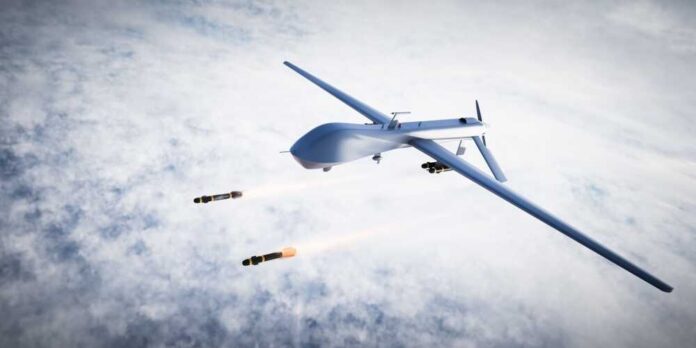
- FBI and DHS circulated an alert to California law enforcement about potential Iranian retaliation on U.S. soil, including possible drone attacks on the West Coast.
- Officials cited an intercepted, likely Iranian-origin encoded broadcast that analysts viewed as a possible “operational trigger,” though no specific credible plot was confirmed publicly.
- California’s risk profile is shaped by major military presence and a large Iranian-American community, making both security and civil peace key priorities.
- Cyber defenders warned state and local agencies to expect spillover from the conflict, including low-level probing and hacktivist activity.
What the FBI alert actually says—and what it doesn’t
Federal authorities issued an alert to California law enforcement warning of potential Iranian retaliation tied to the current U.S.-Israel campaign against Iran. Reporting described concerns ranging from lone-actor violence inspired by Iranian messaging to sleeper assets and drone strikes aimed at the West Coast.
At the same time, officials did not publicly point to a specific, confirmed attack plan or a fixed target list—meaning the posture is vigilance, not panic.
BREAKING: The FBI has warned police departments in California that Iran wants to retaliate for American attacks by launching offensive drones against the West Coast, according to an alert reviewed by @ABC News. Aaron Katersky reports.
Read more: https://t.co/LNR2dkGK8T pic.twitter.com/P0JdsbF2Gl
— ABC News (@ABC) March 11, 2026
That distinction matters for the public. When agencies warn broadly, the goal is usually to tighten information-sharing and raise readiness without telegraphing sensitive intelligence. The practical implication is more visible coordination between federal partners and local departments, along with renewed emphasis on reporting suspicious activity.
For conservatives who watched the last administration drift into selective enforcement and political policing, the test now is whether security stays focused on real threats.
Why California is in the crosshairs: people, bases, and soft targets
California carries unique exposure in any overseas escalation because it combines high-profile targets with a dense civilian environment. Reporting highlighted a large Iranian-American population concentrated in Southern California and a substantial active-duty military footprint.
That reality cuts two ways: it creates obvious strategic targets for a hostile regime, and it raises the stakes for protecting innocent communities from backlash or collective suspicion. Security planning has to do both at once.
Law enforcement leaders emphasized “heightened awareness” for lone offenders, a problem that can emerge when foreign conflicts get imported through online propaganda and grievance narratives. The threat doesn’t require a large team or sophisticated explosives when drones and off-the-shelf tech can create fear and disruption.
From a constitutional standpoint, preparedness should mean targeted investigation and patrol adjustments—not blanket surveillance of lawful speech or broad-brush suspicion based on ethnicity.
The “operational trigger” signal and the limits of what we know
Several outlets reported that analysts reviewed an intercepted, encoded sequence described as a possible activation signal for overseas or U.S.-based assets. That detail is the most alarming element because it suggests planning beyond rhetoric.
Still, the public record remains limited: reporting described the signal as likely Iranian in origin and treated it as a warning indicator, not proof an attack is imminent. Readers should separate “elevated concern” from “confirmed plot.”
Past Justice Department cases involving alleged Iranian-linked plots against U.S. officials were referenced as context, underscoring why investigators take retaliation talk seriously.
Those precedents show a pattern of asymmetric methods—plots, proxies, and covert action—especially when Iran cannot match U.S. conventional power. That history supports the logic of the current alert, even if authorities have not disclosed a concrete California target or timeline.
Cyber spillover: the quieter front that can still hit your community
State and local governments were urged to prepare for cyber fallout alongside any physical threat. Briefings described increased activity from Iran- and Russia-aligned groups and the likelihood of low-level attacks that target routers, VPN infrastructure, and public-sector networks.
Even “low-level” intrusions can disrupt emergency services, payroll systems, court scheduling, or public communications. For families already burned by years of mismanagement and inflation, local disruption is not theoretical.
Cyber defense is also where competence beats slogans. The most practical steps described in reporting were basic hardening: patching, monitoring, and improving resilience so an attack cannot cascade.
That’s a limited-government lesson with real-world teeth—do the fundamentals well, avoid waste, and keep the mission narrow. If agencies can’t explain how a new program stops a specific threat, taxpayers should be skeptical, especially after years of bloated spending.
What to watch next—and how Americans should think about it
President Trump publicly said the administration is monitoring potential threats, while local leaders signaled they are coordinating with federal partners. The near-term question is whether the alert produces actionable leads or remains a warning posture as the overseas conflict evolves.
The longer-term question is whether Washington can secure the homeland without repeating the last decade’s pattern: letting the border and internal security fray while lecturing law-abiding citizens about “extremism.”
FBI warns Iran aspired to attack California with drones in retaliation for war: Alert https://t.co/uvLCnsIFPF 🤔
— MOAB (@TNFMWORLDNEWS) March 11, 2026
For the public, the responsible takeaway is straightforward: stay alert, expect increased security activity around sensitive sites, and demand clarity from officials without fueling rumor.
The Constitution doesn’t require Americans to choose between safety and liberty—but it does require government to justify intrusions and focus on real enemies. The FBI’s warning is serious; the lack of a publicly confirmed specific plot is also real. Both facts can be true.
Sources:
https://statescoop.com/iran-war-2026-low-level-cyber-activity-state-local-government/