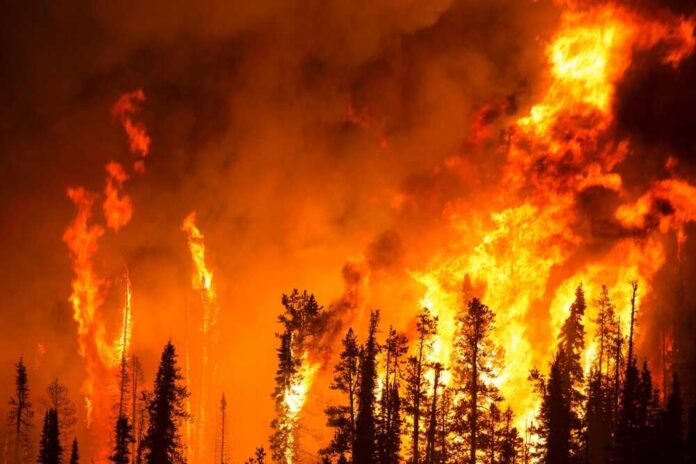
Wildfires racing across eastern Washington have destroyed roughly 600 structures and pushed tens of thousands of people out of their homes near Spokane.
Story Snapshot
- Fires around Spokane destroyed about 600 homes, businesses, and other buildings as of Sunday, August 2.
- Roughly 5,000 homes were evacuated in the immediate Spokane area, with wider reports putting total evacuations near 60,000 people.
- Governor Bob Ferguson declared a statewide emergency and burn ban as fires burned across more than a quarter-million acres statewide.
- The Washington National Guard mobilized for what officials call its first-ever full wildfire response.
Flames Jump The Spokane River As Winds Turn Deadly
The Old Trails Fire started around noon on Saturday, burning brush and grass before strong winds pushed it into northwest Spokane. It jumped the Spokane River and forced thousands to flee with little warning. Two other fast-moving fires burned nearby, turning a single afternoon into a citywide emergency for Washington’s second-largest city.
Authorities said about 5,000 homes were placed under evacuation orders, and close to 600 homes, businesses, and other buildings burned before firefighters could stop the spread. The fires scorched more than 8 square miles around Spokane alone, though the blazes remained uncontained as of Sunday night.
Some reports citing later figures put total evacuations across the Spokane region closer to 60,000 people, reflecting how fast the numbers grew as more neighborhoods came under threat. Evacuation counts in fast-moving wildfires often shift hour by hour as incident commanders expand zones, so early tallies and later consolidated totals can look different even though both are accurate snapshots in time.
A Statewide Emergency Backed By The National Guard
Governor Ferguson declared a statewide emergency and a burn ban Saturday morning as fires burned across more than a quarter-million acres of Washington, according to state officials. About 4,000 firefighters battled more than a dozen blazes at once, stretching resources thin across the state’s dry, wind-whipped terrain.
State officials say more than 1,000 fires have ignited across Washington since the start of the year, scorching roughly 425,000 acres, or over 660 square miles of forest, farmland, and neighborhoods. The Washington National Guard mobilized in response, a step officials described as unprecedented for a wildfire season in the state.
Governor Ferguson also said the Federal Emergency Management Agency approved disaster aid as the Upriver Fire destroyed homes in Spokane Valley, adding federal firefighting money and resources to the state’s response. That approval signals Washington expects the damage bill and recovery timeline to stretch well beyond a single weekend of firefighting.
Weather Warnings Signal More Danger Ahead
The National Weather Service issued its most serious fire alert, a red-flag warning for a “particularly dangerous situation,” covering large stretches of eastern Washington and beyond. Forecasters pointed to powerful winds and high heat as the ingredients pushing already-active fires into fast-moving emergencies near populated areas.
That warning level is rare and reserved for conditions officials believe could turn a manageable fire into a life-threatening one within hours. For families near Spokane, it meant evacuation orders could arrive with almost no notice, a pattern residents have now lived through more than once this fire season.
Wildfires in eastern Washington state forced the evacuation of 60,000 people in the Spokane area while destroying at least 600 homes, businesses and other structures, authorities said Sunday. pic.twitter.com/WNF2EgaIxE
— The Associated Press (@AP) August 3, 2026
Eastern Washington has battled a brutal wildfire stretch for months, with blazes like the Kaiser Canyon Fire on the Colville Reservation and the Lyons Ferry fire burning tens of thousands of acres earlier this summer. The Spokane-area fires mark the most destructive chapter yet, hitting a dense urban area instead of remote rangeland.
Firefighters continue working to contain the blazes, but with winds and dry conditions expected to persist, officials are asking residents to heed evacuation orders immediately rather than wait to see how close the flames get.
Sources:
wasmoke.blogspot.com, wfca.com, nytimes.com, abcnews.com, spokesman.com, npr.org