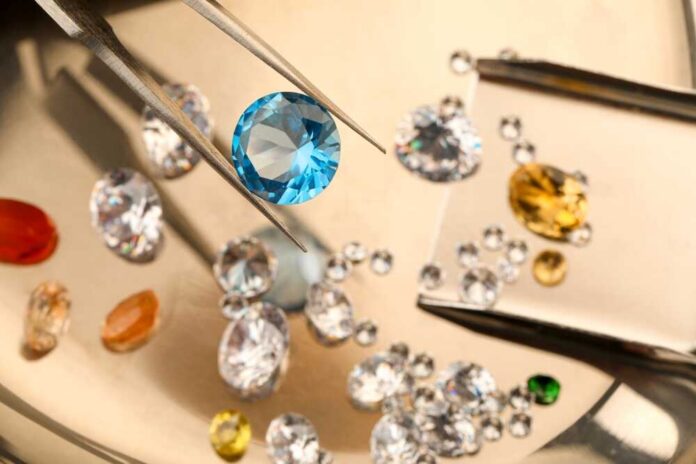
As inflation-era distrust in paper wealth lingers, affluent buyers are quietly parking money in colored gemstones—assets that fit in a pocket and now come with stricter grading and traceability.
Story Snapshot
- Wealthy consumers are shifting from volatile white diamonds toward colored gemstones such as ruby, emerald, and sapphire as “portable wealth.”
- New grading standards taking effect January 1, 2026, are driving higher premiums for untreated stones, especially “no heat” rubies.
- Blockchain-style traceability and “birth certificate” documentation are narrowing price gaps for ethically sourced supply.
- Market forecasts cited in industry reporting project roughly 5–6% annual growth through 2030, with continued demand from younger high-net-worth buyers.
Why the Rich Are Rotating Out of Diamonds
Wealth managers and jewelers tracking luxury demand describe a clear pivot: buyers who once defaulted to large white diamonds are increasingly targeting colored gemstones, particularly the “Big Three” of ruby, emerald, and sapphire.
Research summaries point to two drivers: diamond market volatility, including pressure from lab-grown supply, and the appeal of rarity in top-tier natural stones. Colored gems also function as compact, transportable stores of value for global buyers seeking diversification.
Pricing ranges cited in 2026-focused guides underscore why this market attracts serious capital. Reported price bands range from roughly $10,000 to $100,000+ per carat for rubies, $6,000 to $60,000 per carat for emeralds, and about $4,500 to $40,000 per carat for sapphires, with sapphires often described as comparatively liquid.
Those wide ranges also highlight the reality: gemstone “investment” hinges on quality, provenance, and treatment status, not merely size or color.
Wealthy consumers are turning to jewelry as an investment, especially colored gemstones https://t.co/wXqVQ43KKq
— CNBC (@CNBC) March 22, 2026
GIA’s 2026 Standards and the Premium on “Untreated” Stones
Industry reporting frames 2026 as a turning point, with grading and disclosure standards tightening, and the Gemological Institute of America’s new approach cited as a major inflection point beginning January 1, 2026.
In practical terms, buyers are paying more for stones with clearer documentation and fewer enhancements.
Guides describing current pricing say “unheated” rubies can command multiples versus heated stones, reflecting a market that increasingly treats treatment status as a decisive value factor.
Transparency Goes Mainstream: Traceability and “Birth Certificates”
Beyond grading, the research points to blockchain-style traceability as an accelerant: more stones are being sold with origin and chain-of-custody narratives meant to satisfy ethical sourcing expectations.
This matters because luxury buyers—especially younger, high-net-worth consumers—are demanding ESG-friendly assurances without sacrificing prestige.
Traceability tools are described as reducing uncertainty and helping ethically sourced production in places like Zambia (emeralds) and Mozambique (rubies) compete for premium pricing in global markets.
The push for transparency is also reshaping the power dynamics in the trade. Certifiers and producers that can document origin gain leverage, while sellers relying on vague sourcing stories lose pricing power.
For American consumers, that shift should be read as a broader institutional trend: more third-party oversight and standardized documentation.
That can protect buyers from fraud, but it also reinforces how quickly “elite” markets adopt gatekeeping structures that can disadvantage ordinary people who lack specialized knowledge.
What the Numbers Suggest—and What They Don’t
Forecasts summarized in the provided research project about 5–6% annual growth through 2030, with overall market-size estimates cited around $50–80 million by 2030.
Other notes point to short-term appreciation expectations of roughly 5–12% in 2026 for rare colors, while also emphasizing supply constraints for top-tier stones.
Those claims are consistent across multiple industry-style sources, but the research does not provide a unified dataset, an audited index, or a standardized benchmark comparable to public equities.
That limitation matters for anyone trying to read this trend as a political or economic signal. A growing market for “portable wealth” reflects a simple reality many Americans felt during the inflation years: trust in institutions and fiscal stewardship can erode, pushing people toward tangible assets.
The cited materials do not allege government wrongdoing. Still, they do show how quickly capital seeks alternatives when traditional stores of value look less stable—an instinct many conservative households understand firsthand.
Where This Leaves Middle-Class Buyers
Several reports highlight “smart buys” such as Mahenge spinel and tsavorite garnet at sizable discounts compared with the Big Three, suggesting a broader menu of stones entering the conversation.
Still, experts quoted or summarized in the research stress that expertise is required and that top-tier, certified stones are most likely to hold value over time.
For practical buyers, the conservative takeaway is to exercise caution: verify grading, treatment, and documentation before treating jewelry as an investment.
Social-media research provided for this topic includes YouTube links but no English X/Twitter URLs, so a secondary X/Twitter insert cannot be added under the article’s rules.
Readers following the trend should focus on primary documentation—lab reports, treatment disclosures, and credible appraisals—because the spread between “collector-grade” and “retail-hype” gems can be enormous.
If transparency is the new gold standard, paperwork—not buzz—will decide who wins and who overpays.
Sources:
https://gemsandmore.com.au/colored-stone-price-trends-2026-guide/
https://christopherduquet.com/trending-gemstone-colors-market/
https://www.gemsroot.com/blogs/guide/10-best-gemstones-to-invest
https://jewelry-appraisal-denver.com/the-colored-gemstone-gold-rush-2026/
https://diamondsncolors.com/high-jewelry-gemstones-2026/