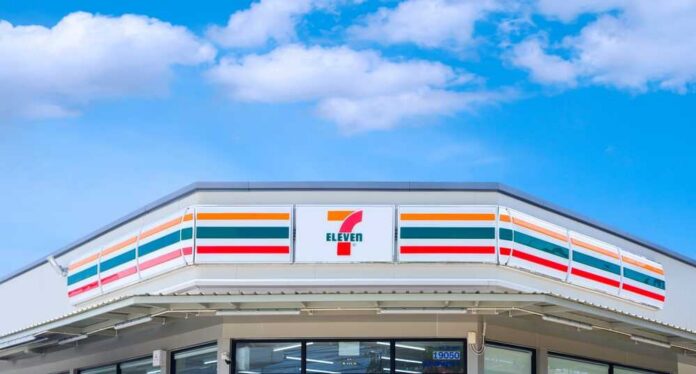
645 familiar 7-Eleven corners are about to vanish or radically change, and the real story is how America’s cheapest, quickest stop is being rebuilt around hot food, higher margins, and fewer places for the working class to stretch a dollar.
Story Snapshot
- Seven & i Holdings will close or convert 645 North American 7-Eleven stores in fiscal 2026.
- The chain is pivoting hard to larger, food-focused formats while opening 205 new locations.
- Many “closures” are conversions to wholesale fuel sites, which reduce the company count by dropping the convenience store.
- Lower-income families, franchisees, and small communities will feel the squeeze hardest as access shrinks.
645 closures are not a rumor, they are a signed corporate plan
Seven & i Holdings, the Japanese parent of 7-Eleven, has formally locked in a plan to remove 645 North American convenience stores during its 2026 fiscal year, which runs from March 1, 2026 through February 28, 2027.
This is not a leak or a guess; it is written directly into earnings documents filed with investors and lenders for their review. The move comes after several years of net store reductions in North America and continues a clear “shrink to grow” pattern across the chain.
The company expects to open 205 new stores during the same period, but that still leaves a net reduction in its footprint. By the end of the fiscal year, the North American base is projected to fall from more than 13,000 convenience outlets to about 12,272.
So anyone saying “they’re just moving stores around” is dodging the math. There will be fewer branded convenience locations, even after you count the shiny new ones built around the updated model.
7-ELEVEN TO CLOSE HUNDREDS OF U.S. STORES: Convenience store giant 7-Eleven plans to close hundreds of locations across the United States as part of a sweeping restructuring effort.
Full Story: https://t.co/MHACg6KY6t pic.twitter.com/KSbftxLiKD
— The Dallas Express News (@DallasExpress) July 19, 2026
The real pivot is from cigarettes and cheap snacks to hot food and margin
The closures are only one piece of a larger strategy: push 7-Eleven toward a “food-forward” convenience model that looks more like Wawa or Sheetz than the old Slurpee-and-smokes shop. The newer prototype stores emphasize prepared meals, fresh food, and larger footprints.
Those food-heavy stores have already delivered a double-digit sales boost compared with older formats in previous tests, and they generate far better profit margins than fuel or packaged goods. From a business standpoint, this is rational: follow the margin and follow the traffic.
Fuel still accounts for a large share of sales in the system, but it delivers only a small share of gross profit. Foodservice has grown from a minor part of in-store sales twenty years ago to nearly one-third today and now drives about forty percent of gross margin.
The parent company wants more of that high-margin food money and less of the low-margin fuel dependence. That means fewer tiny boxes on street corners and more large-format stores that can sell full meals, coffee programs, and branded snacks at restaurant-like prices.
Not every “closure” means the gas station goes dark
The headline “645 closures” hides an important detail: a significant number of sites are not vanishing from the map so much as switching categories in company accounting.
Earnings documents state that some of the affected locations will be converted into wholesale fuel stores, which 7-Eleven does not count as convenience outlets in its store numbers. In those conversions, the corporate convenience store goes away on paper, while fuel sales continue under independent operators.
Reporting from business press and company statements describes three buckets inside the 645 figure: permanent shutdowns of underperforming stores, conversions to wholesale fuel, and other contract or franchise terminations.
Wholesale fuel conversions often mean a local gas station survives but no longer has a corporate-run store attached. For the parent, this shifts risk and labor costs to third parties while preserving fuel revenue. For drivers, it can mean a simpler forecourt with fewer services and less competition for snacks and daily basics.
Who pays the price when a “portfolio optimization” hits the street
For investors, closing unproductive locations and leaning into higher-margin food sounds smart. For regular customers and observers, the real question is which neighborhoods lose access and who absorbs the pain.
The company itself admits that personal spending has begun to decline, especially among lower-income families squeezed by inflation, even as the broader economy looks strong on paper. When a chain retrenches, it tends to prune the weakest stores first, and those are often in poorer, less dense areas.
Seven & i Holdings (parent of 7‑Eleven North America) is executing a major reshaping of its U.S. store footprint in fiscal year 2026. An earlier filing said 645 7‑Eleven stores would be closed; the company’s latest quarterly presentation broke that down: plans to permanently c…
— MarketMoodz Sentinel (@MM_Sentinel) July 20, 2026
Research on convenience store survival shows that sales volume is the strongest indicator of whether a store survives over time. That means outlets in high-poverty regions or low-traffic corridors are at higher risk of closure, especially when corporate leaders chase margin improvement ahead of a public stock listing.
Reports already frame the trend as reducing competition and likely raising fuel prices, which hit working- and middle-class budgets hardest.
Franchisees, jobs, and the missing human math
One glaring hole in the official story is the issue of jobs. Seven & i has not disclosed how many workers will lose employment or be forced into new arrangements as the 645 stores close or convert.
That silence invites speculation, and it clashes with values that call for transparent impact on families when big corporations remake entire business lines.
Franchisees, clerks, and managers live in real towns and pay real rent; they do not appear anywhere in the sleek slide decks used to justify the strategy.
In Australia, franchisees have already gone public with claims that 7-Eleven evicted them from sites and blocked sales they tried to arrange, describing the process as “systematic” and a “rip-off.” Those allegations focus on another country’s legal framework, and courts in the United States have upheld 7-Eleven’s franchise system in key rulings.
Still, the pattern matters. When a company refuses to share a closure list, keeps job-loss numbers opaque, and fights back against protest, people are reasonable to worry about small-business owners being squeezed in the name of “portfolio optimization.”
Sources:
foxbusiness.com, finance.yahoo.com, nypost.com, restaurantbusinessonline.com, govinfo.gov, abc.net.au, bostonbar.org, vettedbiz.com