
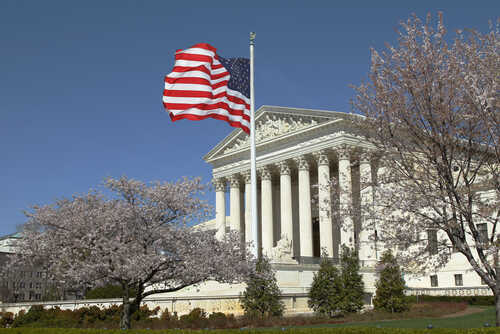
The Supreme Court delivered a stunning rebuke to President Trump’s immigration enforcement efforts, blocking his attempts to deploy National Guard troops to crime-ridden Chicago despite overwhelming public support for restoring law and order.
Story Highlights
- Supreme Court blocks Trump’s National Guard deployment to Chicago for immigration enforcement
- Court cites Posse Comitatus Act, finding Trump lacked authority for Illinois deployment
- Three conservative justices dissented from the majority decision
- Trump successfully deployed troops to D.C., Los Angeles, and Portland despite local opposition
Supreme Court Deals Setback to Immigration Enforcement
The Supreme Court on Tuesday, December 23, 2025, rejected President Trump’s emergency request to override a lower court ruling that blocked National Guard deployment to the Chicago area.
The Trump administration sought Court intervention after a District Court judge halted plans to send troops for immigration crackdown operations in October 2025.
This decision represents a rare judicial pushback against Trump’s aggressive immigration enforcement strategy, which has proven popular among Americans frustrated with sanctuary city policies that shield criminal aliens.
Supreme Court won’t allow National Guard deployment to Chicago in major loss for Trumphttps://t.co/65uZnnZopl
— The Hill (@thehill) December 24, 2025
Legal Constraints Hamper Presidential Authority
The Court’s unsigned order cited the Posse Comitatus Act, which restricts military involvement in domestic law enforcement unless specifically authorized by Constitution or Congress. The justices found the administration “failed to identify a source of authority that would allow the military to execute the laws in Illinois” at this preliminary stage.
While presidents possess certain National Guard deployment authorities, guardsmen typically cannot engage in civilian law enforcement activities. This legal framework creates frustrating barriers for executives attempting to restore order in lawless jurisdictions.
Conservative Justices Signal Support for Executive Action
Three conservative justices—Samuel Alito, Clarence Thomas, and Neil Gorsuch—filed dissenting opinions, suggesting they would have permitted the troop deployment. Justice Brett Kavanaugh authored a separate concurring opinion explaining his position.
The split among conservative justices highlights the complex constitutional questions surrounding federal intervention in local law enforcement. This division may signal future opportunities for Trump to refine his legal strategy and present stronger constitutional arguments for immigration enforcement operations.
Administration Maintains Broader Enforcement Success
Despite the Illinois setback, Trump has successfully deployed National Guard troops to Washington D.C., Los Angeles, and Portland over local Democrat leaders’ objections. These deployments triggered multiple lawsuits from governors like California’s Gavin Newsom and D.C. officials who prioritize political resistance over public safety.
White House spokesperson Abigail Jackson emphasized that “nothing in today’s ruling detracts from that core agenda,” noting the President’s commitment to protecting federal personnel and property from violent rioters while enforcing immigration laws.
The preliminary nature of this order suggests ongoing legal battles ahead as the administration works to fulfill campaign promises of immigration enforcement.
Trump’s determination to restore law and order in Democrat-controlled cities reflects his understanding that Americans demand action against sanctuary policies that endanger communities and undermine federal immigration law.