
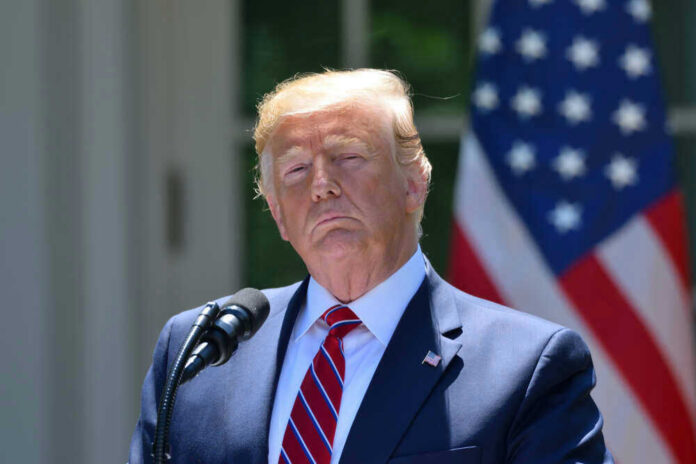
Two-thirds of Americans now reject President Trump’s handling of the Iran war, and many link it to higher prices at the pump and the grocery store.
Story Snapshot
- Overall job approval has hovered near record lows through spring and summer 2026.
- Support for U.S. military action against Iran slid to about one in three Americans.
- Only 28% approved of Trump’s handling of Iran in late-July polling.
- Most adults say the war raised food and gas prices, sharpening disapproval.
Public Backlash Focuses On Costs, Not Just Strategy
Polls show frustration with both the war’s aims and its price tag. The University of Massachusetts Amherst survey reports over two-thirds disapprove of how Trump has handled the Iran war. Four in five say the conflict raised food and gas prices, which hits households every week.
That kitchen-table squeeze frames the war as more than foreign policy. It feels like a bill due now. That is why softer support turned into hard disapproval once prices jumped.
Approval for military action has thinned as the months drag on. A late-August Reuters/Ipsos poll found just 31% supported U.S. strikes against Iran, down from 37% in March and 34% earlier in August. That slip is not a partisan echo chamber.
It marks a broad reluctance to keep paying in money and risk without a clear, near-term win. Voters reward strength with a plan. They punish open-ended fights that drain wallets and offer vague endpoints.
Job Approval Slides As War Support Erodes
Trump’s approval has tracked the war’s grind. Reuters/Ipsos recorded 36% approval in late March amid spiking fuel prices and rising war fatigue. By late June, approval fell to 34%, tying the low of his second term. Late August polling kept it near the floor at 33%, matching a record low.
The University of Massachusetts Amherst poll placed overall approval at 32% and showed a 14-point drop among Republicans since March, a rare sign of base erosion.
New UMass Amherst Poll Finds Over Two-thirds of Americans Disapprove of President Trump’s Handling of Iran War, as 4-in-5 Say the War Has Increased Food and Gas Prices : UMass Amherst https://t.co/qEeCfm8m91
— Ray La Raja (@raylaraja) August 31, 2026
Issue-specific readings paint the same picture. The Associated Press and the National Opinion Research Center report that only 28% approve of Trump’s handling of Iran, down from 34% a month earlier.
Cable recaps of a Washington Post survey described net approval of the war plunging from negative three points in early March to negative forty later, a steep slide that mirrors cost concerns and a drift in support. These are not blips. They are the through-line of 2026.
Why The Rally Never Came
Most wars give presidents a short bump. This one did not. Political science says “rally around the flag” effects fade fast when people doubt the mission, see mounting costs, or tie blame to the White House. The Iran war checks those boxes. Public patience depends on visible gains and clear limits.
Voters also want energy prices under control. When fuel and groceries rise while the mission stays murky, patience ends. The war then turns from symbol to surcharge, and support cracks.
🇺🇸 CNN POLL: VOTERS STILL TRUST TRUMP & GOP MORE ON IRAN
Here’s the fascinating part of the latest polling:
Even as voters express serious doubts about President Trump’s handling of the Iran war, Republicans still hold an advantage over Democrats when voters are asked whom they…
— Chaya Eitan (@ChayaEitan) September 1, 2026
Expectations align with these numbers. Americans will back force if they see a necessary, short, and successful action. They balk at a long, costly engagement with no defined finish. The recent polling streak shows that line crossed months ago.
One caution is in order: several polls track overall approval alongside views on war and inflation, so the causes overlap by design. But the pattern is plain. War disapproval and price pain are moving together.
What Could Reverse The Slide
Clear goals, a real coalition, and a timetable could help. So would progress that lowers risk and steadies markets. If the White House shows how the war ends, not just how it continues, support could improve.
Targeted steps to ease energy costs would matter even more. Voters judge outcomes they can see. A ceasefire, a narrow counterterror aim met, or a domestic energy push that trims prices could change the mood. Absent that, low approval will likely harden.
Sources:
apnews.com, reuters.com, umass.edu, cnn.com