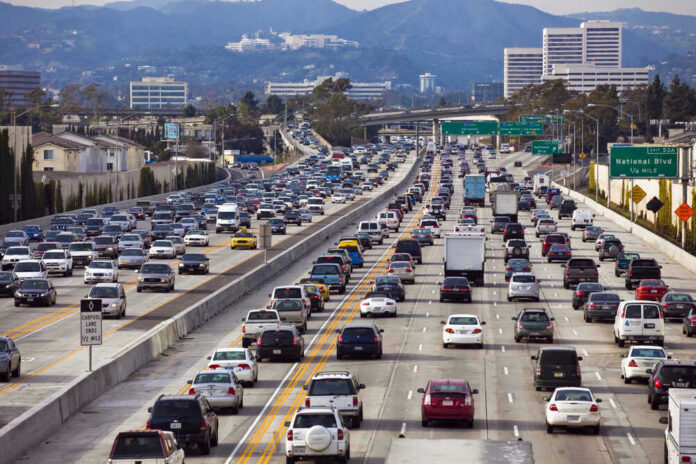
Four-dollar gas is back, not because you drove more, but because war and politics turned the pump into a battlefield.
Story Snapshot
- National average gas price has climbed back to about $4 a gallon, a level not seen since the spring war spike.
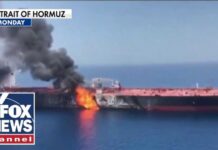
- Attacks and blockades tied to the Iran conflict are squeezing the Strait of Hormuz, where a huge share of the world’s oil moves.
- Refinery outages and tight supplies inside the United States add fuel to the fire, not just foreign missiles.
- Media and politicians mostly blame Iran, while skipping hard questions about U.S. policy, refinery capacity, and Wall Street traders.
Gas hits $4 again as war risk turns into everyday pain
The headline number is simple and brutal. The national average price for regular gas in the United States has pushed back to about $4 a gallon after dipping below that level in June.
Earlier in the year, American Automobile Association data showed prices jumping from just under $3 to above $4 in a matter of weeks once the conflict with Iran began and U.S. and Israeli strikes started. For drivers, it feels like a bad déjà vu: the same stations, the same cars, but every fill-up now eats a bigger slice of the paycheck.
Back in March, the move over $4 was treated as a kind of national shock. GasBuddy and American Automobile Association data captured the first time in more than three years that average prices broke the barrier, climbing to roughly $4.02 and then higher.
Reporters pointed to a 35 to 40 percent surge since late February, when military action against Iran ramped up. That spike set the stage. Now the story is not just about crossing a line; it is about staying painfully close to it, with “again” doing most of the emotional work in the headlines.
How a distant strait chokes local prices at the pump
The Strait of Hormuz may sound like a trivia answer, but your gas budget lives and dies by it. Before the war, roughly one-fifth of the world’s oil and gas exports moved through that narrow waterway.
Once Iran answered U.S. and Israeli strikes with its own attacks, tanker traffic dropped to what one tracking firm called a “single-digit trickle,” cutting off an enormous share of global supply. Analysts described it as the largest oil supply disruption in history, with Brent crude prices jumping more than 50 percent at one point.
BREAKING: U.S. gas prices have jumped to an average of $4 a gallon again as the U.S. and Iran launch more attacks. https://t.co/axKon9Fysc
— The Associated Press (@AP) July 20, 2026
Oil futures traders then stacked a “war risk premium” on every barrel moved. Reports described Brent crude soaring from the low $70s to near $120 as fears grew that the Strait could be locked down for months.
Every $10 to $15 added to the barrel shows up at your gas station days later. That is why national averages that sat under $3 before the war now hover near or above $4, a more than $1 jump tied straight to conflict headlines and shipping bottlenecks.
Refinery outages and homegrown bottlenecks
War alone does not explain the whole squeeze. Even Reuters, which strongly ties price spikes to the Iran conflict, admits that refinery outages inside the United States play a major role. Shutdowns in April removed around 150,000 barrels per day of capacity, which means less gasoline coming out the other end even if crude oil is available.
When you stack that on top of blocked tankers overseas, you get a compound shock: less crude getting in, and fewer refineries turning that crude into fuel.
Seasonal demand adds another twist. By late spring, Americans drive more, fly more, and run more equipment. That raises fuel use even during calm years. In 2026, this normal summer pattern met a war-driven supply crunch.
Some federal moves, like lifting limits on gasoline with higher ethanol blends, were sold as relief, but there is little public data on how much they really helped prices. Common sense says you cannot keep breaking things at home and abroad, then act surprised when costs jump.
Politics, media, and the blame game at $4 gas
Most major outlets stay locked on one story line: Iran war equals higher gas prices, full stop. They highlight drones hitting tankers, naval blockades, and “historic” supply disruptions.
Much less space goes to refinery capacity, regulation, or the role of big traders who profit when fear drives volatility. Some analysts openly talk about $5 to $7 gas if the Strait stays blocked, but rarely explain how likely those worst cases truly are.
US gas prices hit an average of $4 a gallon again as the US and Iran launch attackshttps://t.co/tP2ftWAvCq
— ken crichlow (@ken_crichlow) July 20, 2026
Political reactions have followed the same pattern. Secretary of State Marco Rubio called Americans “very fortunate” even as averages neared $4.50, a tone that can sound detached from daily reality. President Trump has said prices will drop once the Iran war ends, yet reports show costs kept climbing after a brief ceasefire.
Sources:
apnews.com, cnbc.com, wsj.com, bostonglobe.com, reuters.com, theguardian.com, foxbusiness.com, time.com, aljazeera.com