Eight days after Venezuela’s twin earthquakes, a lone security guard emerged alive from a buried basement, turning a collapsing mall into a case study in both human grit and hard rescue science.
Story Snapshot
- A 43-year-old guard survived eight days trapped beneath a collapsed shopping center basement.
- Seven nations spent roughly 100 hours coordinating a precise, high-risk tunnel rescue.
- A tiny security booth created a survivable air pocket, while tubes fed him water and oxygen.
- Media called it a “miracle,” but the facts reveal planning, skill, and sobering lessons for disaster response.
The day the mall became a trap instead of protection
The twin earthquakes that hit Venezuela’s coastal state of La Guaira tore open the normal rhythm of daily life. On June 24, the ground shook with magnitudes above seven, snapping buildings and throwing families into chaos.
At the Galerias Playa Grande shopping center, security guard Hernán Alberto Gil Flores was stationed in a basement booth when concrete and steel collapsed around him.
The mall structure failed, but the small cabin around him did not. That tiny mismatch between collapse and shelter gave him a narrow chance to live.
The booth acted like a reinforced box inside a failing structure. As floors pancaked, its walls and frame held just enough shape to form an “air pocket.” Disaster experts call this kind of space a survivable void.
It prevents crushing injury and keeps dust and debris from sealing off breathing room. For Hernán, that pocket was not comfortable. It was cramped, dark, and unstable. But it was intact, and that made all the difference.
Eight days under rubble: why he did not die
Medical research on earthquake entrapment shows people sometimes survive far longer than many assume. One study of major quakes found verified rescues as late as 13 to 14 days after impact, with average “last rescues” occurring around a week later.
Survival hinges on three basic things: air, water, and manageable injuries. Hernán had an air pocket and protection from heavy debris.
Once rescuers found him, they added water and oxygen through tubing pushed into the rubble. Those choices shifted him from “barely hanging on” to “sustainable until extraction.”
Rescue teams first confirmed he was alive using telescopic cameras and microphones threaded through narrow cracks. They spoke to him directly, coached him to move his arm, and monitored his responses.
He was conscious and able to move when they reached him, which signaled that his brain and vital organs had not suffered fatal damage during the collapse. That human voice link did more than give data. It told him he was not alone, which matters when you are fighting panic in the dark.
The 100-hour tunnel: seven nations against the clock
The operation that freed Hernán did not look like the usual image of disaster response: big excavators ripping at debris piles. Heavy machinery was risky here. One wrong move could crush the very pocket keeping him alive.
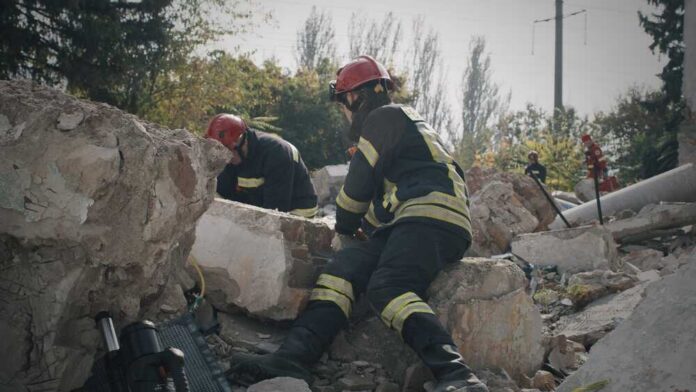
Urban search and rescue teams from Chile led a slower, more surgical plan, joined by specialists from the United States, Portugal, Mexico, Costa Rica, El Salvador, and Venezuela itself. They carved a human-sized tunnel through a maze of broken slab, twisted rebar, and hanging walls.
A Venezuelan security guard was pulled alive from earthquake rubble after nearly eight days trapped underground.#Venezuela #Earthquake #Rescue pic.twitter.com/A5P44iQmNf
— CREASE19 BREAKING NEWS (@Crease19NEWS) July 2, 2026
The mission took more than 100 hours of continuous work, with crews rotating through cramped shafts, cutting and shoring as they advanced. Some reports say 70 hours; others, 72 or 100; but all agree it was a multi-day push that went well beyond the usual “golden day” after a quake.
Teams made trade-offs: speed versus stability, risk to rescuers versus chance of collapse, all while fuel shortages and broken communication systems hampered wider operations.
Miracle story versus uncomfortable reality
Major outlets framed the rescue as a “miracle,” and on the surface that word makes sense. A man walking out alive after eight days underground stirs emotion and gives people hope. But “miracle” language can hide the real story: technical competence, physical laws, and choices made by prepared people.
That wider context is not pretty. Venezuela entered the disaster with humanitarian funding already cut back, leaving response systems weak. Social media filled with anger about slow government aid, fuel shortages, and cranes sitting idle while families dug with hand tools. International teams arrived from more than a dozen countries to fill gaps.
Hernán’s rescue shows what happens when high-caliber crews actually get the access, equipment, and time they need. The contrast quietly asks why such standards are not the norm everywhere, every time.
Facts, doubts, and the limits of the record
Some details around Hernán’s rescue do not line up. Different reports list him as 43 or 44 years old. The building is described as seven stories in some outlets and nine stories in others. Location names shift between Catia La Mar and La Guaira.
Timelines for the rescue run from about 70 hours to more than 100. These are not small mistakes, but they are also common in fast-moving disasters where reporters pull quotes from different teams and translations.
What matters is that no credible source disputes the core fact: Hernán was trapped under rubble after the quakes and pulled out alive eight days later. No doctor, rescue leader, or government agency has stepped forward to say this did not happen.
That lack of challenge does not prove every detail correct, but it does place the main claim on solid ground.
For people who care about accountability, the next step should be simple: official rescue logs, medical records, and engineering reports released to the public. Those documents would turn a gripping headline into a clean case file.
Sources:
apnews.com, ndtv.com, christianpost.com, timesofindia.indiatimes.com, instagram.com, dw.com, x.com, reuters.com, aljazeera.com, news.un.org, youtube.com, facebook.com, pubmed.ncbi.nlm.nih.gov, nytimes.com