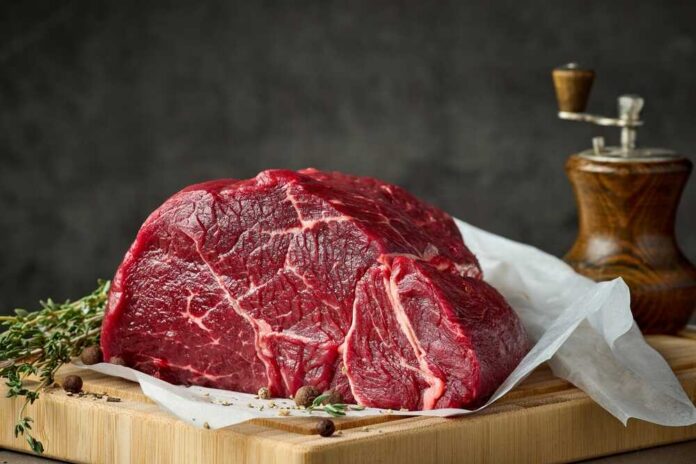
Nearly 30,000 pounds of raw beef imported from Argentina were pulled from the market because the product skipped a required U.S. import inspection. The recall turns on a border control step that the government treats as a basic safety gate, not a minor paperwork lapse.
Story Snapshot
- Corte Argentino USA LLC recalled about 29,628 pounds of raw beef products after the United States Department of Agriculture said the meat entered without import reinspection.
- The products were imported from Argentina and were tied to distributors and retailers in Florida and Texas.
- Officials said the recall was based on a compliance failure, not a confirmed contamination finding.
- No illnesses had been linked to the beef at the time of the notice.
What The Recall Covered
The United States Department of Agriculture’s Food Safety and Inspection Service said Corte Argentino USA LLC, based in Aventura, Florida, was recalling approximately 29,628 pounds of raw beef products imported from Argentina without the benefit of import reinspection
The notice said the affected products were produced in May 2026 and carried use or freeze-by dates in September 2026. Reporting on the recall said the meat went to distributors and retailers in Florida and Texas.
More than 3,200 pounds of ready-to-eat pastrami and corned beef products are being recalled nationwide over possible Listeria contamination, according to the USDA’s Food Safety and Inspection Service.
The recall covers products sold under the Midamar, Bea’s Best, and Kirsch… pic.twitter.com/SSWqBZA4yb
— FOX Business (@FoxBusiness) August 10, 2026
The recall list matters because it shows how quickly an import problem can turn into a consumer problem. Import reinspection is meant to check documentation, labels, packaging, and sometimes the product itself before meat reaches shoppers.
When that step does not happen, regulators treat the gap as enough reason to remove the product from commerce, even before any illness claim enters the picture.
Why Import Reinspection Matters
This case fits a familiar pattern in imported meat enforcement. The issue was not a lab result showing bacteria or foreign material. It was a process failure at the border.
Federal officials have used the same recall language before when imported beef arrived without being presented for reinspection, which makes this look less like a one-off drama and more like a recurring compliance problem.
That matters because the public often hears “recall” and assumes contamination. Sometimes that is true. Sometimes the government acts because it cannot verify that the product met the rules meant to protect the food supply.
In this case, the government’s concern was traceability and oversight. The logic is simple: if the inspection step is skipped, the safest move is to remove the meat until the records and routing can be sorted out.
What Shoppers Should Know
For consumers, the key question is whether any of the recalled beef is still sitting in a refrigerator or freezer. The reporting said the product had already reached distributors and retailers, which raises the odds that some packages could still be in circulation.
The notice did not report any illnesses tied to the meat, but officials still urged people not to eat recalled products and to throw them away or return them.
The larger lesson is plain: a food recall does not always start with a sick person or a bad test. Sometimes it starts with a missing checkpoint.
That may sound bureaucratic, but in food safety, bureaucracy is the barrier between a shipment and a problem no one wants on the dinner table. This recall shows how seriously federal inspectors treat that barrier, especially when imported meat is involved.
Sources:
foxbusiness.com, abc7news.com, yavapaiaz.gov, thebrooksinstitute.org, usatoday.com, fox10phoenix.com