
A stopped high-speed train was struck from behind on Spain’s Madrid–Seville corridor, leaving dozens dead and a nation stunned.
Story Snapshot
- Officials reported a rear-end collision on the Madrid–Andalusia high-speed line.
- Two trains traveled the same direction; one was stopped when hit, a regional spokesperson said.
- Local authorities reported at least 39 dead as updates came in.
- Two carriages derailed, with cars dropping toward an embankment, according to early accounts.
What happened on the Madrid–Seville corridor
Rail administrators halted traffic on the Madrid–Andalusia high-speed line after a rear-end crash between two trains in Toledo province. The infrastructure manager described the event as a rear-end collision, and media carried that official notice live as rescue teams worked along the track. Regional authorities said both trains were southbound when the following train struck the tail of the other while it was stopped. Emergency services reported mass casualties, and crews moved survivors to hospitals as daylight faded.
🚨🇪🇸 TRAGIC NEW VIDEO:
We’re getting more footage of this morning’s high-speed train crash near Toledo, Spain, that killed at least 46.
It happened on the Madrid-Andalusia line between the Iryo Train with 147 passengers and a baby, and the Renfe train, with 397 passengers.…
— Mario Nawfal (@MarioNawfal) October 28, 2026
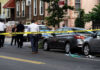
Local authorities placed the death toll at least at 39 during the evening briefings, with the count expected to change as searches continued along the embankment and ditches near the line. Reporters on the scene described coaches off the rails and twisted metal hanging over a drop, consistent with a high-energy rear impact. Dispatchers requested cranes and lighting masts while medics set up triage near access roads cut into farmland. Police secured a long perimeter to keep the corridor clear.
The trains, the route, and the derailment pattern
Reports identified a Renfe AVE service and an Iryo high-speed service traveling from Madrid toward Seville at the time of impact. The crash area sits in Toledo province on the core north–south spine that links the capital to Andalusia. Early accounts referenced segments between Mora and Orgaz and between Los Yébenes and Urda, two stretches along the same corridor used by many long-distance services daily. Two carriages derailed, and at least one coach appears to have slid toward an embankment, magnifying injuries inside.
Authorities emphasized that investigators had not issued a cause. Officials referenced standard lines of inquiry: signaling logic, dispatcher commands, and human factors on both trains. Mechanical checks on braking systems and the event recorders will anchor the timeline. That method follows common practice after rear-end collisions, where the forward train’s status and the following train’s braking distance become the central puzzle pieces for reconstructing seconds that decide life or death.
Why rear-end crashes still happen on advanced lines
Rear-end collisions occur when a lead train slows or stops and the following train does not get enough time, distance, or warning to brake. The path often includes a chain: a signal aspect, a control-center instruction, or a driver’s delayed response, followed by physics that cannot be bargained with. High-speed systems layer safeguards to prevent this chain, yet no stack is flawless. Safety engineers study these rare failures so that one gap never lines up with another again.
🚨 SPAIN TRAIN CRASH – what we know
📍 Toledo, Madrid-Seville high-speed line
🚆 Renfe + Iryo, same direction, one hit the other from behind
💔 At least 10 confirmed dead, officials say number will rise
👥 397 + 147 passengers
🚧 Line suspended#spain #accident #horrible pic.twitter.com/AbYGOH1lF3— Dexter Markus News (@markusdexternew) October 28, 2026
Spain’s rail network carries a strong safety record, but past tragedies drove reforms. The Santiago de Compostela derailment in 2013, though a different type of accident, showed how speed, human error, and system design can combine with lethal force. Courts and European Union reviews pushed changes to training, oversight, and independent investigation standards. Those lessons now shape how Spain will examine this collision, from data gathering to public reporting and accountability.
What to watch next: data, identities, and accountability
Investigators will collect dispatcher audio, signal logs, and event recorder data from both trains. The infrastructure manager will map wheel marks, coupler heights, and debris scatter to fix speeds and angles. Renfe and Iryo will confirm train numbers and passenger lists to match families with facts. The Ministry of Transport will coordinate public updates. Political leaders paused campaign events, but the hard work now passes to crash labs and courts that turn grief into lessons and rules.
Sources:
irishtimes.com, independent.co.uk, thenews.com.pk, cbc.ca, english.elpais.com, ar5iv.labs.arxiv.org