

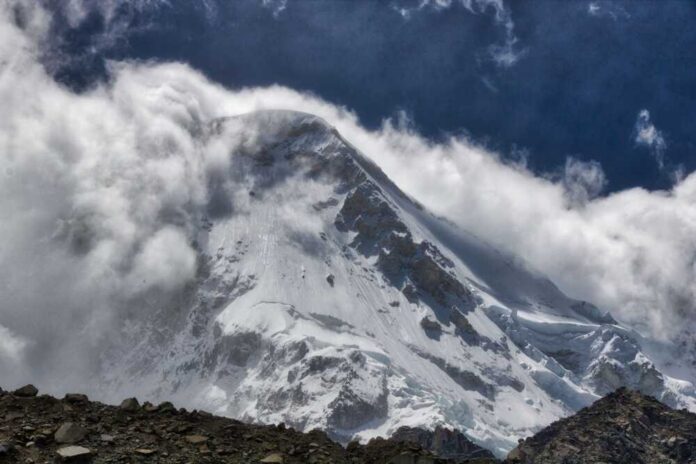
A 57-year-old climber summited Nepal’s Ama Dablam, then fell nearly a mile to his death on the way down.
Story Snapshot
- Wolfgang Waschiczek reached Ama Dablam’s summit on October 25, then went missing during the descent the next day.
- Reports place his fall at about 1,500–1,700 meters, or roughly 4,920–5,600 feet.
- Search teams found his body around 4,500–4,600 meters and recovered it by helicopter.
- Expedition operators on the ground provided key details about the timeline and recovery.
The Summit, The Descent, The Vanish Point
Wolfgang Waschiczek, a German climber, summited Ama Dablam on October 25 with his guide, Sonam Lama. They returned to Camp III that evening, a high perch on the mountain’s classic route. He went missing during the following day’s descent. Expedition staff reported him overdue and out of contact. This sequence fits a known high-altitude risk window: the long, exposed downclimb after a summit push, when fatigue rises as focus drops.
Search teams launched a helicopter-assisted sweep and soon spotted a body far below the camp. Crews recovered Waschiczek from about 4,500–4,600 meters, beneath the steeper upper ridges. The location matched a long fall from higher on the route, not a short slip near camp. Officials with Real Himalaya, the expedition logistics company, confirmed the recovery and transfer for further handling, providing an on-the-record operational account.
How Far He Fell, And Why That Range Matters
Published reports estimate the fall at 1,500 to 1,700 meters, or about 4,920 to 5,600 feet. That spread reflects the terrain’s angles and the gap between the last known position near Camp III and the recovery site much lower on the mountain. The core fact stands: a prolonged, lethal fall during descent. Some outlets rounded that span to “nearly 5,000 feet,” which fits the low end of the reported range without claiming false precision.
Reporters on the scene traced the summit-to-descent timeline to expedition staff and company leaders who managed the search and recovery. Gokul Thapa and colleagues at Real Himalaya described when Waschiczek was reported missing and how the team located him. Their statements supplied crucial times and locations while rescue teams executed the helicopter retrieval. Grounded, named sources in the Khumbu region give this account its backbone.
Why Descents Kill More Climbers
Himalayan death records show a clear pattern: more climbers die on the way down than the way up. The reasons are simple and harsh. Bodies are spent. Judgment wobbles. Weather shifts. Fixed lines glaze. Even strong climbers can misstep. A large study of Everest deaths found most fatalities above 8,000 meters occurred during the descent after summiting, a caution that echoes across the region’s steep routes, including Ama Dablam.
🔴 German climber dies in 5,000-foot fall day after summiting Ama Dablam
Wolfgang Waschiczek, 57, fell approximately 1,500 meters from Camp 3 on Monday, one day after reaching the 6,812-meter summit of Ama Dablam in Nepal's Khumbu region. His guide Sonam Lama left him in a tent… pic.twitter.com/4nWCvyPV6c
— NewsTongue (@NewsTongueX) October 27, 2026
Ama Dablam is famous for its beauty and exposure. The standard route links airy ridges, mixed ice and rock, and fixed-rope sections where a stumble can turn into a long fall. The mountain’s accident history includes both falls and ice hazards, like the 2006 serac collapse that swept Camp III. Climbers accept this risk because precision and discipline can manage it—but only so far. On this peak, the margin for error is thin and short-lived.
Facts We Know, And The Lesson They Carry
The facts are stark. Waschiczek stood on Ama Dablam’s summit. He reached Camp III that night. He was later missing. Searchers found him far below and recovered his body by helicopter. Reports cite an estimated fall of roughly 1,500 to 1,700 meters. The reporting does not identify the exact trigger of the fall, but the descent window remains the prime risk zone for technical peaks in the Himalaya.
American common sense draws a clean lesson from the record. Success is not the summit photo; it is the safe return to base. Climbers, guides, and outfitters should front-load energy and time for the descent, not just the push. Conservative planning saves lives: tighter turnaround times, sharper rope discipline, and hard calls when fatigue creeps in. The mountain does not grade on ambition. It pays only for control, especially on the way down.
Sources:
cbsnews.com, thehimalayantimes.com, bmj.com, en.wikipedia.org