
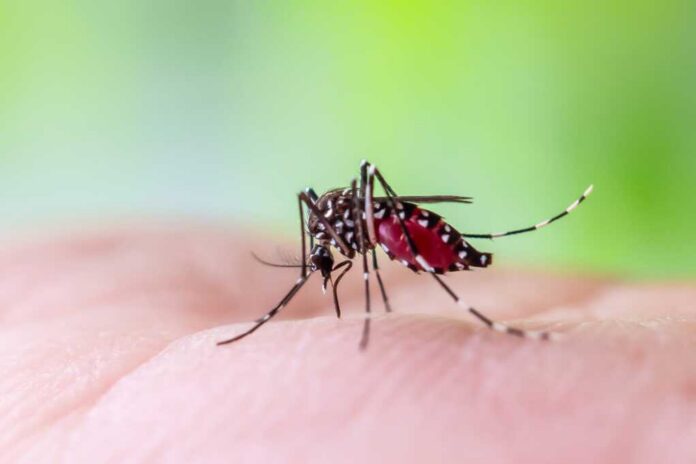
A lab-tested smart trap says it can spot dengue-carrying mosquitoes with more than 98% accuracy—and Florida wants it on the front lines next season.
Story Snapshot
- University of South Florida researchers built an AI mosquito trap with 98%+ accuracy in lab tests.
- Florida battled its largest dengue surge in decades in 2026, centered around Tampa Bay.
- Field validation is planned with Hillsborough County before wider deployment.
- Faster species ID could sharpen spraying, staffing, and community alerts when hours matter.
What the USF team built and why it matters now
University of South Florida researchers created a smart mosquito trap under a startup called Digitomy. The device uses bait and airflow to draw in mosquitoes, then captures images and uses artificial intelligence to classify species. In lab tests, it achieved over 98% accuracy in identifying species that spread dengue. That level matters because control crews need to know, fast and locally, if Aedes mosquitoes are active. The goal is same-day species intelligence, not next-week lab reports.
Florida’s 2026 dengue surge made speed the scarce resource. State reports and local coverage tied more than 500 locally acquired cases to 12 counties, with Hillsborough County hit hardest. Health teams raced to find breeding spots, treat water containers, and target adult mosquitoes. Traditional traps and hand sorting slow decisions. A grid of smart traps that flags species in near real time could tell crews where to spray, where to knock on doors, and where to stand down.
Where the evidence stands on promises and proof
The 98% figure comes from controlled laboratory testing, not busy neighborhoods with mixed insects, wind, and dust. The researchers plan field validation with Hillsborough County to confirm performance outside the lab. That step fits a pattern in dengue work. Tools often prove they can identify or count mosquitoes, yet clear links to fewer infections take longer to show. Past reviews found that evidence strength drops as claims move from lab wins to real health impact.
Evidence across decades of dengue projects shows what usually moves the needle. Community cleanup, container covers, and house screening reduce risk and key mosquito indices in many trials. Chemical spraying shows mixed results when used alone. Integrated programs work best when they blend community action with targeted control. Suppose smart traps can show crews where Aedes species spike today; they can direct these proven steps faster and with less waste. That is the value test that awaits the device.
How AI species ID could tighten the dengue playbook
County teams need to pick neighborhoods, streets, and even blocks for action. Smart traps can feed maps that highlight hot spots by species, not just total insects. Leaders can shift trucks, apply larvicides where containers cluster, and alert residents to cover water and fix screens. Crews can avoid broad spraying that misses the target and burns budget. Faster species calls also help labs decide where to test mosquito pools for virus presence to confirm active risk.
USF's AI trap tags species in lab tests at 98%+ accuracy, same day.
But it could shrink the gap between catch and response.
Speed is the outbreak tool nobody budgets for. 👀#AI #Dengue #Florida #PublicHealth #TechNews@USouthFlorida @HillsboroughCohttps://t.co/KaK7daw2QE— RelAItool (@relaitool) November 15, 2026
Florida’s outbreak set a hard deadline for better tools. A clear path runs from fast species intel to smarter moves. That includes earlier door-to-door talks, timed container dumps before rain, and focused adulticide in blocks where Aedes bite at dawn and dusk. These steps align with evidence favoring local action and household protection over blunt, county-wide sprays. A device that trims days to hours on species ID can turn that playbook from reactive to proactive.
The standard to judge this tech in 2026 and beyond
Taxpayers should ask four plain questions. One, does the trap still hit high accuracy outdoors in Florida heat and wind? Two, does it run all week without fussy upkeep? Three, do the alerts change where and when crews act? Four, do those changes lead to fewer dengue infections? The first two answers come from field validation. The last two answers come from program data matched to case trends. That is how strong public health spending should be made.
Sources:
foxnews.com, usf.edu, heraldtribune.com, wusf.org