Two ancient gold rings, one etched with an early Indian script, just turned a Thai rice field into a time machine.
Story Snapshot
- Thai archaeologists found two gold rings with human remains at Don Yai Thong in Phetchaburi.
- Experts estimate the age at about 1,900 to 2,100 years, in Thailand’s late prehistoric Iron Age.
- One ring bears characters read as “the one protected by Pushya,” a noted Indian zodiac sign.
- The find points to early trade and Indian cultural links across Southeast Asia.
Discovery In A Field: Gold, Bones, And A Message From The Stars
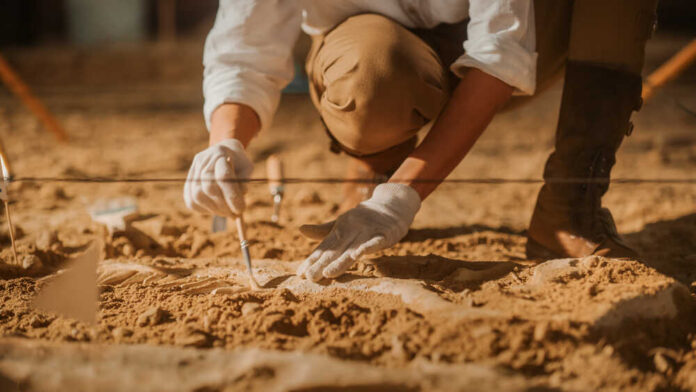
Archaeologists from Thailand’s Fine Arts Department uncovered two gold rings last week at the Don Yai Thong site in Phetchaburi province. The team found the rings with human bones during an ongoing excavation about 80 miles southwest of Bangkok.
One ring carries characters that experts read as a blessing tied to Pushya, a highly auspicious zodiac sign in Indian astronomy. The other is a plain gold band. Officials estimate the rings date to roughly 1,900 to 2,100 years ago.
Gold rings around 2,000 years old found at Thail archaeological site https://t.co/0tj6feMkkL
— Express & Star (@ExpressandStar) July 6, 2026
Officials say the site emerged after locals spotted pieces of ancient bronze drums in a rice field earlier this year. Excavations since February have revealed at least eight skeletons, bronze and gold jewelry, pottery, and other grave goods. The burial goods suggest status and wealth.
The Fine Arts Department plans to finish fieldwork soon and later display key finds to the public. The rings are now under conservation at a national museum for further study.
Why An Indian Script In A Thai Grave Makes Sense
Researchers link the inscribed ring to early contact with traders from the Indian subcontinent. The term read on the ring, linked to Pushya, fits known religious and astrological ideas that spread with merchants and ritual specialists.
Scholars have long noted that gold ornaments, scripts, and religious symbols reached Southeast Asia during the Iron Age, alongside growing sea trade with India. This find joins that wider pattern of imported ideas and goods across the region.
Historians describe a trade web in which Southeast Asia consumed gold artifacts but left little evidence of local gold production until later eras. Studies synthesizing evidence from Thailand, Vietnam, and beyond show a rise in gold ornaments in Iron Age cemeteries as contact with India grew.
The pattern is consistent: precious items signal status, belief, and far travel. A ring inscribed with Indian characters placed on a high-status burial fits the rulebook of that age.
Reading The Ring: What Experts Can And Cannot Claim Yet
The Fine Arts Department reported an initial reading of the script and suggested the owner may have been a merchant from the Vaishya caste. That idea tracks with trade-era burials, but it remains an informed inference, not a proven identity. Epigraphers will test the reading with better imaging.
Conservators will analyze alloy composition and wear. Those steps can confirm the date range and help pinpoint workshop style. For now, the script, age, and context point to strong Indian ties.
Archaeologists in western Thailand have unearthed two gold rings believed to be around 2,000 years old at a newly discovered archaeological site, officials said. One of the rings found on Thursday was engraved with characters believed to be Bhrami script, an ancient Indian… pic.twitter.com/RHq56EFbwi
— Hindustan Times (@htTweets) July 6, 2026
Questions remain that deeper lab work can settle. Was the ring made in India and shipped, or crafted locally by an artisan trained in Indian styles? Did the person live within an Indian-speaking community, or simply buy a prestige item from traders?
Regional studies show that gold traveled far and wide, often as finished ornaments, making both options possible. The next round of analysis could also match the alloy to known clusters from other Iron Age finds.
What This Means For The Map Of Ancient Trade
The Phetchaburi rings add a clear point on the trade map that linked South Asia to mainland Southeast Asia two millennia ago. The site’s bronze drums, high-status burials, and inscribed gold tie into a corridor of exchange that scholars already see across Thailand and Vietnam.
This is not a one-off curiosity; it is another sturdy plank in a growing bridge of evidence. Each new provenanced artifact reduces guesswork and strengthens the timeline of cultural exchange.
Why It Matters Now: Heritage, Proof, And Common Sense
Public agencies earn trust when they document, conserve, and share finds like these. The Fine Arts Department moved the rings to a museum and flagged rising groundwater as a risk to the site. That is the right call: protect first, then publish.
Good stewardship beats rumor and looting. These rings survived two thousand years; they deserve another century of careful study and public view.
Sources:
abcnews.com, facebook.com, instagram.com, news.abplive.com, youtube.com