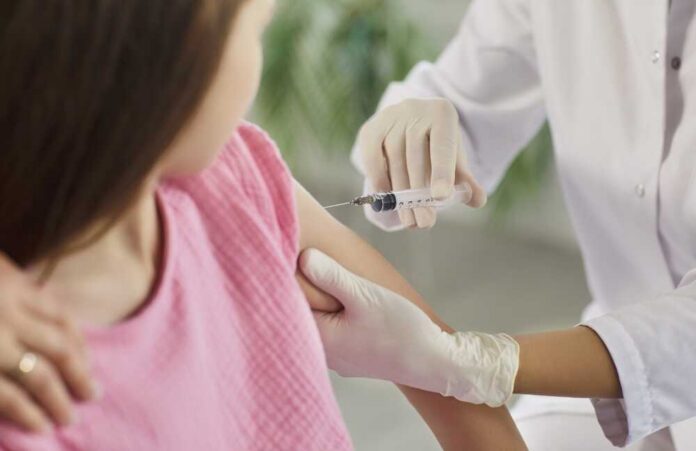
U.S. kindergarten vaccine exemptions reached a new high while coverage slipped again, widening cracks in school immunity.
Story Snapshot
- Exemptions rose to 3.6% in 2024–2025, a record in federal tracking.
- Thirty-six states and Washington, D.C., saw increases; 17 topped 5%.
- Most exemptions are nonmedical; medical exemptions remain rare.
- Lower coverage can invite outbreaks and learning loss in some districts.
Record exemptions signal slippage in school protection
Centers for Disease Control and Prevention data show kindergarten exemptions from one or more required shots hit 3.6% in the 2024–2025 school year, up from 3.3% the year before.
Exemptions rose in 36 states and Washington, D.C., and exceeded 5% in 17 states, marking the widest spread yet of higher-risk pockets. The rise mirrors recent years, not a one-off spike. The trend pushes coverage for core vaccines down, especially where school follow-up and documentation lag.
The mechanics behind this shift are not a mystery. State laws set which shots children need for school entry. States also decide how parents claim exemptions, what proofs schools must collect, and how quickly staff must follow up on missing records.
Where rules are clear, and paperwork is firm, coverage tends to be higher. Where forms are easy and audits are light, exemptions climb and more students attend without complete records.
Nonmedical exemptions drive the increase
Federal reports show that medical exemptions account for a tiny share of the total, often about 1/5 of 1%, because true medical reasons are rare and specific. Nonmedical exemptions—religious or personal belief—make up the vast majority.
That pattern continued through 2023–2024 and into 2024–2025 as nonmedical claims rose and spread across jurisdictions. The data point to policy design more than biology. When the process makes opting out easier than catching up, opt-outs grow.
School vaccination rates inch down again to record low as exemptions reach new high. https://t.co/FyfOtQiufc
— CBS News (@CBSNews) August 17, 2026
Americans emphasize parental duty, local control, and practical guardrails. The data support a simple balance. Keep medical exemptions for the few who need them. Set straightforward, uniform documentation so schools do not drown in red tape.
Require brief counseling or a notary step for nonmedical exemptions, which several states already use. These light-touch checks respect freedom while nudging families to consider the community impact of their choice.
Why a few percentage points matter for outbreaks
Measles, chickenpox, and pertussis exploit gaps. They do not wait for a statewide average; they surge where clusters form. When a district crosses the five percent exemption threshold, the risk of a cluster rises, and a single exposure on a bus or in a cafeteria can sideline dozens of students.
Some schools then impose exclusion rules for unvaccinated children during outbreaks, resulting in lost class time and family disruption. Higher exemption pockets heighten these risks even when statewide numbers look steady.
CDC data confirms it: Kindergarten vaccine exemptions hit a record 4.2% in 2025-26 (up from 3.6%), covering ~155,000 kids. Nearly all the increase is non-medical.
MMR coverage slipped to 92.4% — still high nationally, but below the 95% herd-immunity mark and down in more than…
— Jeffcoly | ZarGates (@Jeffcoly) August 18, 2026
Several fixes cost little and avoid heavy mandates. Close data gaps so schools quickly spot missing records. Offer weekend “one-and-done” clinics before school starts. Sync school enrollment systems with immunization registries to cut paperwork.
Use short grace periods for late shots, then enforce them. Publish campus-level dashboards so parents can see real coverage, not just averages. These moves are routine government competence, not culture war theater, and they work where tried.
The next school year will test whether states course-correct
The exemption share has climbed year after year since 2021–2022, rising from 2.6% to 3.0%, then to 3.3%, and now to 3.6%. That is a slow drip, not a tidal wave, but slow drips rot beams if no one patches the leak.
States that tightened exemption steps after outbreaks saw coverage rebound without drama. States that loosened procedures saw exemptions keep rising. The choice now is clear: simple guardrails, steady follow-through, and less disruption for kids and schools.
Sources:
washingtontimes.com, apnews.com, cidrap.umn.edu, cdc.gov, kff.org, frontiersin.org