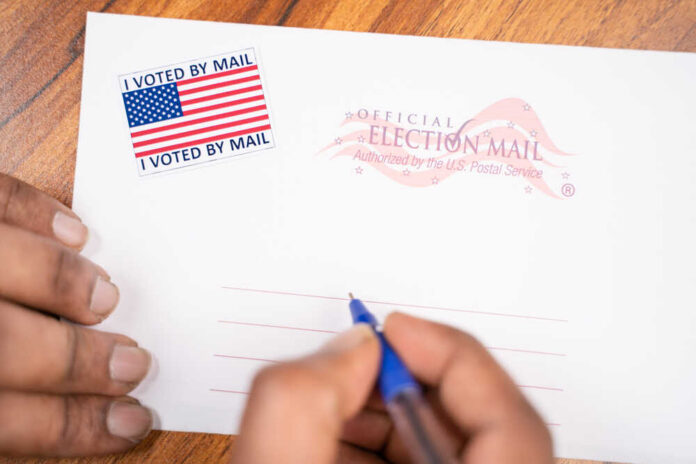
The administration asked the Supreme Court for urgent permission to tighten mail-ballot rules while ballots are already going out.
Story Snapshot
- The Justice Department filed an emergency request to implement the order nationwide before more ballots mail.
- Ballots have begun mailing in some states, which the administration says makes delay risky.
- The Court gave the administration a preliminary opening but did not decide legality.
- Opponents say the plan exceeds executive power and could block lawful ballots.
The emergency push and the clock the Court cannot stop
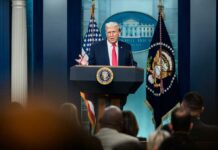
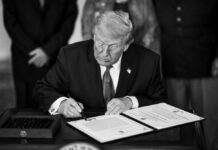
The Justice Department filed an emergency application asking the Supreme Court to allow immediate enforcement of President Trump’s mail-ballot order across the country.
The filing argues that courts blocked the rule in parts of the nation while ballots were already being printed and mailed, which creates confusion and uneven treatment for voters and election officials.
The administration frames the request as a short-term stay to keep one national standard in place while broader legal fights continue in lower courts.
BREAKING: The Trump administration makes another appeal to the Supreme Court to allow mail ballot restrictions. https://t.co/j7mizn0PWs
— The Associated Press (@AP) September 6, 2026
Solicitor General John Sauer told the Court that ballots had already started going out in North Carolina, with Alabama and several more states close behind. The filing claims each day of delay worsens the problem because ballots move on fixed calendars, not legal timelines.
The administration says an administrative stay would remove uncertainty and make clear that compliance for the Postal Service and state partners must begin now while appeals proceed.
What the order actually requires and why it matters now
The executive order directs federal agencies to standardize how mail ballots move through the system. Reports describe a federal list of eligible voters and specific ballot-envelope standards tied to Postal Service delivery rules.
The aim, as stated by the administration, is to ensure ballots go only to eligible voters and track envelopes with more precision.
The stakes rise because election officials are already preparing mailings; shifting standards midstream risks misroutes, mismatches, or process breakdowns.
Supporters of the order frame it as a basic compliance and chain-of-custody upgrade. They argue the federal government has clear authority over its agencies, including the Postal Service, and should set uniform handling rules to reduce weak spots in the mail stream.
They see the Court as the only venue that can impose a nationwide pause on the patchwork of injunctions that now split states into different rule sets while the season’s first ballots leave the print shops.
What courts have done so far and what they have not
The Supreme Court removed at least one procedural hurdle on August 24, giving the administration an early but limited win that did not decide the order’s legality. That move opened a path for planning and coordination but left the core constitutional questions for later.
Other courts, including in Massachusetts, raised sharp concerns about whether the Postal Service documented how the system would work at scale and whether the record showed a need to justify fast rollout.
Opponents, including Democratic-led states and voting-rights groups, argue the plan exceeds executive power and intrudes on state control over elections.
They say the Postal Service cannot set voter eligibility rules or refuse to deliver lawful ballots, and they warn that sudden changes close to an election would likely disenfranchise voters who rely on the mail.
A Reuters report noted a judge highlighted a lack of concrete evidence of mail-ballot fraud that would warrant these federal limits.
How to weigh the claims through a stability-first lens
Election law has a strong bias against late turbulence. Courts often avoid changes close to voting because confusion itself can harm voters.
The administration counters that a stay now prevents an even bigger mess: different rules in different states while mail ramps up.
On the merits, the question turns on clear lines of authority and proof of need. On timing, the question is which path causes less chaos when millions of envelopes are already moving.
Trump administration petitions Supreme Court to allow mail ballot restrictions | https://t.co/4YCwQtyBIB https://t.co/hdyLoMJcPy
— Woody (@dw2025rmeat) September 6, 2026
Common sense points to three tests. First, show lawful authority: if the executive directs its own agencies, the record must spell out the legal hook in plain terms.
Second, show readiness: the Postal Service should document systems, error rates, and training before flipping the switch. Third, show the harm: if fraud risk justifies the cure, bring state-by-state evidence, not general claims. The side that meets those tests should win the emergency call.
Sources:
reuters.com, apnews.com, aclum.org, politico.com, aclu.org, aljazeera.com