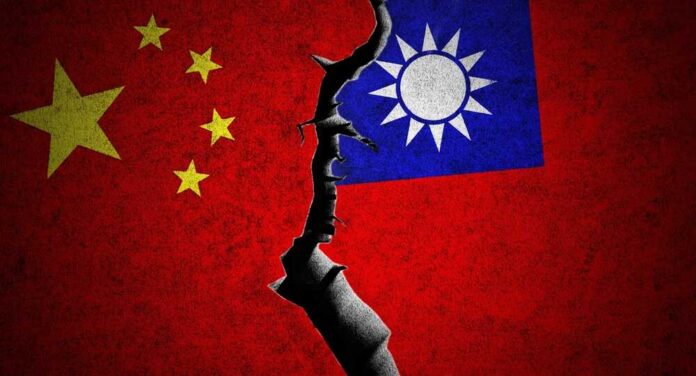
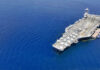
China launched its largest military drills ever around Taiwan on Monday, deploying record forces in seven zones to practice cutting off the democratic island from U.S. support—a brazen rehearsal for invasion that directly threatens American strategic interests in the Pacific.
Story Highlights
China’s “Justice Mission 2025” drills are the largest ever, spanning seven zones around Taiwan with live-fire exercises
Beijing deploys 89 aircraft, multiple warships, and futuristic robotic weapons in response to $11.1 billion U.S. arms package
Exercises specifically target Taiwan’s vital ports and practice blocking international intervention in potential invasion
Taiwan mobilizes U.S.-made HIMARS systems and maintains defiant stance against Chinese aggression
Beijing Escalates Military Intimidation Campaign
China’s Eastern Theatre Command deployed unprecedented military assets for its “Justice Mission 2025” exercises around Taiwan on December 29, 2025. The operation involves troops, warships, fighter jets, and artillery conducting live-fire drills and simulated strikes across seven designated zones—the largest coverage area in any previous exercise. These war games represent China’s sixth major military intimidation campaign since Nancy Pelosi’s 2022 Taiwan visit, demonstrating Beijing’s growing boldness under weak international leadership that preceded Trump’s return to office.
China 'all-dimensional' largest live-fire drills to 'blockade & shield Taiwan from US' after massive Trump arms deal
Army navy air & rockets move in tomorrow in biggest show of force since Taiwan Strait Crisis pic.twitter.com/vvpobgPbXN
The timing reveals China’s strategic calculation, launching these provocative drills just 11 days after the United States announced an $11.1 billion arms package to Taiwan—the largest weapons sale ever to the democratic island. Beijing’s defense ministry immediately protested the sale and warned of “forceful measures,” showing how American support for Taiwan’s self-defense capabilities directly triggers Chinese military responses. This pattern underscores the critical importance of maintaining strong deterrence against communist aggression in the Pacific theater.
Advanced Weaponry Showcases Invasion Preparations
Chinese military forces revealed disturbing new capabilities during these exercises, releasing footage of automated humanoid robots, microdrones, and weaponized robotic dogs attacking simulated targets on Taiwan. This futuristic military technology has never been publicly showcased before, indicating Beijing’s rapid advancement in autonomous warfare systems designed specifically for urban combat scenarios. The deployment of such sophisticated weaponry demonstrates China’s serious preparation for actual conflict rather than mere political posturing.
Propaganda materials accompanying the drills featured graphics with targeting crosshairs over four Taiwan locations and posters showing civilian ships converted for amphibious assault operations. One poster declared “Any foreign interference that touches the shield of justice shall perish! Any separatist scoundrels who encounter the shield shall be destroyed!” This threatening rhetoric directly targets American military assistance and reveals Beijing’s determination to eliminate Taiwan’s democratic government through overwhelming force if diplomatic pressure fails.
Taiwan Demonstrates Resolute Defense Capabilities
Taiwan’s military responded with its own show of defensive strength, deploying U.S.-made HIMARS rocket systems capable of striking targets 186 miles away across the Taiwan Strait. These highly mobile artillery systems could effectively target Chinese coastal installations in Fujian Province during actual conflict, providing Taiwan with credible counter-attack capabilities. The island’s defense ministry coordinated with coast guard vessels to confront Chinese ships near territorial waters while maintaining high alert status for potential rapid response operations.
Despite facing 89 Chinese military aircraft, 14 naval vessels, and 14 coast guard boats operating around the island simultaneously, Taiwan’s markets remained stable and closed 0.9% higher. This economic resilience reflects public confidence in defensive preparations and international support, particularly from the United States. Taiwan’s aviation authority worked to maintain civilian flight operations despite China designating “temporary danger zones” in Taipei’s airspace, showing determination to preserve normal life under military pressure.