Two men traded gunfire in the middle of a packed Toronto street festival, leaving two dead, four wounded, and a shaken city arguing over whether it had just lived through an “active shooter” nightmare or something even more troubling: targeted gun violence exploding inside a family event.
Story Snapshot
- Two men were killed and four people wounded during gunfire near the Salsa on St. Clair street festival.
- Police say the shooting was an exchange of gunfire between individuals targeting each other, not an active shooter.
- Initial alerts warned of an active shooter, spreading fear through a crowd of about 13,000 people.
- No suspects are in custody, and the festival was shut down as leaders condemned “gangster violence.”
Gunfire erupts beside a crowded summer street festival
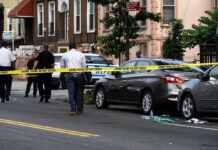
Toronto Police say the shooting started around 8:12 p.m. Saturday near St. Clair Avenue West and Arlington Avenue, just steps from the Salsa on St. Clair Latin street festival. Thousands of people had packed the area to dance, eat, and enjoy live music.
Instead, many ended the night sprinting for cover as shots rang out, sirens flooded the street, and the sound of festival music mixed with screams and police commands.
Two men were killed. Four other people were taken to hospital with gunshot wounds described as serious but not immediately life-threatening. Police and some media outlets first reported up to six people shot, a sign of how chaotic the early minutes were.
Officers quickly locked down blocks around the scene, ordering people indoors, as terrified families and vendors tried to understand if they were under attack from a roaming gunman.
From active shooter panic to targeted “exchange of gunfire”
As early 911 calls came in, Toronto Police warned the public about a possible active shooter near the festival. That phrase triggers a very specific fear: a gunman randomly hunting victims in a crowded place.
Federal Emergency Management Agency guidance says an active shooter is someone trying to kill people in a populated area with no clear pattern to their victims. That is why officers tell people to hide, run, and lock doors when they hear that warning.
Hours later, Deputy Chief Frank Barredo publicly walked that language back. He said investigators now believe there was “an exchange of gunfire between individuals” who were “targeting each other,” not randomly shooting festival goers.
He stressed, “It turned out not to be an active shooter in the classic sense of the word,” and confirmed two firearms were recovered at the scene. That finding suggests at least two armed people fired at one another, turning a private conflict into a public disaster.
2 killed in mass shooting at Canada’s largest Latin street festival in Toronto, police say https://t.co/PaToGXGBHa
— ABC 27 (@abc27) July 12, 2026
Three crime scenes, two guns, and many unanswered questions
Police say they found three separate crime scenes along St. Clair Avenue, not one single spot where all shots were fired. Shell casings and blood marks stretched along the street, which hints at movement during the shootout rather than one attacker firing from a fixed position.
Two firearms were recovered by investigators, backing the claim that at least two people exchanged gunfire. Yet officers have not said whether the guns belonged to the dead men or to still-unknown suspects.
Deputy Chief Barredo admitted it is “too early” to say who exactly was involved or what started the violence. No arrests have been made, and police have not confirmed if the two men who died were among the shooters or bystanders caught in the crossfire. That uncertainty matters.
If the shooters died at the scene, the immediate threat is over. If they did not, dangerous people are still out there, and families who fled the festival are right to ask how that can happen on a busy Toronto street.
Community shock, political anger, and a battle over the story
The Salsa on St. Clair festival was canceled after the shooting, cutting short a major cultural event meant to celebrate Latin music and food. Residents and witnesses have described feeling stunned and insecure, saying the street no longer feels safe after hearing gunfire at a community party.
City leaders and commentators have framed the incident as “disgusting gangster violence” and a “reckless, irresponsible act,” pushing a moral message that this kind of street crime will not be tolerated.
The CN Tower dimmed its lights Sunday evening in honour of the victims of the Salsa on St. Clair shootinghttps://t.co/DSxp1n7ubO
Sources : CN Tower – CityNews Toronto#Toronto #CNTower #SalsaOnStClair #StClairWest #TorontoStrong #CommunitySupport #TorontoNews #PublicSafety pic.twitter.com/GCnXbfC2iu
— The Ontario Post (@TheOntarioPostM) July 13, 2026
That framing lines up with common sense: families should be able to attend a public festival without worrying that gang-style gun fights will erupt beside the food trucks. At the same time, the clash between early “active shooter” alerts and later “exchange of gunfire” language creates confusion.
Many people remember being told to fear a roaming killer. Now they are told the danger was more contained. That shift can weaken trust if police and media do not explain it clearly.
Why the “active shooter” label keeps getting used and then dropped
This Toronto case fits a pattern seen in other festival shootings. In Toledo, Ohio, police warned of an active shooter after gunfire near the Old West End Festival left at least 12 people injured, only to later treat it as targeted gun violence near the event rather than a mass shooter roaming the crowd.
When officers first arrive at a scene with multiple victims, they often assume the worst to push people to seek cover. Later, evidence can show a more focused dispute.
Federal Bureau of Investigation (FBI) studies of active shooter incidents show how dangerous true indiscriminate attacks are, but they also stress the need for precise language. If every public gunfight is labeled a “mass shooting” or “active shooter,” people tune out warnings over time.
On the other hand, if police soften language too fast, it can feel like they are downplaying risk. The Toronto Deputy Chief tried to walk that line by calling the St. Clair case an exchange of gunfire “obviously indiscriminately putting vast numbers of people in great danger.”
What comes next for Toronto and for festival safety
Investigators are now canvassing for video from local businesses and from the phones of thousands of festival attendees. Surveillance footage and doorbell cameras could map out who fired, where they moved, and whether the dead men were shooters or victims.
Ballistics tests on the two recovered firearms can show if those guns fired the bullets that hit the six people, and whether they link to other crimes in the city. Each hard fact will either support or challenge the current “two-person exchange” story.
The bigger lesson reaches past one street in Toronto. Cities on both sides of the border have seen festivals turned into crime scenes before. The Gilroy Garlic Festival shooting in California, for example, led to years of fear, economic loss, and new security rules.
Common sense says the answer is not to shut down public life, but to enforce gun laws, break up gun-for-hire and gang networks, and demand honest, clear communication from police when things go wrong. Families deserve festivals where the only loud bursts are fireworks and brass bands, not gunfire.
Sources:
apnews.com, youtube.com, instagram.com, facebook.com, npr.org, kvue.com