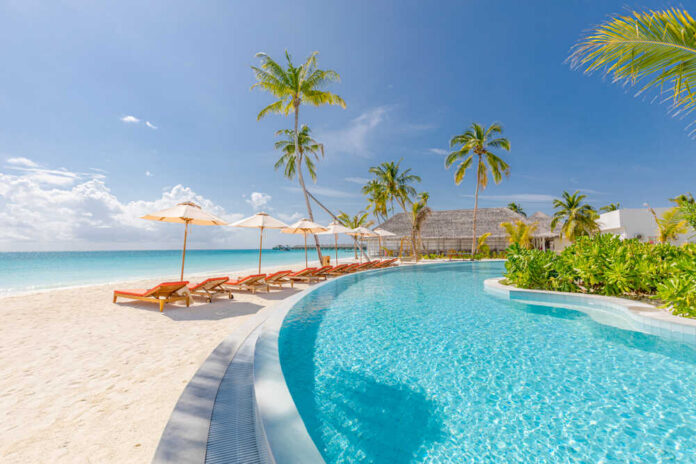
The most dangerous thing on your next beach vacation might not be the waves, but what swims silently beside them.
Story Snapshot
- A 28-year-old Mexican man, Irving Mauricio, was dragged into the sea and killed by a crocodile at Marina Vallarta Beach in Puerto Vallarta.
- The attack happened right in front of the Marriott Puerto Vallarta Resort and Spa, in a zone with posted crocodile warnings and known wildlife activity.
- Witnesses say resort guests tried to save him as the crocodile held him by the thigh and rolled him under the water.[9]
- Officials call the incident “isolated” and “unusual,” but past attacks near the same beach raise hard questions about risk and responsibility.[5]
A quiet evening swim that turned into a deadly struggle
Friday evening at Marina Vallarta Beach looked like the kind of scene tourism ads love. The sun dropping over the Pacific. Guests moving between the pool and the shoreline.
Just offshore from the Marriott Puerto Vallarta Resort and Spa, 28-year-old Irving Mauricio from Mexico City was near the water when a crocodile struck and dragged him into the sea, according to Jalisco state authorities. Screams from the beach cut through the normal resort noise in seconds.[3]
A family from San Clemente, California, heard the screams while relaxing at the hotel pool and ran toward the water. Onlookers say the crocodile had Irving by the thigh, twisting and pulling him under.
One witness grabbed a life preserver and tried to reach him, but Irving appeared to be in shock and could not grab the ring. The crocodile rolled and disappeared with him into deeper water. People on the sand were left watching a rescue attempt they could not finish.[9]
Search crews, a grim recovery, and a captured predator
Police say the attack happened around 6:00 to 6:30 p.m. local time, while plenty of guests were still on the beach. Local authorities launched an overnight search by land and sea, using boats to scan the shoreline and nearby estuaries where crocodiles are often seen.
The next morning, crews found Irving’s body roughly 300 meters offshore, close to river and estuary channels that feed into the bay. Wildlife officials later located and secured the suspected crocodile near the same zone, treating it as a direct threat to the public.[1][3]
State civil protection officials moved quickly to expand beach patrols and warn visitors about wildlife moving from estuaries to the open shoreline after seasonal rains. Their public statement called the attack “lamentable, unusual, and isolated,” stressing that fatal crocodile encounters are extremely rare.
One analysis of global data puts the odds of a fatal crocodilian encounter at around one in 2.5 million. Rare does not mean impossible, especially in narrow areas where wild animals and mass tourism share the same strip of sand.[1]
Resort warnings, repeat danger, and the question of common sense safety
Photos taken after the attack show warning signs near the Marriott beach, alerting guests to the presence of crocodiles in the area. The resort stated that safety is its top priority and pointed to “appropriate signage,” night patrols, and red flags that were “properly in place.”
This is the kind of language lawyers like. It says the boxes were checked. But local discussion paints a more troubling picture of a known danger that keeps brushing up against vacationers, especially near estuaries and mangroves.[3][5]
Residents and past guests on social forums report at least three prior crocodile attacks in the same general Marina Vallarta zone since 2021, including one in front of the same resort where a young woman survived.
These accounts are not official case files, but they show a pattern: wild predators using the same access routes, people in the same water, and a tourism engine eager to label each case a “freak” rather than “foreseeable.” For readers who value personal responsibility and transparent risk, that gap matters.[5]
Who owns the risk when nature and tourism collide?
The Puerto Vallarta tourism industry brings in billions of dollars every year, with resorts and local officials both depending on a steady flow of visitors.
That money creates a strong incentive to calm fears and frame deadly wildlife encounters as one-off tragedies, not as ongoing risk in specific hotspots.
Authorities emphasize the rarity of such attacks and remind guests to heed warning signs and avoid swimming near estuaries and mangrove areas where wildlife is present. [1][3]
A Mexican man was killed by a crocodile near the Marriott Puerto Vallarta Resort and Spa. The attack was witnessed by a pair of tourists from California.https://t.co/MUBsaMHFA2
— The Inertia (@the_inertia) June 29, 2026
The harder question is whether resorts built beside known crocodile habitat are doing only the minimum or the maximum to protect people. Americans tend to respect both property rights and personal accountability.
If the signs are clear, the red flags fly, and guests still walk past them into the water, much of the risk falls on individual choice. But when repeat attacks cluster in the same zone, and families say they never heard direct verbal warnings, it is fair to argue the system leans too much on fine print and not enough on plain speech.
What this means for anyone who loves the beach
Irving Mauricio’s death was not a statistic; he was a working man from Mexico City in town with friends, standing on a beach that promised relaxation and escape. His story sits at the point where two realities meet.
One reality is glossy marketing that sells “paradise” with soft waves and sunset cocktails. The other reality is nature that does not care about hotel stars, brand names, or airline miles. Crocodiles follow food, currents, and river mouths, not room rates.[9]
For travelers, the lesson is simple enough for any teenager to understand. Read the signs. Ask locals about wildlife. Treat river mouths, mangroves, and estuaries as high-alert zones, even when the water looks calm.
For resorts and officials, the honest path means clear warnings in spoken language, not just small icons on a post. Tragedies like this will always be rare. That makes each one even more important, because it shows exactly where paradise ends and the wild world begins.
Sources:
[1] Web – Man, 28, dragged out to sea and killed by crocodile at popular resort: …
[3] Web – Crocodile Kills 28-Year-Old at Mexican Beach Resort (Video) – Surfer
[5] Web – Horrifying Crocodile Attack! : r/puertovallarta – Reddit
[9] Web – Orange County couple tried to rescue man killed in crocodile attack …