

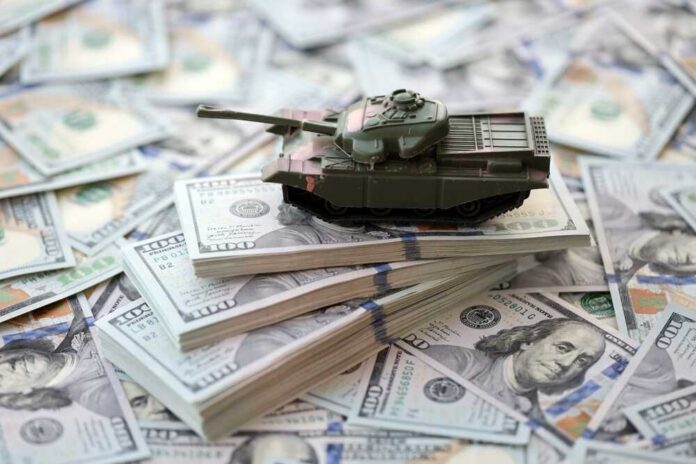
The most concrete number the Pentagon has given for the Iran war is $37.5 billion, but every serious signal around it says the real bill is much larger and still climbing.
Story Snapshot
- Pete Hegseth told senators the Iran war’s cost is now estimated at $37.5 billion.
- That figure mixes past spending with costs the Pentagon expects through September.
- Earlier official estimates jumped from $25 billion to about $29 billion in just weeks.
- Outside experts and anonymous officials say the true tab may be closer to $100 billion.
Hegseth’s $37.5 Billion Number And What It Really Represents
Defense Secretary Pete Hegseth went before the Senate Appropriations Committee and gave the most attention-grabbing figure of the war so far: $37.5 billion. He answered a direct question from Senator Dick Durbin with a crisp line, “Senator, the estimate we have as of today is 37.5 billion.”
That one sentence instantly became the headline, the cable chyron, and the social media sound bite. But it only makes sense when you see what is inside that number and what is missing from it.
Hegseth hearing shows tough fight ahead for Iran war supplementalhttps://t.co/qcXz75urER
— The Hill (@thehill) July 22, 2026
Hegseth explained that the estimate covers “current activity” in the Iran war and also “additional operations and maintenance, military pay and other costs” the Pentagon expects to incur through the end of the fiscal year on September 30.
In plain terms, this is not just a bill for what has already been spent. It is a running total plus what accountants expect to spend over the next few months.
That is closer to a short-term budget forecast than a clean “cost so far” tally, which matters if you are trying to judge how big this war has already grown.
How The Official Cost Escalated From $25 Billion To $37.5 Billion
The $37.5 billion figure did not appear out of thin air. It is the latest update in a series of rising Pentagon estimates. In late April, the Pentagon’s chief financial officer, Jules Hurst, told lawmakers the war had cost about $25 billion, driven mainly by munitions, operations, maintenance, and equipment replacement.
Within weeks, the Pentagon’s comptroller told Congress the running total was now closer to $29 billion, thanks to updated repair and replacement costs and keeping personnel deployed in theater.
By the time Hegseth offered the $37.5 billion estimate, he framed it as the new internal tally that budget officials had developed as they tracked daily spending, updated repairs, and personnel costs. That kind of step-by-step update makes more sense than a random political number.
It reflects a real accounting process trying to keep up with a fast-moving war where missiles and bombs worth billions are used in days, and damaged hardware must be fixed or replaced.
Why Critics Say The Real Price Tag Is Far Higher
Outside analysts and some officials argue that even $37.5 billion undershoots the true cost of the Iran war by a wide margin. Reporting from outlets like The New Republic says intelligence officials and independent experts put the overall cost upwards of $100 billion once you include categories the Pentagon’s near-term estimate does not fully capture.
Those higher figures fold in base repair, long-term equipment replacement, and the broader strain on readiness as units and ships are tied up in the region rather than training or deterring other threats.
Research on past U.S. wars shows this pattern is not new. Official numbers often track only direct operating costs or “overseas contingency operations” funding, while outside studies add interest on war borrowing, long-term health care for veterans, and economic ripple effects.
For the post‑9/11 campaigns, government budget figures in the $1.6 trillion range have coexisted with outside estimates of $4 trillion, $6 trillion, even $8 trillion once you account for future obligations. When you apply that history to Iran, a single $37.5 billion figure looks more like the visible tip of the iceberg than the full mountain of cost.
Budget Politics: $37.5 Billion Versus A Much Larger Ask
Hegseth did not drop the $37.5 billion number in a vacuum. He used it to help sell a much bigger request. The Trump administration is asking Congress for about $67 billion in supplemental defense funding tied to the Iran conflict, on top of a larger nearly $90 billion package. That supplemental covers both the war itself and replenishing stocks of weapons, missiles, and other gear used up in the campaign.
For taxpayers, the key point is this: the smaller cost estimate is being used alongside a much larger ask for cash that will flow into the broader defense system.
From this standpoint, the question is not just “how much has the war cost” but “how much of this new money truly replaces war losses, and how much quietly grows government and bureaucracy.”
Without a public line-item breakdown, voters cannot easily see how much goes to genuine combat needs, how much goes to long-delayed wish lists, and how much may simply feed the Pentagon’s habit of using crises to fatten its base budget.
What Taxpayers Still Do Not Know About The War’s Cost
The biggest problem today is not that Hegseth’s number is clearly false. The problem is that it is clearly incomplete. Pentagon officials and media reports admit the $37.5 billion may not include the cost of rebuilding damaged U.S. bases and other major construction.
That means core pieces of the bill are still off the books in the official figure. The underlying cost worksheets, budget memos, and damage assessments that would show the full picture have not been released to the public.
Decades of war cost research warn that this kind of partial reporting is how wars slowly turn into multi-trillion-dollar commitments with little honest debate. For citizens who value fiscal discipline and limited government, the lesson is simple. Do not take a single headline number as the whole story.
Keep pressing for full, transparent accounting: from weapons and base repairs to future veteran care and interest on the debt that will outlive the politicians who started the war.
Sources:
cbsnews.com, youtube.com, fortune.com, newrepublic.com, facebook.com, thefinancialexpress.com.bd, apps.dtic.mil, csis.org, costsofwar.watson.brown.edu, warcosts.org, sites.socsci.uci.edu