
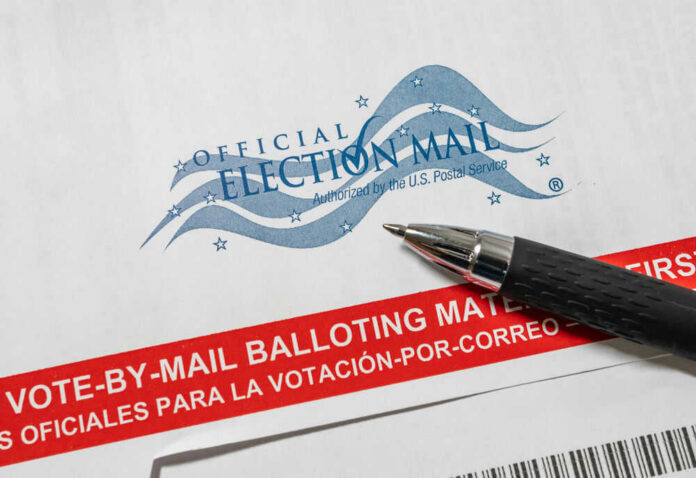
The Supreme Court let California count the disputed ballots, but the real fight now shifts to proof and process.
At a Glance
- The Supreme Court declined to block California from counting flagged mail ballots on the eve of the election.
- The Department of Justice said a Department of Homeland Security list identified about 20,000 “likely” noncitizen voters and sought to set their ballots aside.
- Lower courts warned the requested fix would disrupt election operations and risk disenfranchisement.
- California officials said federal data lacked proof and showed large errors, fueling public doubt about the list.
What the Supreme Court Did, and Why Timing Ruled the Day
The Supreme Court declined the Department of Justice’s last-minute request to stop California from counting ballots linked to about 20,000 flagged registrations. The request reached the Court one day before Election Day after the district court and appeals court refused emergency relief. The rulings fit a long-standing caution: courts avoid changing election rules at the last minute because it can confuse voters and workers and cause new mistakes. That timing logic carried the day here, not a verdict on the larger claim.
BREAKING: The Supreme Court denied the Trump administration's emergency request to force California to set aside mail-in ballots from roughly 20,000 suspected noncitizens until their citizenship could be verified, one day before the midterm elections. pic.twitter.com/hjQzYV7Ht3
— SCOTUS Wire (@scotus_wire) November 2, 2026
The Department of Justice had asked courts to require counties to set aside vote-by-mail ballots from people the federal government identified as “likely” noncitizens while citizenship checks occurred. The government grounded its request in a federal law that makes noncitizen voting in a federal election a crime, and said a Department of Homeland Security dataset flagged the names. The Department of Justice delivered a list and a short deadline for counties to review. That defined list set this clash apart from vague claims.
Why Lower Courts Balked at the Remedy, Not Just the Claim
Judge David O. Carter said the proposed fix would force counties to quickly build new ballot sorting and tracking methods. He warned it could “wreak havoc” and push out eligible voters whose ballots might be wrongly set aside. That matters in close deadlines where vote-by-mail systems run on barcode scans, batch intake, and strict chains of custody. Courts often prefer targeted proof first, then tailored fixes, not a sweeping change the night before votes are counted.
Appellate judges also pushed on the gap between a screening list and proof. A list can be a starting point, but a mismatch is not a crime. Counties need time and records to confirm status person by person, and the Department of Justice’s 48-hour window made that task hard. The Court’s refusal to intervene preserved the existing systems while leaving the core legal issues for regular appeals.
California’s Counterpunch: Data Quality and Disenfranchisement Risks
California leaders contested the list’s accuracy and the urgency claim. The Secretary of State said the federal government did not provide the underlying data or matching method to back the “likely noncitizen” labels. The Attorney General publicized a sample review of 200 names from Los Angeles County that showed more than half were canceled or inactive, 38.9% had a United States birthplace, and most had no voting history. One rural county found every person on its slice of the list lived elsewhere.
State officials also argued that noncitizen voting is already illegal in California and that existing checks make it rare. They warned that a broad late change risks throwing out eligible votes and shaking public trust. That message dovetailed with the trial court’s disruption concerns and helped frame the Department of Justice request as a fix in search of confirmed harm, rather than a response to proven ineligible votes in hand.
How to Square Election Integrity with Operational Reality
Two facts can both be true. First, noncitizen voting in federal elections is illegal and must be stopped. Second, fast mass filtering on the eve of counting can break systems and hit innocent voters. Conservative common sense says build a clean pipeline: share the full federal matching method and data fields; test match rates and errors with state records; and agree on a steady, pre-election process that flags, investigates, and resolves cases well before ballots arrive.
Courts respond best to narrow, proven claims. A voter-by-voter record that shows citizenship, status checks, and ballot disposition is stronger than a bulk list under a two-day clock. If any confirmed noncitizens did vote, prosecutors can bring targeted cases under federal law. If most flags prove wrong, the system learns and tightens the match rules. Either way, evidence first, remedy second — and never at the brink if you can help it.
What Comes Next
The Supreme Court’s move means the counting continues while the case proceeds through normal appeals. The Department of Justice preserved its legal theory, and California banked a win on timing and process. The lasting fix will not come from a midnight order. It will come from transparent data, measured timelines, and remedies that separate confirmed ineligible ballots without sidelining lawful votes. That is how you keep both the ballot and the republic secure.
Sources:
cnbc.com, abcnews.com, pbs.org, npr.org, cnn.com, sbsun.com, jurist.org, rmb.reuters.com, gov.ca.gov, latimes.com, sandiegouniontribune.com