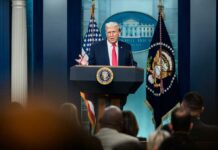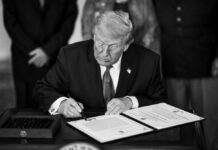
One federal judge just turned a high-profile immigration fight into a warning shot about government overreach.
Quick Take
- A federal judge blocked the Trump administration’s attempt to subpoena Governor Tim Walz and other Minnesota officials in an immigration probe [2].
- The judge said the subpoenas looked aimed at coercion, harassment, and retaliation, not a real criminal inquiry [2][7].
- The case centers on federal claims that state officials obstructed immigration enforcement during a large operation in the Minneapolis-St. Paul area [9].
- The ruling strengthens the argument that states can refuse to help enforce federal immigration policy [2][7].
The Judge Saw a Political Weapon, Not a Lawful Probe
U.S. District Judge Patrick Schiltz said the subpoenas had an “extremely weak to nonexistent” link to any possible crime [2][7]. He also wrote that the Justice Department struggled to identify “a single plausible investigatory justification” for the records demand [2][7].
That is why he halted the effort. In his view, the grand jury process was being used for “other (unlawful) purposes,” not for a genuine criminal investigation [2][7].
That finding matters because the administration had framed the case as a response to obstruction during immigration enforcement [9]. The subpoenas reached into the offices of Walz, Attorney General Keith Ellison, Minneapolis Mayor Jacob Frey, St. Paul Mayor Kaohly Her, and county officials [9].
But the judge said the requested materials largely concerned constitutionally protected conduct, including public criticism and policy choices [2][7].
Why the Case Landed So Hard
The fight did not start in a courtroom. It grew out of a sweeping immigration operation in the Minneapolis-St. Paul area, where federal officials said they were trying to enforce immigration law more aggressively [9].
A person familiar with the matter said the subpoenas were tied to an inquiry into whether state and city leaders obstructed or impeded law enforcement [9]. That alone made the dispute combustible. Once the judge ruled, the legal story became much sharper than the political one.
Federal prosecutors had also pointed to the scale of the operation. Greg Bovino of United States Border Patrol said more than 10,000 people in the country illegally had been arrested in Minnesota over the past year, with 3,000 arrested in the last six weeks during “Operation Metro Surge” [9].
That number gave the administration a strong law-and-order talking point. Still, the judge’s ruling said the subpoena demand did not line up with a credible criminal theory [2][7].
What the Ruling Means for States and Cities
The key legal point is simple. A state does not have to turn itself into a junior arm of federal immigration enforcement [2][7]. The judge’s ruling leaned on that principle and treated Minnesota’s policy choices as protected conduct, not evidence of crime [2][7].
That is why the subpoenas failed so badly. If public criticism or refusal to spend state resources counts as obstruction, then nearly any disagreement with Washington could become a federal case.
Federal judge has halted the Trump administration effort to subpoena Minnesota Gov. Tim Walz and others in an immigration enforcement probe.https://t.co/gekujqp1MM
— Gary Buckley™ (@myrddenbuckley) June 22, 2026
The broader lesson is larger than Minnesota. Federal power works best when it stays tied to real evidence and narrow purpose. When it looks like pressure, not prosecution, judges notice. And when a conservative-appointed judge says the evidence is “extremely weak to nonexistent,” the administration does not just lose a motion. It loses the moral high ground, too [2][7].
Sources:
[2] Web – DOJ subpoenas Walz amid immigration enforcement crackdown in …
[7] Web – Justice Department subpoenas Walz, 5 others in immigration …
[9] Web – Justice Department subpoenas Walz and others in immigration …