
A president’s helicopter, a loaded passenger jet, and a rule meant to prevent another deadly crash all crossed paths over Washington in a way federal investigators cannot ignore.
Story Snapshot
- Marine One carried President Trump from the White House while a commercial jet departed nearby Reagan National Airport.
- Federal officials say there was a brief loss of required separation but no real collision danger.
- A new safety rule created after a fatal 2025 midair crash appears to have been broken.
- The Federal Aviation Administration and National Transportation Safety Board now must explain how a protocol around the president failed.
How Marine One Ended Up Sharing Airspace With A Passenger Jet
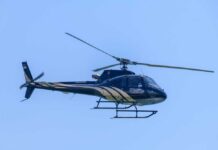
Marine One left the South Lawn of the White House on a clear Tuesday afternoon with President Trump on board, headed to begin a trip to Los Angeles. At the same time, an Envoy Air passenger jet, an Embraer 170 regional plane, rolled down Runway 1 at Ronald Reagan Washington National Airport and lifted off, full of travelers bound out of the capital.
According to people familiar with the event, air traffic controllers had not yet stopped commercial flights at Reagan National, even though that pause was supposed to kick in before the president’s helicopter lifted.
Tuesday 'safety incident' with Marine One flight carrying Trump under investigation
Air traffic at nearby Reagan National Airport wasn’t stopped despite chopper take-off
'At NO point was the President in harm’s way' — White House pic.twitter.com/HZRd4j9GcL
— RT Intl (@RT_on_X) August 5, 2026
For movements like this, the rule is simple on paper: when Marine One is set to take off or land near Reagan National, commercial planes are supposed to be held, creating a quiet bubble of airspace around the presidential helicopter.
That protocol was put in place after a deadly 2025 midair collision between a United States Army Blackhawk helicopter and an American Airlines jet that killed 67 people, a disaster tied partly to conflicting traffic near Washington.
Allowing a jet to depart while Marine One climbed out from the White House cut against that new safeguard, which is why the Federal Aviation Administration and National Transportation Safety Board quickly opened formal reviews.
What Officials Say Happened In Those Critical Seconds
Federal Aviation Administration officials now describe the event with careful technical language. Their statement calls it a “momentary loss of separation” in which the required distance between the aircraft briefly fell below the standard and then increased again as the helicopter and jet moved away from each other.
A loss of separation means the aircraft did not fully meet Federal Aviation Administration spacing rules; near major airports, those rules require at least one and a half miles horizontally and five hundred feet vertically between aircraft flying at the same time.
Federal Aviation Administration officials also stress that the controller stayed in radio contact with both the Marine One crew and the Envoy Air pilot during the episode, and that radar showed the paths were not converging toward the same point. A spokeswoman told reporters that the two aircraft “did not appear to get dangerously close” under federal standards.
The White House echoed that view, saying President Trump was never in danger, and pointing out that Marine One is flown by some of the best aviators in the world, trained to manage unusual situations around crowded airspace.
Evidence Of A Protocol Lapse And Why It Matters
Even if there was no real risk of collision, the record shows a clear breach of the policy created after the 2025 crash. The Wall Street Journal and local television outlets, citing air traffic control audio reviewed by 7News, report that controllers had not stopped commercial departures from Reagan National when Marine One called in “three minutes to lift.”
Audio captures repeated attempts by the Marine One crew to coordinate the departure and a later call warning about the Envoy Air jet departing Runway 1, with Marine One responding that it had the traffic in sight and would make a “momentary delay.”
The FAA has launched an investigation into the failure to halt commercial flights at Washington Reagan National Airport during the takeoff of Marine One carrying President Donald Trump.https://t.co/zcU204nCoB pic.twitter.com/8KDQMzy2wn
— Ally Daily (@allydailycom) August 6, 2026
From an aviation safety perspective, this looks less like drama in the sky and more like a process problem on the ground. A rule meant to create space around the president’s helicopter was not followed cleanly.
A government that writes strict protocols after a fatal crash has a duty to follow those protocols every time, especially when they involve both a head of state and ordinary passengers. The fact the president was never at risk does not erase the need to know why commercial traffic was still flowing.
Balancing Public Fear And Technical Reality
Television segments and social media posts quickly framed the story as a “near crash” and “major security lapse,” leaning on dramatic language that grabs attention but often blends rule violations with true danger.
Aviation regulators use more narrow terms because they live in a world where thousands of flights cross paths daily, and many small deviations from ideal spacing never come close to an accident. A loss of separation is a red flag, but it sits at the start of the risk chain, not the end.
The gap between those two lenses is important. Treating every procedural error as if the president almost died may sound tough, yet it can also numb people to serious warnings.
A wiser approach asks two direct questions: did the event break the rules, and did it create real physical hazard? In this case, current evidence answers yes to the first and no to the second.
That does not mean the story is fake or trivial. It means the real lesson lies in how government agencies enforce the safety rules they write, not in imagined doom above the Potomac.
Sources:
cbsnews.com, wsj.com, nbcnews.com, reuters.com, youtube.com