

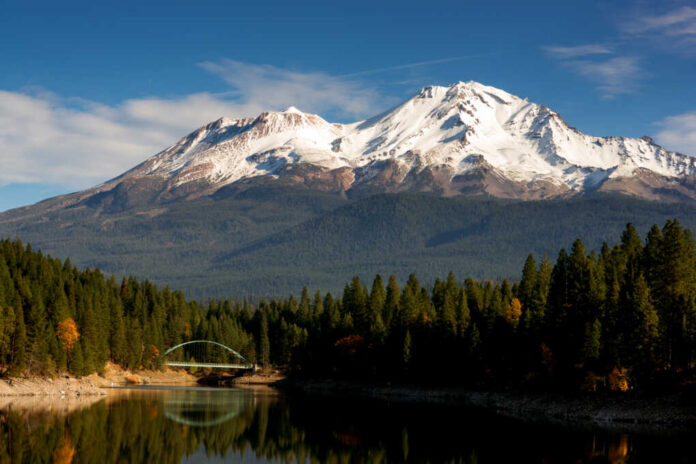
A 31-year-old novice climber slid 1,500 vertical feet down Mount Shasta and somehow lived to tell the story.
Story Snapshot
- A group of three first-time climbers tackled one of Mount Shasta’s steepest snow routes.
- One woman fell about 1,500 feet, dropping from near 13,000 feet down to roughly 11,500 feet.
- Clouds blocked a quick helicopter rescue, forcing rangers to climb on foot with help from other climbers.
- The woman was found alert, in good spirits, and evacuated by helicopter to a local hospital.
A novice team steps onto a serious mountain
Mount Shasta looks like a postcard, but it behaves like a high-altitude maze with sharp teeth. The woman at the center of this story was 31, climbing as part of a group of three novice climbers on the Left of Heart variation of the Avalanche Gulch route.
That route is not a casual hike. It is a steep, snow and ice climb that demands crampons, an ice axe, a helmet, and solid snow travel skills. Rangers stress that this is mountaineering, not weekend walking.
Records from the Mount Shasta Avalanche Center show that most accidents happen here between May and September, when snow is firm, slopes are crowded, and many visitors underestimate the terrain. Slip and fall events on snow and ice are the single most common cause of rescues on the mountain.
Avalanche Gulch sees more incidents than any other route, with multiple rescues logged every year. This woman stepped into the exact zone where the numbers say trouble shows up most often.
The 1,500-foot fall that should have been fatal
The fall began around 13,000 feet as the novice climbers ascended the Left of Heart line. At some point, the woman slipped and then lost control, sliding roughly 1,500 vertical feet before finally stopping around 11,500 feet. That distance is not internet rumor.
It comes from the United States Forest Service Climbing Rangers, who measured the start and end elevations of her slide and reported it publicly. For context, prior incidents on this mountain include a separate 700-foot slide and other long falls, so big numbers are not new.
Why did she live? Snow acts like a brutal conveyor belt. A long, mostly sliding fall on firm snow can produce fewer direct impacts than tumbling over rock, even though the distance is huge.
Rangers reported a suspected broken right ankle and other injuries, but she was awake, alert, and even described as “in good spirits” when they reached her. Common sense says that is providence plus physics: she missed the rocks, she missed the cliffs, and the snow spared her life.
Rescuers fight clouds, time, and terrain
Around noon, the Siskiyou County Sheriff’s Office Search and Rescue coordinator alerted Climbing Ranger Nick Meyers to the emergency. A California Highway Patrol helicopter tried to reach the scene, but thick cloud cover blocked direct access to the injured climber.
That forced a slower, riskier plan. Rangers landed lower on the mountain, then climbed on foot with heavy rescue gear toward Avalanche Gulch. One member of the woman’s own party descended to help carry equipment, and another passing climber stayed with her throughout the rescue.
Woman Survives 1,500-Foot Fall On Mt. Shasta | NewsRadio 560 WHYN https://t.co/E7f4dTw9Ka
— NewsRadio 560/98.9 FM WHYN (@WHYN560) July 2, 2026
On the slope, rescuers secured her into a SKED rescue litter, a flexible sled designed for technical evacuations, and then lowered her carefully down to Lake Helen. That snowfield acts as a staging zone where helicopters can sometimes work near their limits.
Around 5:30 p.m., the California Highway Patrol helicopter hoisted her from Lake Helen and flew her to Mercy Medical Center Mount Shasta for further treatment. The operation followed a pattern seen in many Shasta rescues: ground teams push up from below while air crews wait for a narrow window of workable weather.
A pattern of accidents, and the lesson for the rest of us
This rescue was not a freak one-off. Climbing ranger reports show that Avalanche Gulch alone saw nine rescues in a recent season, most linked to simple slips on snow or ice.
The American Alpine Club notes that Mount Shasta averages about twenty search and rescue incidents per year, with some years lower only because closures kept people off the mountain. Local news has already covered separate major falls, including a 700-foot slide in March 2026, and several other serious accidents.
Some commentators online rush to blame climbers for poor choices, like renting gear they barely know how to use. Others argue that the real issue is a wild mountain that does not forgive small mistakes.
Both views have truth. From a common-sense angle, the line is clear: personal responsibility matters. When you step onto a steep snow route with novice skills, you carry the duty to respect the risk, train properly, and prepare for the worst. Yet the mountain will always add its own danger, no matter how careful you are.
Risk, privacy, and the questions that remain
Some facts about this woman will likely stay private. Officials have not released her name, and details of her long-term medical condition are not public. That silence follows normal privacy rules, but it also fuels online doubt about the exact fall distance and injuries.
Side B skeptics offer questions, not evidence. No source has produced a survey, a competing elevation track, or a formal rebuttal of the 1,500-foot figure. In the record that exists today, ranger statements and hospital transport logs are the only solid trail.
Meanwhile, rescue teams keep training. The Siskiyou County Sheriff’s Search and Rescue program uses full-time deputies and local volunteers to answer these calls year-round. Climbing rangers and air crews from the California Highway Patrol refine hoist and high-altitude procedures because they know more calls will come.
The real takeaway for the rest of us is simple enough for any 13-year-old to grasp: a beautiful mountain can become a life-or-death test in a single step, and you do not get to choose whether you slide 15 feet or 1,500.
Sources:
abcnews.com, shastaavalanche.org, x.com, instagram.com, reddit.com