
In La Guaira, people digging with their bare hands say more about Venezuela’s crisis than any press conference ever will.
Story Snapshot
- Death toll officially at 1,430, with nearly 69,000 people reported missing by families.[2]
- Civilians lead rescues while anger grows over what many call an inadequate government response.[1]
- Acting President Delcy Rodríguez orders troops and police into the zone, but many locals say they rarely see them.[1]
- Years of economic and political chaos left Venezuela’s disaster system weak before the quakes ever hit.[6]
How a nation already on its knees met its worst earthquake in decades
The twin earthquakes that hit Venezuela were not small tremors you sleep through. They were a one-two punch, magnitudes 7.2 and 7.5, slamming a country already crushed by years of economic collapse.[2] Buildings in La Guaira and Caracas fell like houses of cards.
By Saturday, the death toll reached 1,430, and families had reported about 68,900 people missing, a number that feels less like a statistic and more like a roll call of vanished lives.[2]
The shock did not land on a blank slate. Venezuela has carried one of the largest sovereign debt loads in the world, with broken infrastructure, old housing stock, and deep poverty.[6] When the ground started moving, people were living in fragile buildings, not modern, reinforced towers.
Old concrete, informal construction, and hillside neighborhoods turned the quakes into a mass casualty event long before anyone in government could sign an emergency decree.[6]
Frustration on the streets: citizens digging while asking “Where is the state?”
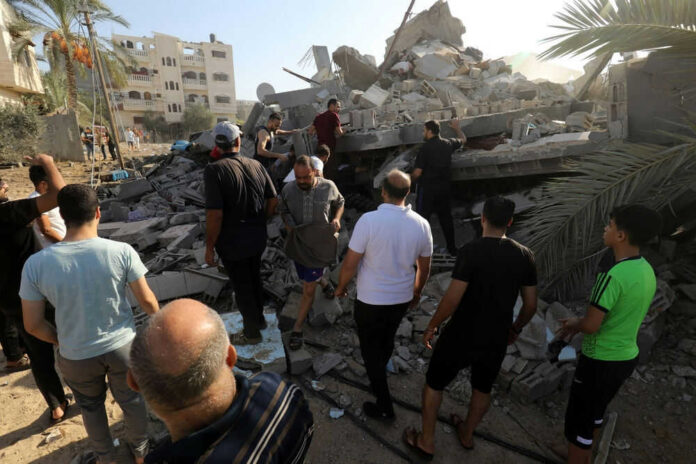
In La Guaira, the anger is simple and raw. Rescue scenes show neighbors using shovels, rebar, and their hands to pull survivors from rubble while they shout for machinery that never arrives.[1]
Many Venezuelans say they see more volunteers than official rescuers. Families complain that soldiers, police, and cadets were clearly underprepared for a disaster of this size, forcing ordinary people to act as first responders in their own destroyed neighborhoods.[2]
Search crews found survivors in the rubble four days after the devastating earthquakes in Venezuela, even as the death toll tops 1,400. Relief centers in the U.S. say they have been overwhelmed with donations for Venezuelans in need. @BrookeShaferTV
More:… pic.twitter.com/1p4QIouP5C
— NewsNation (@NewsNation) June 29, 2026
That frustration is not just emotion; it is shaped by daily reality. Acting President Delcy Rodríguez said on state television that more than 14,000 police and military members were patrolling the area and that access now requires special permits.[2] Yet residents inside the zone tell reporters they have seen little sign of their government, except roadblocks and uniforms guarding perimeters.
From a common-sense lens, this feels like government power focused on control, not service, reinforcing the view of a state strong enough to restrict movement but too weak to clear rubble and save lives quickly.[1]
What the government says it is doing — and where the gaps are
On paper, Caracas is not ignoring the disaster. Officials declared emergency status and labeled La Guaira a disaster zone, a move that opened legal doors for aid, troop deployment, and foreign help.[8] Rodríguez has gone on television with casualty figures, updated death tolls, and claims of thousands of security forces on the ground.[3]
International coverage notes that the United States and other countries are sending rescue teams and supplies, partly at Venezuela’s request, to support an overwhelmed response system.[6]
Those moves matter. They show a central government that is at least trying to act rather than pretending nothing happened. But they also expose how thin the state has become. Reports from journalists and aid workers say the devastation is likely far worse than official numbers, because communications are broken and many neighborhoods have not seen a single ambulance or emergency crew.[6]
For most people, this is the worst mix: a large, politicized state with broad control powers, but lacking the basic capacity to reach its own citizens when it counts most.
Looting, blocked roads, and the risk of force without trust
As days pass, fear turns into something darker. Looting has been reported in La Guaira, with gangs and armed civilian militias tied to the regime already strong in many neighborhoods.[6] Authorities responded by deploying more military units and blocking access to the worst-hit areas unless people have special permits.[1]
Officials say this is about safety and order. Critics see something different: a disaster zone locked down by the same security forces many blame for corruption and abuse.
🌍 WORLD NEWS DIGEST
📅 June 29, 2026 · Past 12 Hours🆘 NATURAL DISASTERS
• 🇻🇪 Venezuela Twin Earthquakes Death Toll Surpasses 1,400 — The M7.2/M7.5 doublet quake that struck on June 25 has killed at least 1,430 people with an estimated 51,000 still missing. International… pic.twitter.com/kziEeGbOOr— 0xzx (@0xzxcom) June 28, 2026
The line between “protecting property” and “controlling people” is thin in a crisis. When citizens watch police ignore thefts from ruined shops, then see the army roll in to seal off streets, it confirms their belief that the state’s first instinct is control, not care.[1]
For those who distrust concentrated power, this is a textbook case of what happens when a government grows in size but shrinks in credibility. Force without trust does not calm a disaster; it makes every siren sound like a warning, not a rescue.
Why this fight over numbers and blame will not end soon
The numbers themselves feed the anger. Families report tens of thousands missing, while the official death toll sits at 1,430.[2] Aid workers and journalists warn that the real toll is likely much higher, simply because so many places remain unreachable and early warning systems did not work when the first quake hit.[6]
In a country with long political battles and a history of underreported tragedies, every gap in data looks like a cover-up, whether or not that is fair.
This pattern is not unique to Venezuela. Across Latin America, when a huge disaster hits a weak state, citizens blame slow, sloppy response while governments claim they face an unprecedented event and lack resources.[24]
In about three-quarters of major disasters studied in Peru, public anger over response speed became the main story, while officials kept pointing to scale and preexisting infrastructure failure.
[24] That same script is playing now on Venezuela’s coast, with one difference: the global spotlight is brighter, and foreign aid — especially from the United States — may rescue lives while also reminding everyone how fragile Venezuela’s own system has become.
Sources:
[1] Web – Frustration grows in Venezuela as earthquake death toll reaches 1,430
[2] Web – Desperation mounts in Venezuela as the earthquake death toll rises …
[3] YouTube – Venezuela earthquakes: At least 1,430 killed, tens of thousands still …
[6] Web – Venezuela quake death toll rises to 1,430: Top lawmaker
[8] Web – Rescuers rush to save lives as Venezuela earthquakes kill at least 235
[24] Web – Natural disaster emergency response from a public policy perspective